Sunrise from Bright Summit
Guangming Ding is the second-highest peak and the one spot that gives you a grand view of both sunrise and the cloud sea. Get up an hour before dawn and claim a spot; it is worth the alarm.
Huangshan · Anhui
Huangshan — Yellow Mountain — is Anhui's granite wonder of pines, craggy rocks and cloud seas. Private Huangshan tours, summit sunrise and Huizhou villages, from US$149 a day.
The short version
The place itself
Huangshan is the mountain the rest of China is measured against. 'Having seen the Five Great Peaks, you need not see other mountains; having seen Huangshan, you need not see the Five Great Peaks' goes the saying, and it is not far off. The granite here has been weathered into 82 improbable peaks; pines grow out of bare rock in shapes that look carved; and cloud pours through the valleys, turning the whole massif into an ink painting that changes by the hour.
It has four signatures, and every visitor comes for some mix of them: the pines, the grotesque rocks, the cloud sea and the hot springs. The scenery is not a single view but a sequence — the view from Begin-to-Believe Peak, the Flying-Over Rock that stood in for the stone in The Story of the Stone, the sunlight through the pines at Refreshing Terrace, the vast canyon of the West Sea.
The mountain is also the reason the Huizhou villages below look the way they do. This corner of Anhui was rich on salt merchants and scholars, and the money built the white-walled, black-tiled villages of Hongcun and Xidi, the old market street at Tunxi, and the memorial arches at Tangyue. Most visitors pair the mountain with at least one village, and you should.
It is a serious mountain, not a stroll: the climbs are steep, the weather turns fast, and in winter the top can drop to −20°C. But it is also one of the best-served mountains in China, with cable cars, hotels and a shuttle system, so with a little planning it is very doable — even in a weekend.
Pins are plotted from real latitude and longitude on a 5° graticule. This is a schematic orientation diagram, not a political map — no boundaries are drawn.
Guangming Ding is the second-highest peak and the one spot that gives you a grand view of both sunrise and the cloud sea. Get up an hour before dawn and claim a spot; it is worth the alarm.
A U-shaped gorge of sheer cliffs and pine-tufted crags, opened to visitors in 2005 and still the quietest, wildest walk on the mountain. Allow four hours; there is no shop and no shortcut out.
The peak where, according to legend, a sceptic finally believed how lovely Huangshan was. It gathers the famous pines in one place — the Black Tiger Pine, the Interlocked Pines, the Dragon Pine.
The Greeting Pine, at 1,670 m beside Jade Screen Pavilion, is the tree on every poster. Nearby, Lotus Peak is the highest point on the mountain at 1,864 m.
Huangshan's weird stones each have a name and a story — the Flying-Over Rock (the stone of The Story of the Stone), Monkey Watching the Sea, the Immortal Sunning His Boots. Half the fun is finding them.
Hongcun, the 'village in a Chinese painting', and Xidi, the open-air museum of Ming and Qing houses, sit within an hour of the mountain. Both are UNESCO sites and a perfect rest day after the climbing.
Fly into Huangshan Tunxi Airport (TXN), only 5 km from the city centre, or take the train to Huangshan Station in Tunxi — note that timetables often still call it 'Tunxi'. From Tunxi, buses to Tangkou at the foot of the mountain leave every 30 minutes from 05:30 to 17:30 and take about 70 minutes for ¥16 (¥20 by the expressway). High-speed rail now reaches Huangshan North from Hangzhou and points beyond.
From Tangkou you take the green shuttle bus into the scenic area: ¥19 for the full route, or ¥11 to the hot-spring stop and ¥8 on to the Ciguang Pavilion or Yungu Temple cable-car bases. The cable cars — Yungu up the back (a gentle 8-minute ride versus a 2.5-hour walk) and Yuping up the front — cost ¥80 each way in peak season. Social vehicles are not allowed above Tangkou.
| Month | Weather | Crowds | Verdict |
|---|---|---|---|
| January | 12°C / 4°C · cool, damp | Quiet | Good |
| February | 14°C / 6°C · cool, damp | Very busy | Good |
| March | 18°C / 10°C · clear and mild | Moderate | Best |
| April | 24°C / 16°C · clear and mild | Moderate | Best |
| May | 28°C / 21°C · cool, damp | Busy | OK |
| June | 32°C / 25°C · very hot, humid | Moderate | OK |
| July | 35°C / 28°C · cool, damp | Busy | Avoid |
| August | 34°C / 27°C · cool, damp | Busy | Avoid |
| September | 29°C / 23°C · very hot, humid | Moderate | OK |
| October | 24°C / 17°C · clear and mild | Very busy | Best |
| November | 18°C / 11°C · clear and mild | Quiet | Best |
| December | 13°C / 6°C · cool, damp | Quiet | Good |
Two days is the standard and the minimum worth doing: up one range, a night on the summit, sunrise, down the other range. Three days lets you slow down, walk the West Sea Grand Canyon properly, and add the hot springs and a Huizhou village such as Hongcun or Xidi on the way down. A single day is possible with cable cars throughout, but you would only be looking at Huangshan, not walking it — and the sunrise, the best thing on the mountain, needs an overnight.
Plan these days properly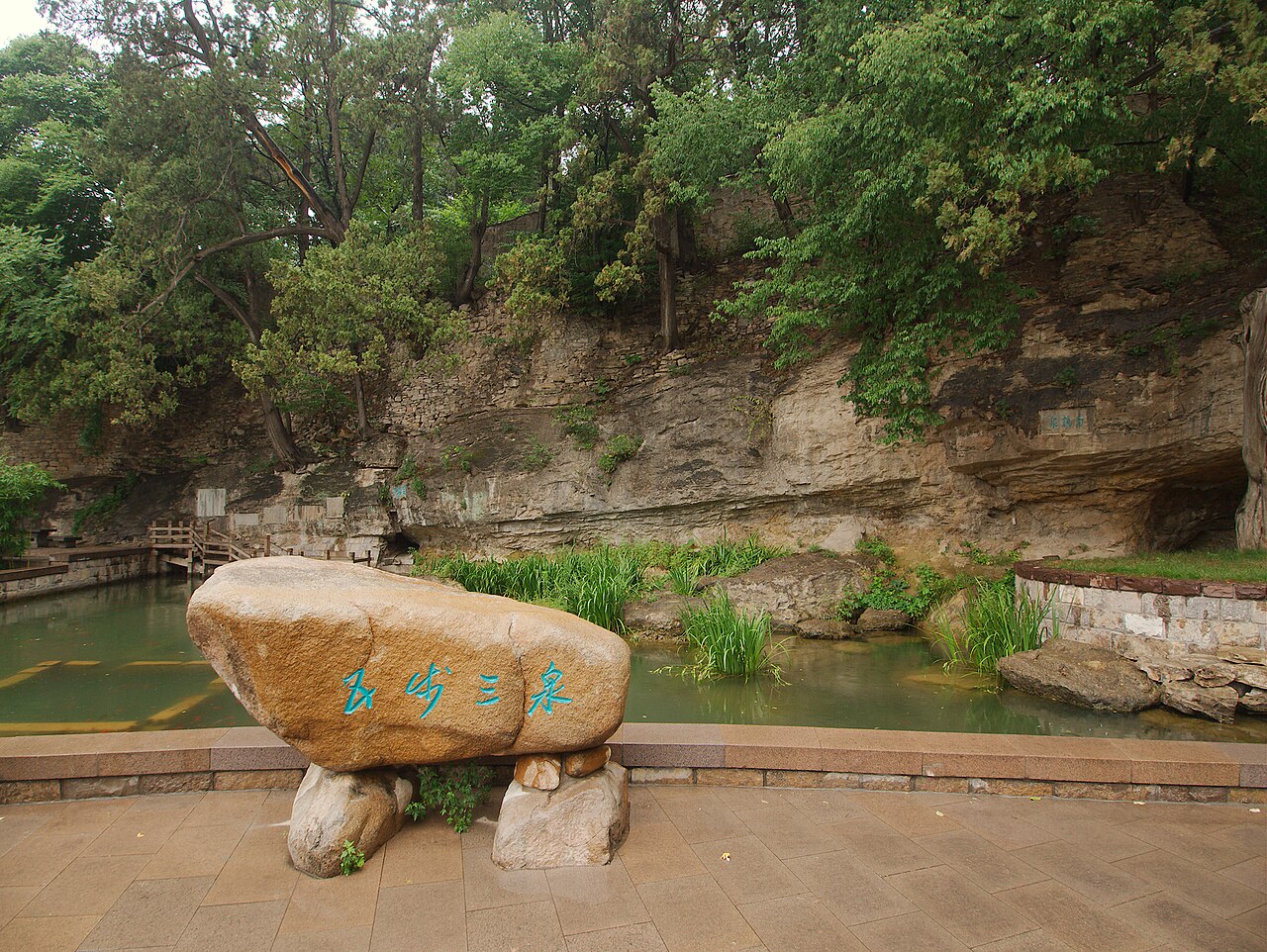 Lushan
Jiangxi · 4 tours
Lushan is a 1,474 m cloud-wrapped mountain in northern Jiangxi whose cool 22°C summer and 90-odd peaks of waterfalls made it China's original hill sta
Lushan
Jiangxi · 4 tours
Lushan is a 1,474 m cloud-wrapped mountain in northern Jiangxi whose cool 22°C summer and 90-odd peaks of waterfalls made it China's original hill sta
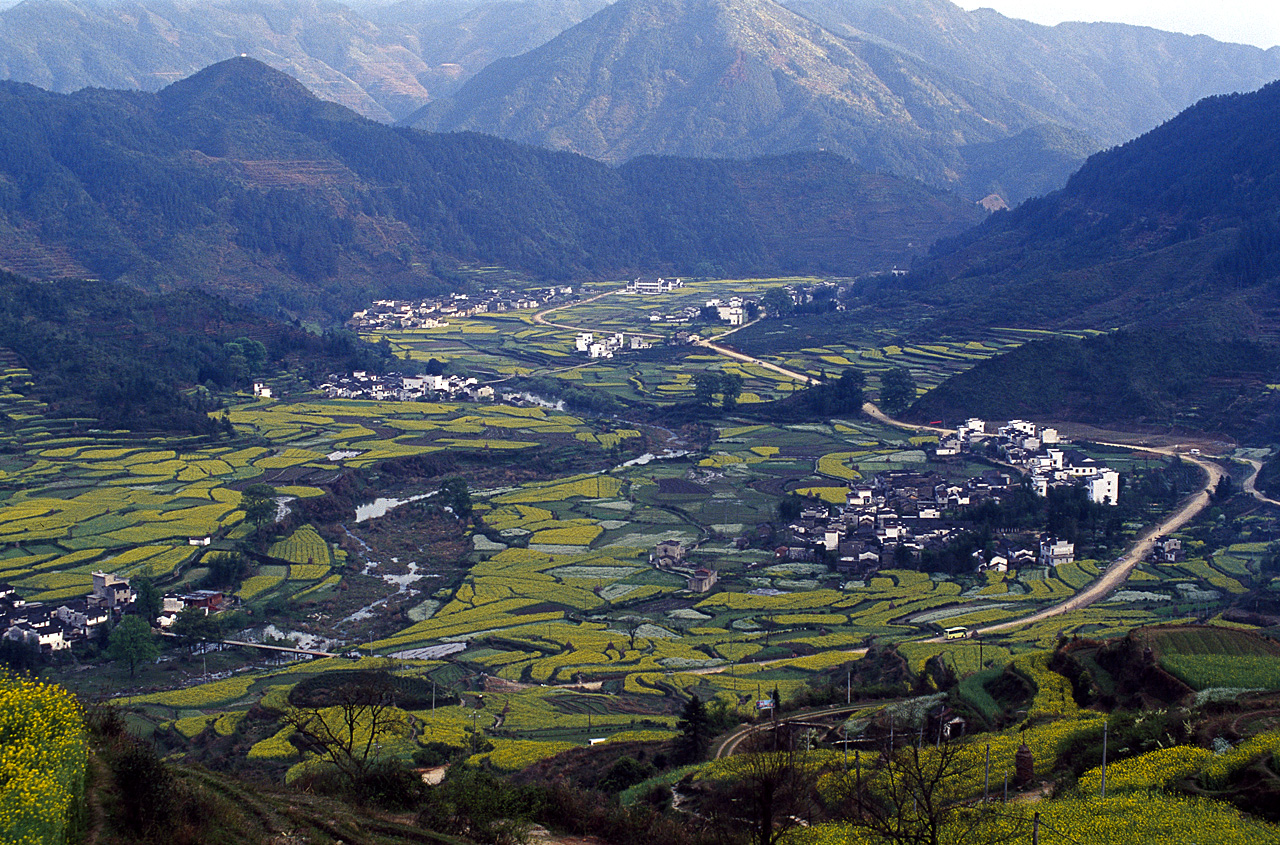 Wuyuan
Jiangxi · 4 tours
Wuyuan is a county of about 360,000 people in northeast Jiangxi, on the Anhui and Zhejiang borders, that China calls its 'most beautiful countryside'
Wuyuan
Jiangxi · 4 tours
Wuyuan is a county of about 360,000 people in northeast Jiangxi, on the Anhui and Zhejiang borders, that China calls its 'most beautiful countryside'
Two days at minimum, with one night on the mountain for the sunrise — anything less and you miss the single best thing there. Three days is comfortable and lets you walk the West Sea Grand Canyon and add a Huizhou village such as Hongcun or Xidi below. A day trip is possible but only with cable cars throughout.
Yes, and it is spectacular. From December to February the pines are coated in rime and snow, the ticket drops to ¥150 and the crowds thin right out. The trade-off is that some peaks — Tiandu and Lotus among them — close for safety, and the summit can hit −20°C, so bring serious cold-weather gear.
Most people go up the back range from Yungu Temple, which is gentler and quicker by cable car, and come down the front range past the Greeting Pine and Jade Screen Pavilion, which is grander. You can do it in reverse. Either way, plan your cable-car and shuttle connections around a night on the summit.
It is the most demanding walk on the mountain — a long descent and re-ascent through a sheer gorge, four hours round trip with no shops and no easy exit once you are in. It is also the quietest and wildest part of Huangshan. Take water and snacks, keep your centre of gravity low on the cliff stairs, and set off before noon.
Yes, absolutely, for the summit hotels — there are only a handful and they sell out weeks ahead in peak season, when people even sleep on the floor. Book through a hotel or travel agent well ahead, and note that some summit hotels close on rotation in winter, so call to confirm. Staying in Tangkou at the foot is the cheaper alternative.
Huizhou cooking — one of China's eight great cuisines — heavy on braising and steaming, strong in colour and flavour. Try the fermented 'stinky' mandarin fish, tofu with a tiger-skin crust, Huangshan 'double stone' (stone ear fungus with mountain frog), and Tunxi drunken crab. Eat in Tunxi's Old Street or Tangkou, where it is far cheaper and better than on the summit.
Free itinerary design, a revised plan within one working day, and nothing charged until you approve the final version.