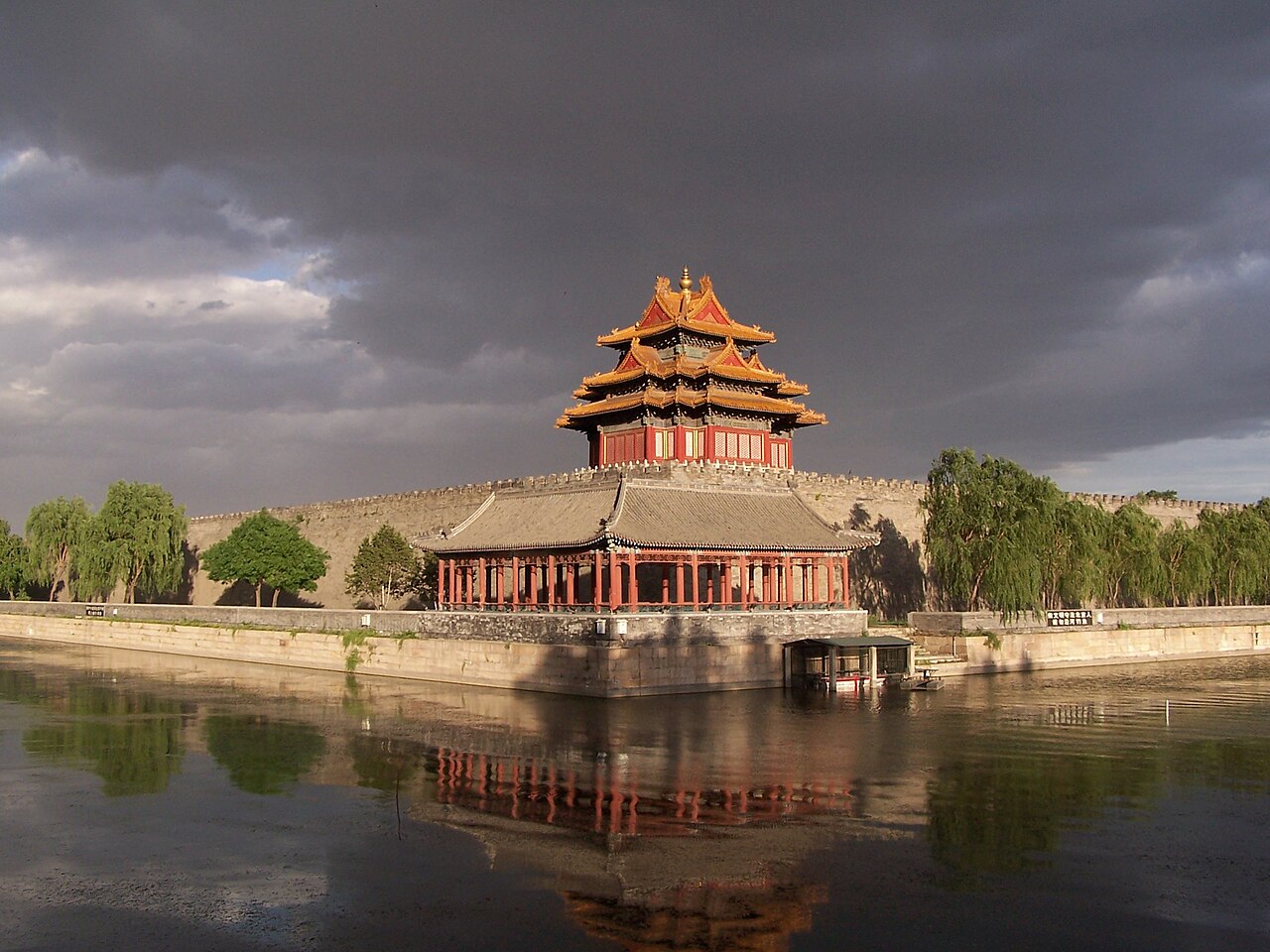
Baili Gorge
The core of Yesanpo: three canyons — Haitang, Shixuan and Xiezi — cut into walls thousands of feet high, with 'One-Line Sky' and natural stone bridges. Tickets ¥90; allow three to four hours.
Yesanpo · Hebei
Yesanpo is Hebei's gorge country at the meeting of the Taihang and Yan mountains, 100 km from Beijing — the Baili Gorge, Fish Valley Cave, Longmen Tian Pass and rafting on the Juma River. Private tours from US$129 a day.
The short version
The place itself
Yesanpo is what happens when two mountain ranges meet just close enough to Beijing to make a weekend of it. The Taihang and the Yan collide here, cutting deep limestone gorges and tearing open caves, and the whole area has been set up as a national scenic spot, with the canyons, the river and the farmhouses all within reach of each other.
The name means 'three slopes', and the area rises in steps from south to north — lower, middle and upper slopes, with the climate changing as you climb. The centrepiece is the Baili Gorge, three parallel canyons cut so narrow that at points the sky is a line; alongside it are the cave-and-spring system of Fish Valley, the cliff carvings of Longmen Tian Pass and the forest reserve of Bai Caopan.
The other half of Yesanpo is the Juma River, which runs through it for some 35 km. In summer it is all rafts and speedboats and horses along the bank; in the farmhouses there is roast lamb, wild vegetables and cornbread. It is a place to move — hike up, raft down, eat outside — rather than to sit still.
Pins are plotted from real latitude and longitude on a 5° graticule. This is a schematic orientation diagram, not a political map — no boundaries are drawn.
The core of Yesanpo: three canyons — Haitang, Shixuan and Xiezi — cut into walls thousands of feet high, with 'One-Line Sky' and natural stone bridges. Tickets ¥90; allow three to four hours.
A 1,800 m cave system of five stacked levels with stone flowers, cave pearls and a spring that is said to release fish around the Grain Rain solar term. Tickets ¥65; the cave stays at 11–13°C inside.
A historic frontier pass with the 'Heavenly Gate of Ten Thousand Fathoms' cliff inscriptions, a Ming fort and 30-odd carved inscriptions — the largest such group in North China.
The forest reserve above the plateau, its main peak at 1,983 m, famous for 'May ice' when the sub-peaks still hold glaciers while the valleys flower. Tickets ¥60, with cable cars to the ridge.
The classic Yesanpo summer activity — 3.5 km of rapids on the Langya stretch, plus bamboo rafts and speedboats on quieter water. Gate price ¥80; buy online for far less.
'Impression Yesanpo', a large-scale song-and-dance pageant staged nightly in a 3,600-seat theatre, and the riverside bonfires at the farmhouses afterwards.
The easiest rail route from Beijing is the Beijing–Yuanping (京原) line to Yesanpo station, a slow but direct tourist service that runs April to October. From the station, the farmhouses at Gougezhuang and the gorge entrances are a short local drive away, and a forest of drivers meets the trains.
By road Yesanpo is about 2 hours from Beijing on the G4 and G95 motorways via Zhangfang and Shidu, which is how most domestic visitors arrive. Once inside, the four scenic areas are 10–40 km apart with shuttle buses and a fleet of private cars and even donkey carts — agree the price before you set off.
| Month | Weather | Crowds | Verdict |
|---|---|---|---|
| January | 4°C / -4°C · dry, cold | Quiet | Avoid |
| February | 6°C / -1°C · dry, cold | Very busy | Avoid |
| March | 14°C / 5°C · dry, cold | Moderate | Good |
| April | 21°C / 12°C · clear and mild | Moderate | Best |
| May | 27°C / 18°C · clear and mild | Busy | Best |
| June | 31°C / 23°C · hot, humid | Moderate | OK |
| July | 32°C / 25°C · hot, humid | Busy | OK |
| August | 30°C / 24°C · hot, humid | Busy | OK |
| September | 26°C / 19°C · clear and mild | Moderate | Best |
| October | 20°C / 12°C · clear and mild | Very busy | Best |
| November | 12°C / 4°C · dry, cold | Quiet | Good |
| December | 5°C / -2°C · dry, cold | Quiet | Good |
Two days is the right length: the Baili Gorge and Fish Valley Cave on day one, the Juma River and a raft or a horse ride on day two, with the night show in between. Three days adds Longmen Tian Pass and Bai Caopan, which are further out and better done without a clock. A day trip from Beijing covers only the gorge and feels rushed.
Plan these days properlyThe classic route is the Beijing–Yuanping (京原) railway to Yesanpo station, a tourist service that runs April to October. By road it is about 2 hours from Beijing via Zhangfang and Shidu. Yesanpo is also about 2 hours from Beijing Daxing Airport (PKX).
The Baili Gorge is the must-see and contains the most concentrated scenery. If you want the quietest and most 'wild' walk, pick Xiezi Canyon on its own; if you are fit and want the full circuit, take the Haitang-to-Shixuan loop over the 2,800-step stairway.
It is at its best in summer — the gorge floor runs about 10°C cooler than Beijing and the river is warm enough for rafting by July. Nights drop to around 18°C, so bring a layer. July and August are the busiest months, so book farmhouses ahead.
Entrance to the four main areas is ¥40–90 each: Baili Gorge ¥90, Fish Valley Cave ¥65, Bai Caopan ¥60, Longmen Tian Pass ¥40. Rafting is ¥80 at the gate but much cheaper online, and the night show runs from ¥90 to ¥280 depending on the seat.
Roast lamb is the signature — a whole small lamb, chosen live and cooked over about two hours. Alongside it, the farmhouse tables serve wild river greens, water celery, fried Sichuan-pepper shoots, fried wild scorpion, the local 'rice prince' dish and grilled rainbow trout.
Free itinerary design, a revised plan within one working day, and nothing charged until you approve the final version.