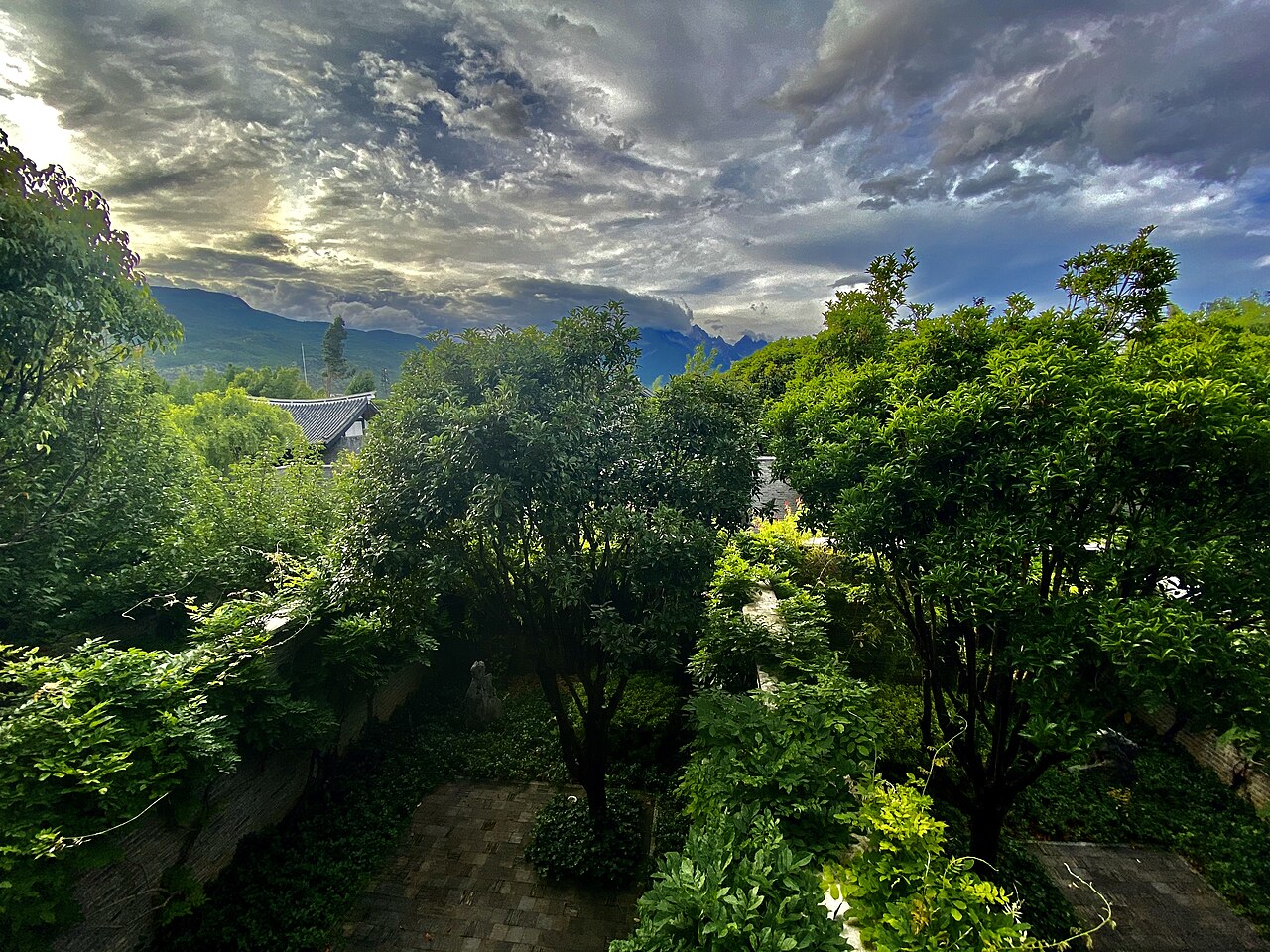
Lijiang is the most famous old town in China after Beijing's hutongs and Shanghai's Bund, and it earns the fame: a UNESCO World Heritage site of 800 years, laid out not in a grid but around three canals of snowmelt that run off Jade Dragon Snow Mountain and thread every lane. It is a Naxi town, and the Naxi — with their pictographic Dongba script and their matriarchal Mosuo cousins — give it a culture you will not find in Beijing.
The mountain is the reason the town exists. Jade Dragon Snow Mountain rises to 5,596 m a short drive north, and on clear mornings the old town's tiled roofs and the canals are lit by the sun coming over its shoulder. A cable car lifts you to a glacier park at 4,506 m; the Naxi consider the peak sacred and call the afterlife inside it 'the third kingdom of jade dragon'.
For all its looks, Lijiang is not a museum. It is a living tourist town, busy with bars and shops along the canal, and the first-timer's experience can be a crowded one. The trick is to know where to go: the old town early and late, the snow mountain on a clear day, the quieter north — and then Shuhe next door, or the villages of Baisha and Yuhu — to remember what drew people here in the first place.
Beyond the town, Lijiang is the hub for north-west Yunnan: Tiger Leaping Gorge, the first bend of the Yangtze, the monastery country towards Shangri-La, and the lakes of Lugu and Lashi. Come for the old town; stay for how much of the province folds out from it.