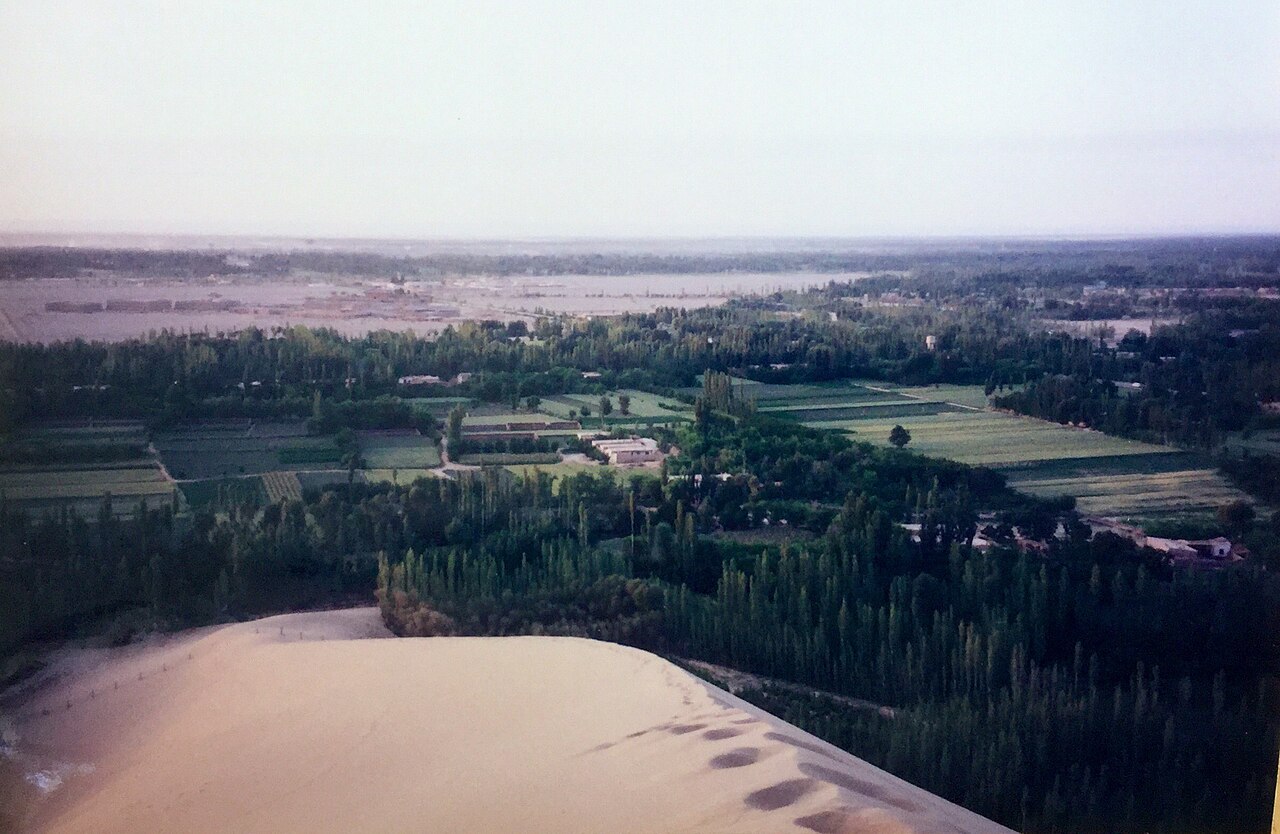
Xinjiang is not a place you pass through. It is larger than France, Germany and Spain combined, and until you have driven a full day between two of its towns you have not understood the scale of it. The Taklamakan — the second-largest sand desert on Earth — fills the middle, and the Tian Shan mountains cut across it in a line of 5,000 m peaks.
This was the middle section of the Silk Road. Kashgar's old town was the last major trading city before the Karakoram passes, and the Id Kah Mosque, the Sunday livestock market and the craft workshops still run on that history rather than on a re-enactment of it. Urumqi, by contrast, is a modern city of three million built on oil, coal and cotton, and it is where nearly every trip starts.
Logistically Xinjiang behaves like a small country. Distances are measured in hundreds of kilometres, the police checkpoints are routine and often slow, and a day that looks short on the map regularly runs long. That is the argument for going with a driver-guide who knows which roads are open and where the good Uyghur kitchens are — not because the region is difficult, but because it is big.