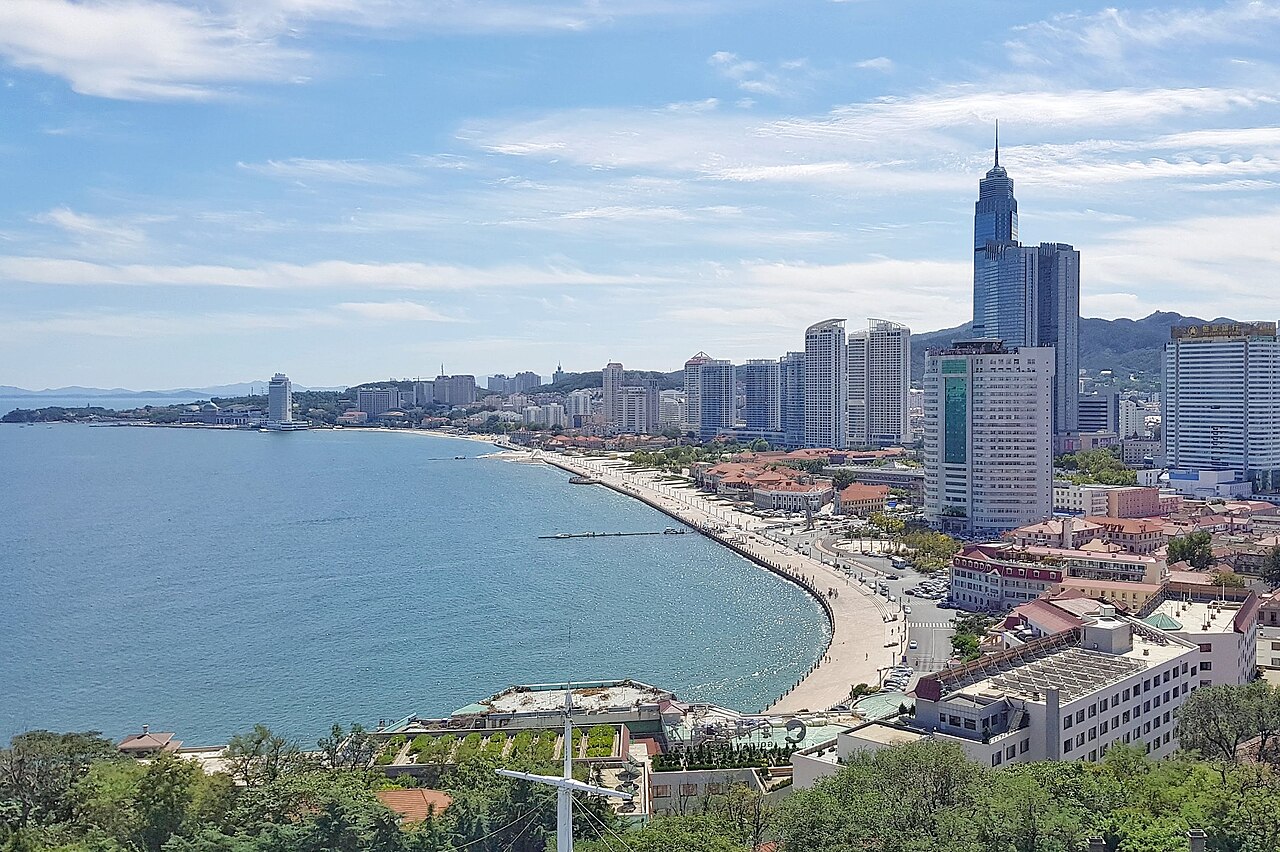
Weihai sits at the far eastern tip of the Shandong peninsula, sea on three sides and Korea closer than from anywhere else in China. It is small by Chinese standards — you can drive around it in an afternoon — and it is clean to a degree that startles people arriving from elsewhere: new housing here must be at least 50% green by law, and the city took a UN Habitat award in 2003.
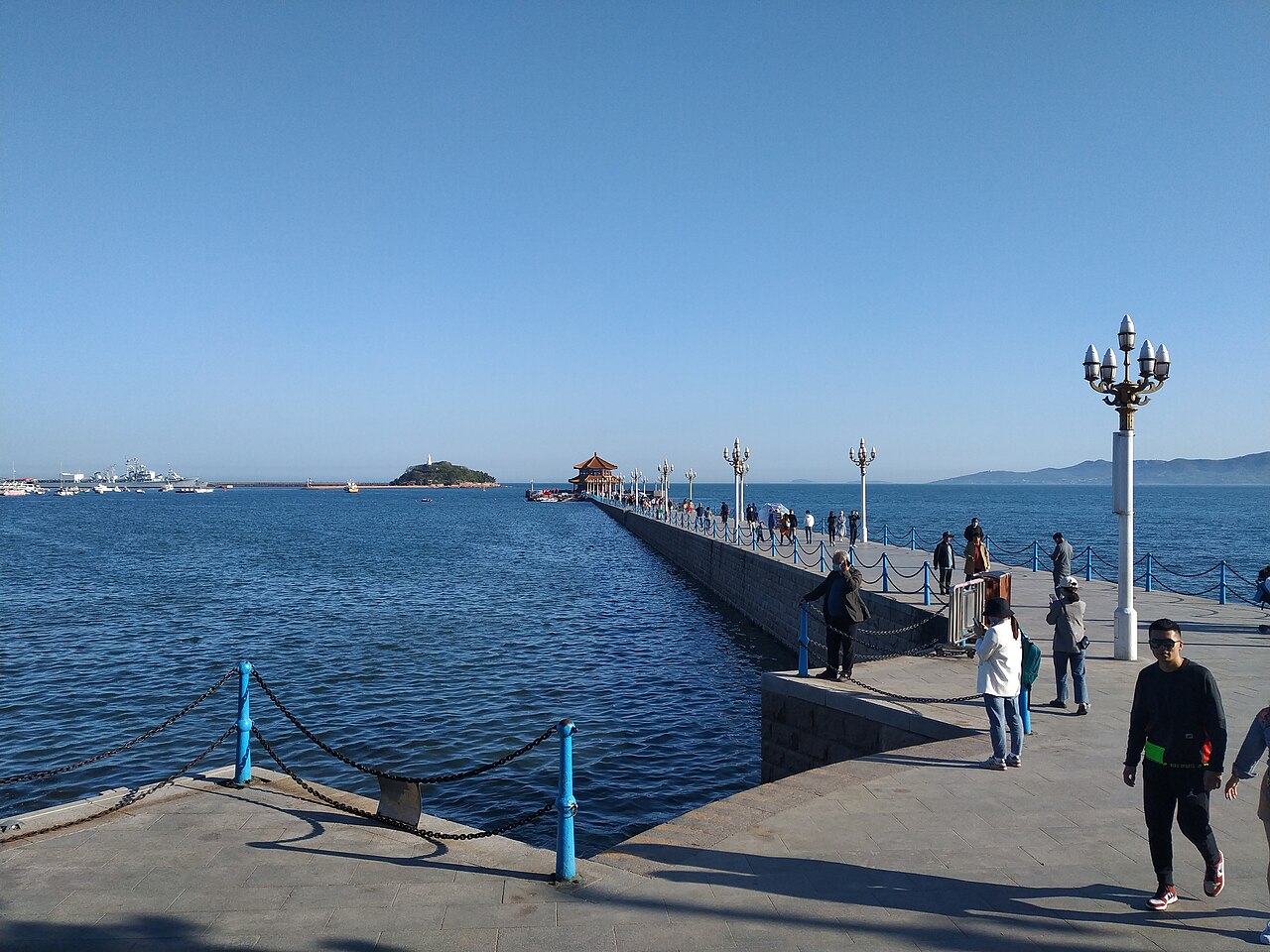
Its older name is Weihaiwei, the guard that awes the sea, given when the Ming planted a garrison against Japanese pirates in the 14th century. The first unit of the Qing dynasty's Beiyang Fleet was raised here, and Liugong Island in the harbour became its base and then the main theatre of the 1894 Sino-Japanese naval war; Britain held the town on a lease from 1898. That is the serious half of the place.
The other half is a beach town. The international bathing beach west of the centre is free, open all hours and shelving enough for children; the coastal parks run one into another along a flat bike path; and the seafood is cheaper and plainer than in Qingdao. Come in July or August to swim, in May or September for the light and the empty sand, and in January if you want the swans.
Above all, Weihai is easy. Buses are ¥1, a taxi starts at ¥5, a bike costs ¥30 a day, and almost nothing is more than half an hour from anything else. There is no great museum complex here and no UNESCO old town. There is a city people move to.