Yellow Crane Tower
The rebuilt five-storey tower on Snake Hill in Wuchang, and the single image the city is known by. Climb it for the sweep of the Yangtze, then read the Tang poem that made it famous — a monument to a poet who never came back.
Wuhan · Hubei
Wuhan is the three-town Hubei capital where the Yangtze meets the Han — gateway to Yellow Crane Tower, East Lake and the Three Gorges. Private tours from US$129 a day.
The short version
The place itself
Wuhan is not one city but three, and locals will say so within a minute of meeting you. Hankou, Wuchang and Hanyang sit on the three banks where the Yangtze and its largest tributary, the Han, meet — a junction so central to China that the city earned the old name 'thoroughfare to nine provinces', the busiest crossroads on the old imperial map.
The scale is the thing. Wuhan is the biggest city in central China and behaves like it: a 13.7-million-strong metropolis of river bridges, a lake six times the area of Hangzhou's West Lake sitting inside the city limits, and a university campus regularly named among the most beautiful in the country. The Yellow Crane Tower on the Wuchang bluff is the postcard; the ferry chugging across the Yangtze for a couple of yuan is the memory you keep.
Come for the history and stay for the food. Wuhan calls itself the capital of Chinese breakfast — locals call eating in the morning guo zao, and the whole city queues before dawn for sesame-slicked hot-dry noodles. It is a blunt, generous, quick-tempered city that has no time for delicacy, and that is precisely its charm.
Pins are plotted from real latitude and longitude on a 5° graticule. This is a schematic orientation diagram, not a political map — no boundaries are drawn.
The rebuilt five-storey tower on Snake Hill in Wuchang, and the single image the city is known by. Climb it for the sweep of the Yangtze, then read the Tang poem that made it famous — a monument to a poet who never came back.
The biggest lake inside any Chinese city — roughly six times the size of Hangzhou's West Lake — with six scenic zones and a cherry-garden that ranks among the world's three great cherry collections.
The 1957 Yangtze Bridge, the first ever built across the great river, carries road on top and trains below. Ride the public ferry across instead — it is only ¥1.5 and the crossing, not the sight, is what you remember.
One of China's prettiest campuses, laid across Luojiashan hill above East Lake, in a mix of Chinese roofs and Western bodies. Free all year except during the March cherry-blossom festival.
Home to the Chime Bells of Marquis Yi — 2,400-year-old bronze bells still played today — and the Sword of Goujian, one of the great archaeological finds of the 20th century.
The old foreign-concession waterfront along the Yangtze, where thirteen nations built consulates, banks and trading houses. The Jianghan Road and the museum-in-the-streets of Lihuangpi Road are the places to walk it.
Wuhan Tianhe International Airport (WUH) sits 26 km north of the centre — not on the map edge, but close enough that metro line 2 reaches downtown in about 40 minutes. Airport buses run to Hankou, Wuchang and Wuhan Station from about 9am until the last flight; a taxi to the riverside is roughly ¥100. As one of China's four great rail hubs, Wuhan is also the easiest city in the region to reach by train: high-speed services link Hankou, Wuchang and Wuhan stations to Beijing, Shanghai, Guangzhou and almost everywhere between.
Inside the city, the metro, buses and the riverside ferry cover everything cheaply; taxis start at ¥6–8 and are metered. The one thing that will catch you out is the traffic — roadworks and congestion are routine, so allow extra time to cross the rivers and never time a train to a tight taxi ride.
| Month | Weather | Crowds | Verdict |
|---|---|---|---|
| January | 12°C / 4°C · cool, damp | Quiet | Good |
| February | 14°C / 6°C · cool, damp | Very busy | Good |
| March | 18°C / 10°C · clear and mild | Moderate | Best |
| April | 24°C / 16°C · clear and mild | Moderate | Best |
| May | 28°C / 21°C · cool, damp | Busy | OK |
| June | 32°C / 25°C · very hot, humid | Moderate | OK |
| July | 35°C / 28°C · cool, damp | Busy | Avoid |
| August | 34°C / 27°C · cool, damp | Busy | Avoid |
| September | 29°C / 23°C · very hot, humid | Moderate | OK |
| October | 24°C / 17°C · clear and mild | Very busy | Best |
| November | 18°C / 11°C · clear and mild | Quiet | Best |
| December | 13°C / 6°C · cool, damp | Quiet | Good |
Three days is the honest minimum and lets you do the three towns properly: one day in Wuchang for the Yellow Crane Tower, East Lake and Wuhan University; one in Hanyang for Guiyuan Temple, Guqin Terrace and Qingchuan Pavilion; one in Hankou for the colonial Bund, Jianghan Road and the markets. A fourth day buys you a side trip — the Wudang Mountains by high-speed rail, or a stretch of a Yangtze cruise toward the Three Gorges.
Plan these days properly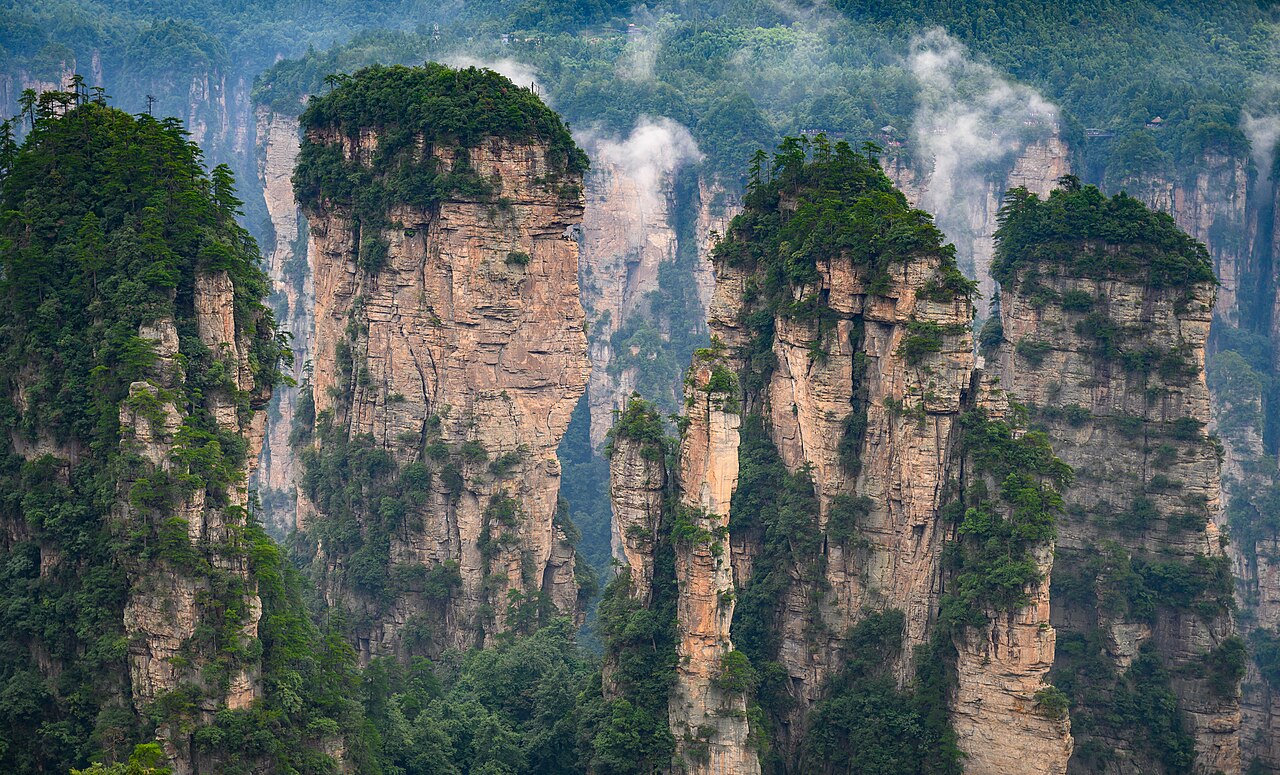 Zhangjiajie
Hunan · 1 tours
Zhangjiajie is in Hunan Province and looks like nowhere else in China: more than 3,000 quartzite sandstone pillars, some over 300 m tall, standing in
Zhangjiajie
Hunan · 1 tours
Zhangjiajie is in Hunan Province and looks like nowhere else in China: more than 3,000 quartzite sandstone pillars, some over 300 m tall, standing in
 Changsha
Hunan · 4 tours
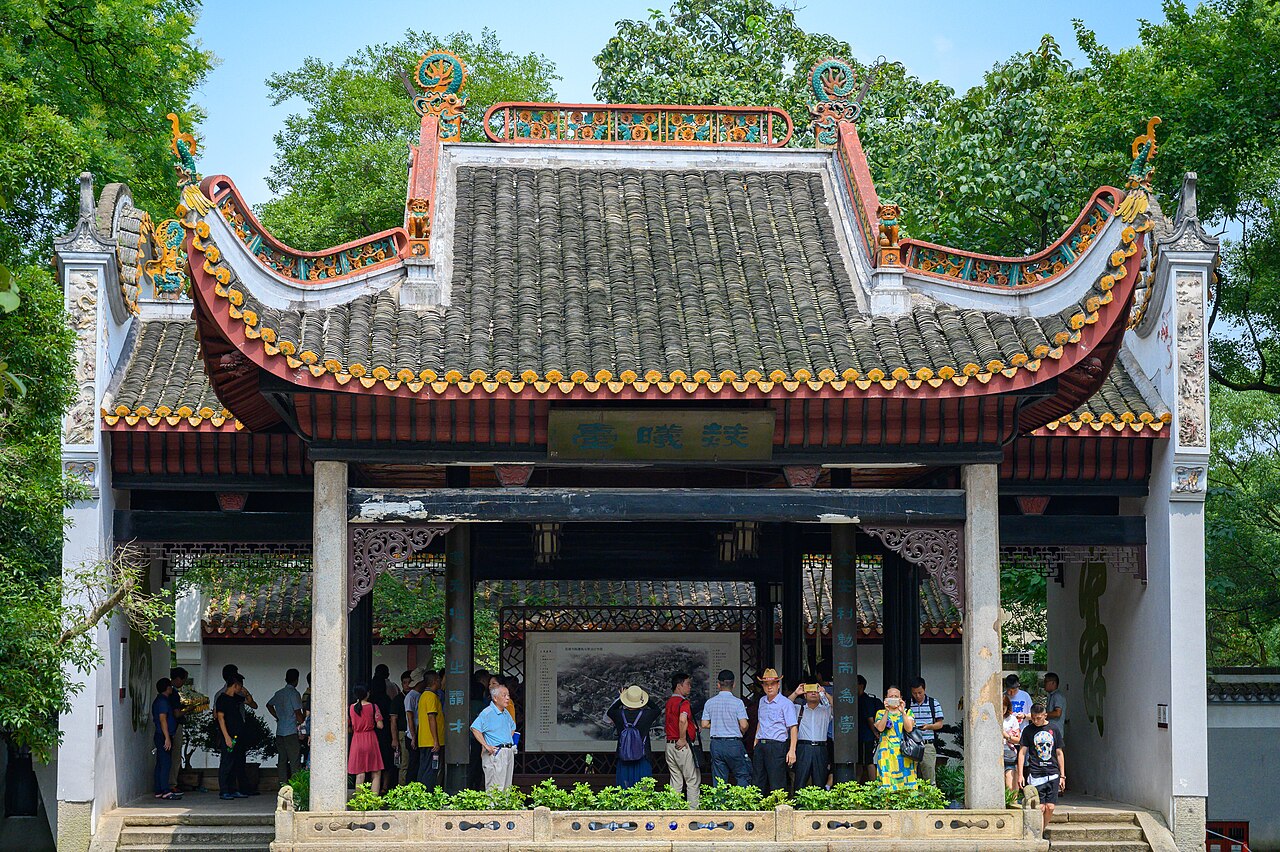
Changsha is Hunan's capital of 10.5 million, a 3,000-year-old city that eats, drinks and stays up later than almost anywhere in China — give it 2 days
Changsha
Hunan · 4 tours
Changsha is Hunan's capital of 10.5 million, a 3,000-year-old city that eats, drinks and stays up later than almost anywhere in China — give it 2 days
 Fenghuang Ancient Town
Hunan · 4 tours
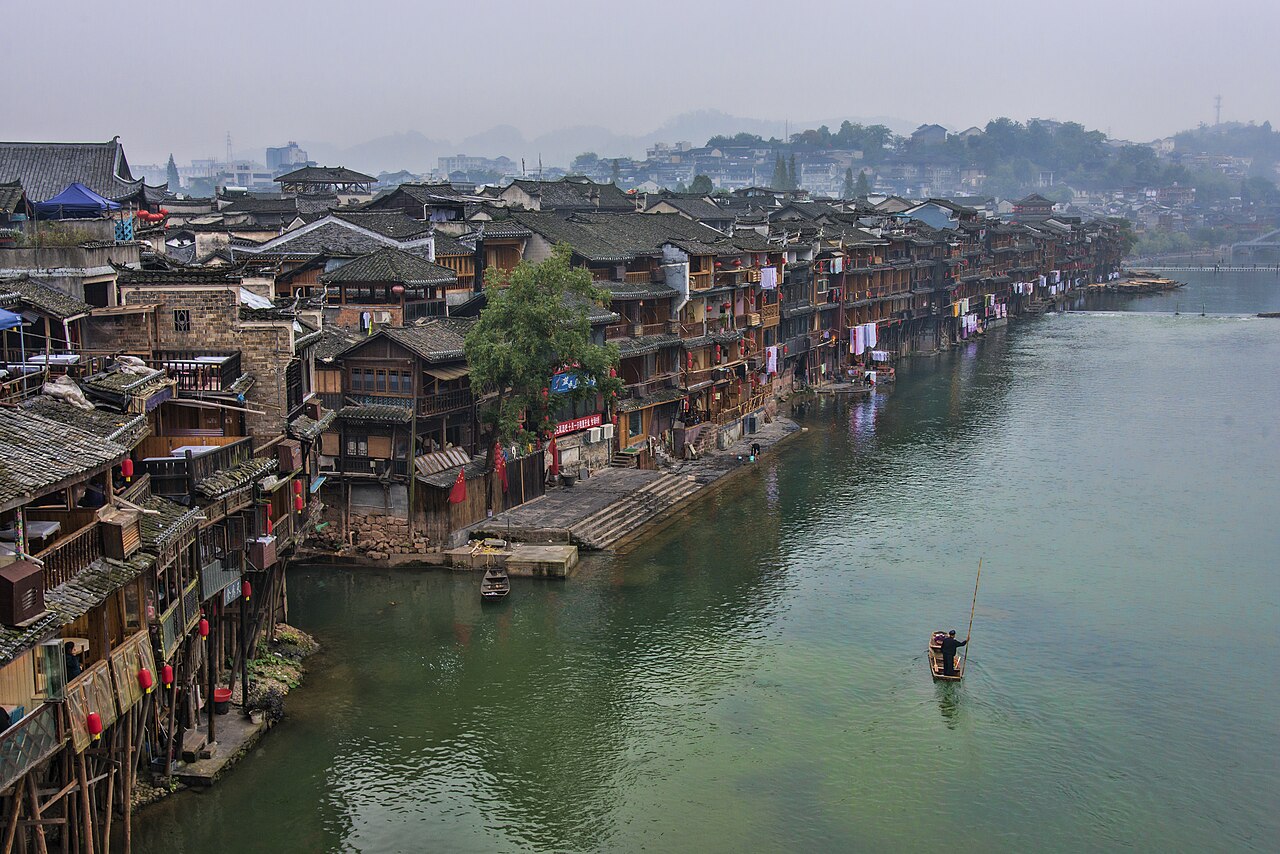
Fenghuang Ancient Town is the stilt-house river town of Shen Congwen's novel 'Border Town' and one of the most photographed places in China — give it
Fenghuang Ancient Town
Hunan · 4 tours
Fenghuang Ancient Town is the stilt-house river town of Shen Congwen's novel 'Border Town' and one of the most photographed places in China — give it
Three days covers the city well, one town per day: Wuchang for the Yellow Crane Tower, East Lake and Wuhan University; Hanyang for Guiyuan Temple and Guqin Terrace; Hankou for the colonial Bund and the food streets. Add a fourth day for the Wudang Mountains or the start of a Three Gorges cruise.
Late March to May and September to November. Wuhan is one of China's 'furnace' cities — July and August routinely top 40°C with punishing humidity, and winter is damp and raw. Spring brings the cherry blossom and the plum fair; autumn is warm and dry, with the city's big riverside food halls in full swing.
Worth a proper stop. Because it is a transport hub, Wuhan gets skipped as a change, but the old concession architecture of Hankou, the East Lake, the Yellow Crane Tower and the best street breakfast in China are a city in their own right. Two full days is the minimum before any onward trip.
Start with hot-dry noodles (reganmian) — sesame paste, scallion and pickles over springy noodles, the city's breakfast staple. Then doupi (sticky-rice and egg pancakes), steamed Wuchang fish, pork-rib soup simmered in clay pots, and Zhou Hei Ya braised duck neck. The old lane of Hubu Alley is the tourist classic; locals eat at markets across the city.
Take the ferry. The public river ferry between the Hankou and Wuchang banks costs about ¥1.5 (¥5 after 8pm) and runs every 20 minutes — it is a fraction of a taxi and the crossing itself is the sight. The Yangtze Bridge is free to walk and carries a lift up to road level; walking it end to end takes under an hour.
Yes, and both are worth it. The Wudang Mountains, the birthplace of Taoist martial arts, are two hours away by high-speed rail and make an easy overnight. Three Gorges cruises down the Yangtze from nearby Yichang are a classic four-day extension; a private Wuhan tour can fold either into the itinerary.
Free itinerary design, a revised plan within one working day, and nothing charged until you approve the final version.