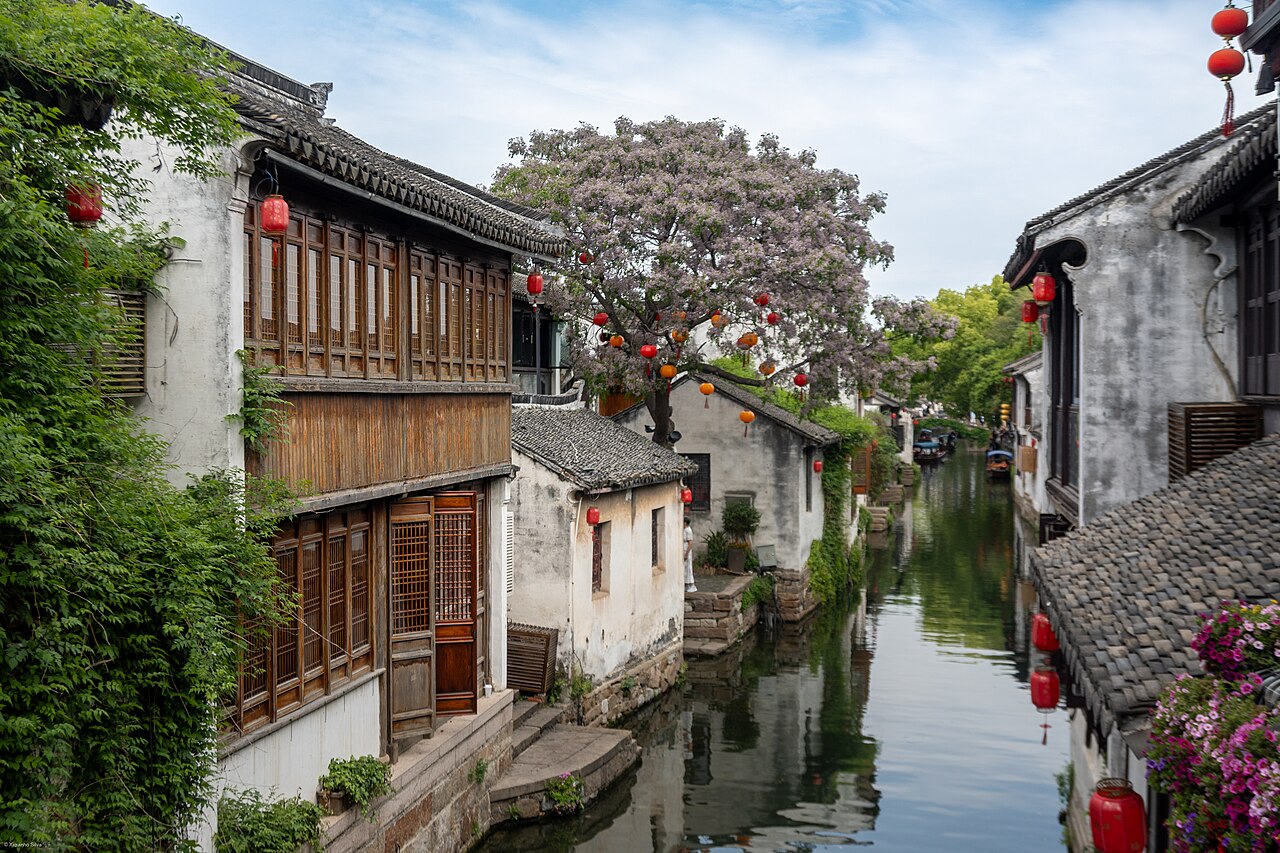
Suzhou was built on water and never really got off it. In the 12th century the city reached roughly the size it is now: a rectangle of wall inside a moat, six gates, six canals running north to south and fourteen east to west. People still live above those canals, and the old quarter still reads as the poem Du Xunhe wrote about it — households all pillowed on the river, little ground taken by the old palaces, many bridges over many lanes.
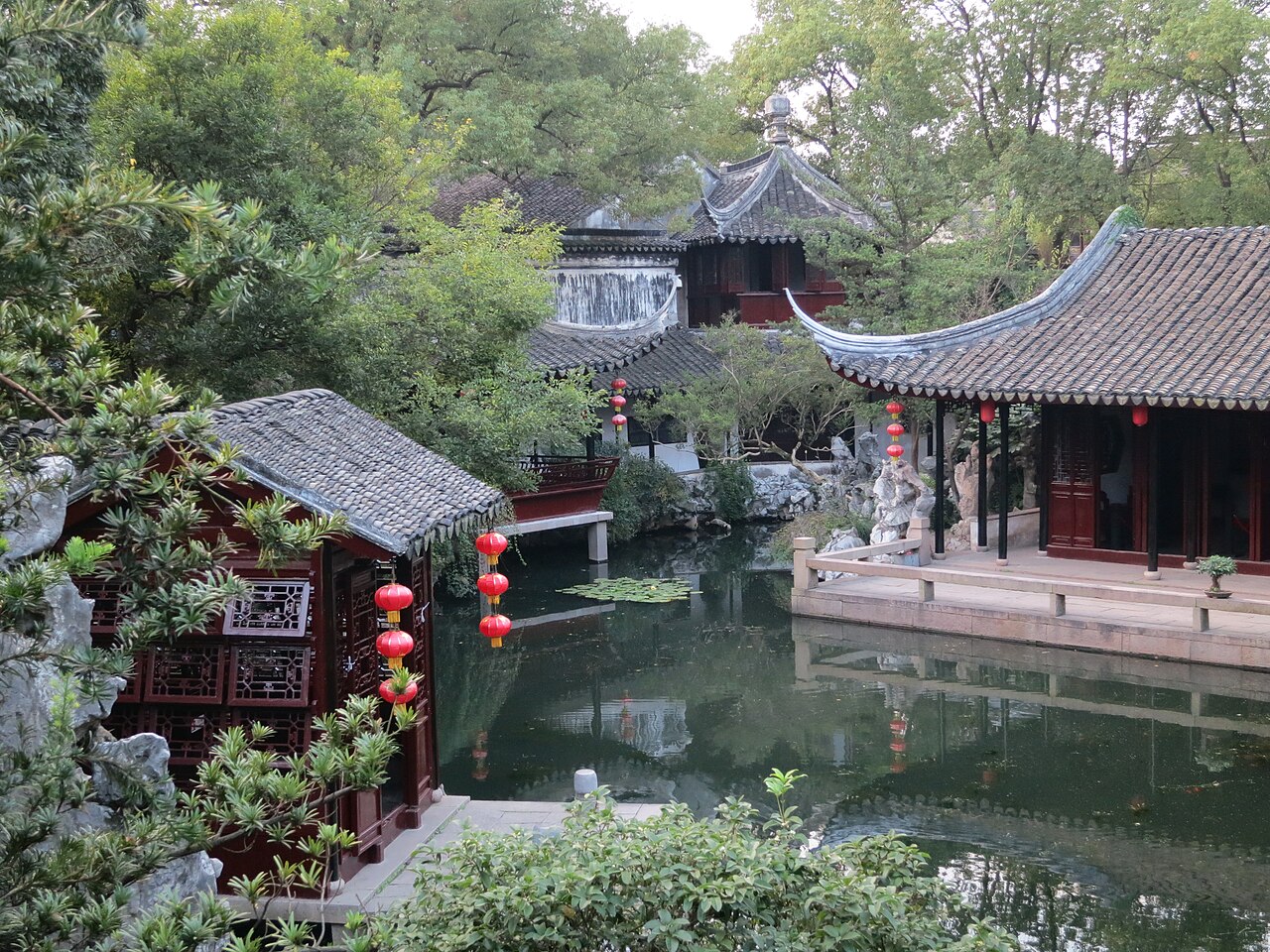
What the city is famous for is the gardens. By the 16th century there were more than a hundred of them inside the walls, built by officials, scholars and merchants who wanted a mountain range they could walk through before breakfast. Around sixty survive. The point of them is not size — the Master of the Nets is barely eight mu — but compression: rock, water, pavilion and planting arranged so that every turn produces a new picture.
The rest of Suzhou is a working city of twelve million with a very old core and a very new skyline. The industrial park east of the old town has Jinji Lake, the largest urban lake in China, and at night the Jiangnan-style buildings along the shore reflect off it in a way that surprises people who came for canals. Wood-block prints, Su embroidery, Song brocade and Biluochun tea are still made here, and the food is sweet, light and seasonal to an almost pedantic degree.
It is an easy place to travel. The old city is small, the tourist bus lines 1 to 5 cover every garden for ¥2 a ride, and Shanghai is half an hour away. Use it as a base for the water towns — Zhouzhuang, Tongli and Luzhi all sit within an hour and a half by coach.