Shangri-La · Yunnan

Shangri-La Tours & Travel Packages 2026 | Diqing, Songzanlin Monastery | JoyoTour

Plan a private Shangri-La tour at 3,300 m in Diqing, Yunnan: Songzanlin Monastery, the Dukezong old town, Pudacuo National Park and the road west to Meili Snow Mountain.

The short version

Shangri-La sits at about 3,300 m in Diqing, the only Tibetan autonomous prefecture in Yunnan, and it is the high plateau that the word itself conjures — a Tibetan town of monasteries, grassland and cold thin air. Three days covers Songzanlin Monastery, the Dukezong old town, Pudacuo National Park and the Napa Lake grassland; four or five adds the drive west towards Meili Snow Mountain. Fly into Diqing (DIG) or come 4 hours by road from Lijiang.

YunnanProvince
May–June for wildflowers; September–November for the clearest skiesBest months
DIGAirport
Connect via hubDaily intl. flights
Prefer it arranged for you? A Tibetan town at 3,300 m in Yunnan's Diqing prefecture — monasteries, grassland, prayer wheels and cold thin air. Shangri-La travel guide →

The place itself

What Shangri-La is actually like

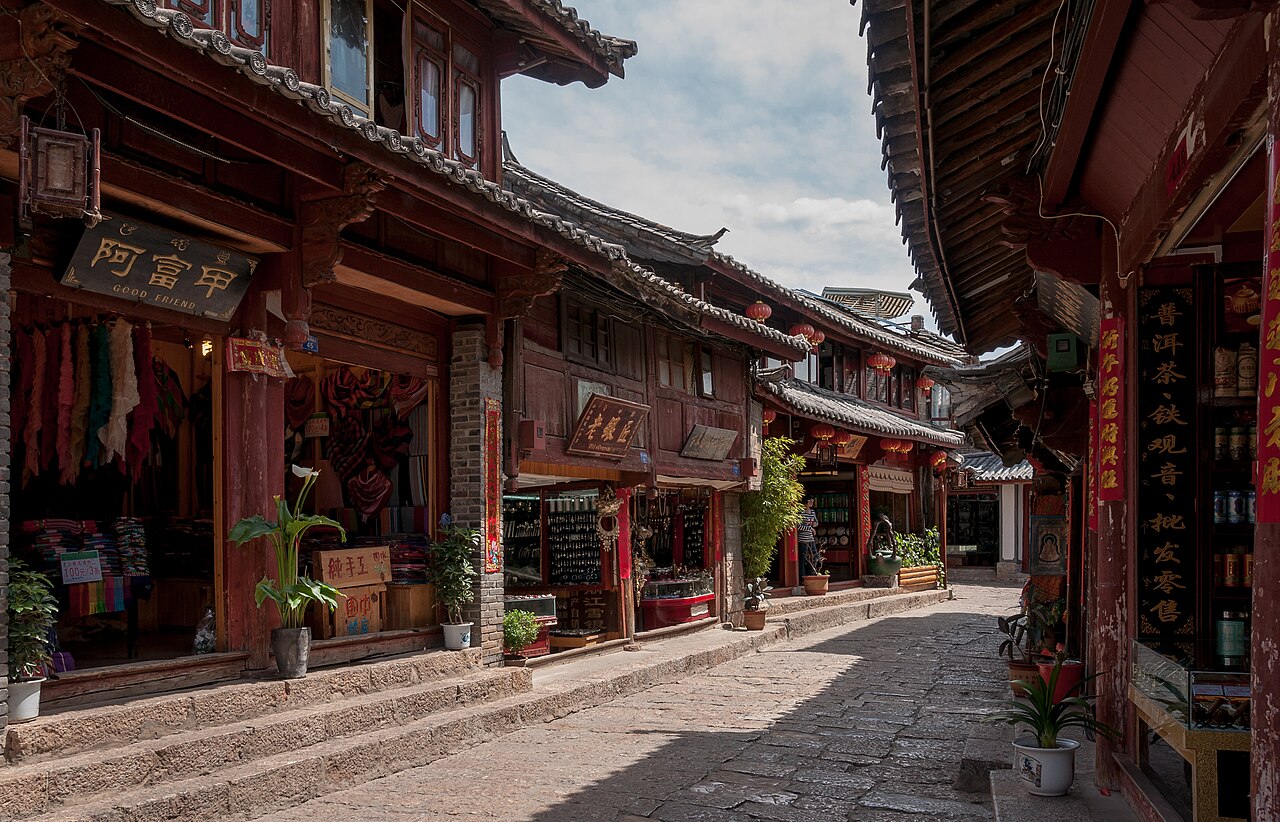
Shangri-La is a name from a 1933 novel — James Hilton's Lost Horizon — that a Yunnan town took for itself in 2001, and for once the marketing has something behind it. At about 3,300 m, this is genuine Tibetan highland: white-walled houses with painted eaves, yak grazing the grassland, a great monastery across the valley, and air so clean and thin that the light looks different. The Chinese name, Xianggelila, is the local Tibetan for 'the sun and moon in the heart'.

The town itself, Dukezong, is a Tibetan old town on the old tea-horse road, its lanes climbing around a hillside crowned by a 21 m gilded prayer wheel — the largest of its kind, and heavy enough that visitors are invited to help haul it round. Parts of the old town burned in a fire in January 2014 and were rebuilt; the atmosphere survives, and the surrounding streets in the new town are where daily life now happens.

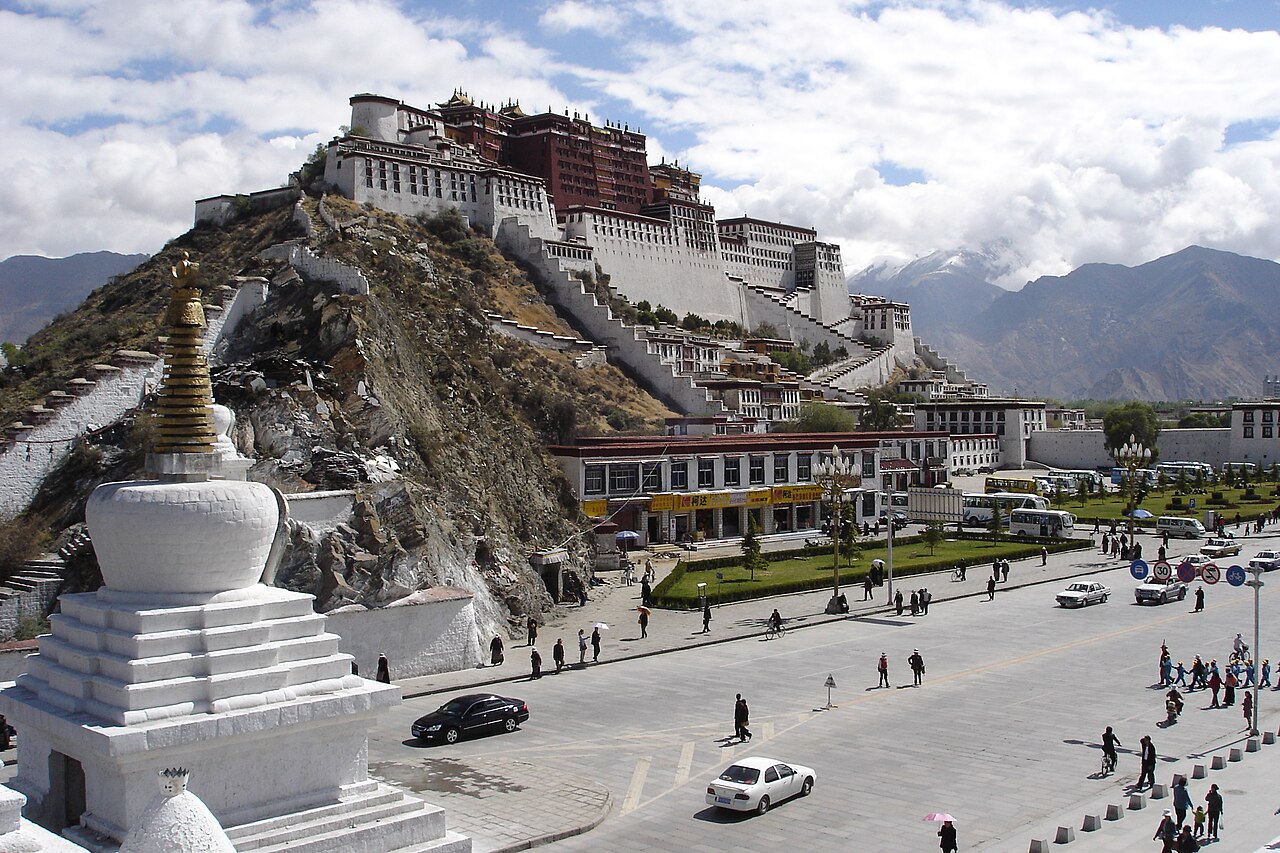
Across the valley stands Songzanlin, the 'little Potala', the largest Tibetan Buddhist monastery in Yunnan, founded in 1679 and home to hundreds of monks. Beyond it lies the real landscape of the plateau: Pudacuo National Park with its two lakes and old-growth forest, and the Napa Lake grassland, which floods in summer and dries to pasture in winter, with Shika Snow Mountain rising behind it.

Deeper into Diqing, the road runs west for four hours to Deqin and the Meili Snow Mountain range, whose main peak, Kawagebo, has never been summited. The sunrise over its peaks — 'golden mountain in sunlight' — is the sacred experience of the region, and the reason many travellers come this far at all.
75°E75°E90°E90°E105°E105°E120°E120°E135°E135°E20°N20°N30°N30°N40°N40°N50°N50°N ChangchunKashgar BeijingBeijingXi'anXi'anShanghaiShanghaiChengduChengduGuilinGuilinHangzhouHangzhouZhangjiajieZhangjiajieTibet · LhasaTibet · LhasaYunnan · KunmingYunnan · KunmingSichuan · ChengduSichuan · ChengduQinghai · XiningQinghai · XiningGansu · LanzhouGansu · LanzhouXinjiang · UrumqiXinjiang · UrumqiInner Mongolia · HohhotInner Mongolia · HohhotGuangzhouGuangzhouShenzhenShenzhenHarbinHarbinDalianDalianShenyangShenyangChangbai MountainChangbai MountainKunmingKunmingDaliDaliShuheShuheLijiangLijiangXiamenXiamenGulangyuGulangyuFuzhouFuzhouLugu LakeLugu LakeXishuangbanna · JinghongXishuangbanna · JinghongShangri-LaShangri-LaNanchangNanchangHefeiHefeiHongcunHongcunWuhanWuhanChangshaChangshaFenghuang Ancient TownFenghuang Ancient TownLushanLushanWuyuanWuyuanMount Heng (Hengshan, Hunan)Mount Heng (Hengshan, Hunan)HuangshanHuangshanWudang MountainWudang MountainLuoyangLuoyangYuntai MountainYuntai MountainRizhaoRizhaoYantaiYantaiLianyungangLianyungangSanqing MountainSanqing MountainTianjinTianjinDatongDatongTaiyuanTaiyuanPingyaoPingyaoWutai MountainWutai MountainHulunbuir · HailarHulunbuir · HailarThe Forbidden CityThe Forbidden CitySanyaSanyaHaikouHaikouBeihaiBeihaiNanningNanningGuangxi · NanningGuangxi · NanningHuizhouHuizhouZhuhaiZhuhaiWuyi MountainWuyi MountainBeidaiheBeidaiheShanhaiguanShanhaiguanBaiyangdianBaiyangdianQinhuangdaoQinhuangdaoYesanpoYesanpoJiuzhaigouJiuzhaigouMount SiguniangMount SiguniangHailuogouHailuogouDaocheng YadingDaocheng YadingShunan Bamboo SeaShunan Bamboo SeaDujiangyanDujiangyanQingcheng MountainQingcheng MountainQingdaoQingdaoMount TaiMount TaiJinanJinanWeihaiWeihaiQufuQufuPenglaiPenglaiChangdaoChangdaoNanjingNanjingSuzhouSuzhouZhouzhuangZhouzhuangTongliTongliWuxiWuxiYangzhouYangzhouZhenjiangZhenjiangChangzhouChangzhouWuzhenWuzhenXitangXitangXixi WetlandXixi WetlandNingboNingboMount PutuoMount PutuoQiandao LakeQiandao LakeShaoxingShaoxingZhoushanZhoushanHengdianHengdianYandang MountainYandang MountainZhejiang · HangzhouZhejiang · HangzhouHong KongHong KongHong Kong Outlying IslandsHong Kong Outlying IslandsHong Kong ShoppingHong Kong ShoppingMacaoMacaoTaipeiTaipeiKaohsiungKaohsiungTaiwan · TaipeiTaiwan · TaipeiUrumqiUrumqiNorth Xinjiang · UrumqiNorth Xinjiang · UrumqiQinghai LakeQinghai LakeMount EmeiMount EmeiLanzhouLanzhouMount HuaMount HuaDunhuangDunhuangGannan · LanzhouGannan · LanzhouSichuan–Tibet Highway (G318) · Chengdu (CTU)Sichuan–Tibet Highway (G318) · Chengdu (CTU)KangdingKangdingLhasaLhasaNyingchiNyingchiNamtsoNamtsoChongqingChongqingQiandongnan · GuiyangQiandongnan · GuiyangLiboLiboGuiyangGuiyangZhenyuanZhenyuanHuangguoshuHuangguoshu
Destination — click to open the guide Province or autonomous region Provincial capital Major river

Pins are plotted from real latitude and longitude on a 5° graticule. This is a schematic orientation diagram, not a political map — no boundaries are drawn.

What not to miss — Shangri-La

01

Songzanlin Monastery

Yunnan's largest Tibetan Buddhist monastery, built in 1679 on a hillside outside town and modelled on the Potala Palace in Lhasa, which is why everyone calls it the 'little Potala'. Two main colleges, murals, gilded statues and a walk up through monks' quarters; allow half a day and dress warmly.

02

The Dukezong old town and the great prayer wheel

The Tibetan old town, rebuilt since the 2014 fire, climbs a hill to a 21 m gilded prayer wheel — said to be the world's largest, and the equivalent of 1.24 million mantras per turn. Join the crowd hauling it around clockwise for good fortune, then wander the stone lanes and shops below.

03

Pudacuo National Park

The park rolls two plateaus together — Bita Lake and Shudu Lake — with old-growth forest, marsh meadows and clear water at 3,500–3,800 m. An unmissable introduction to the plateau's nature; go in the morning, and expect sun and cold in the same hour.

04

Napa Lake and Shika Snow Mountain

Napa, just west of town on the road to Deqin, is a seasonal lake and grassland — flooded in late summer, dry pasture in winter and spring, with horses and yaks in between. Behind it, a two-stage cable car climbs Shika Snow Mountain to 4,500 m, from where eight peaks are visible on a clear day.

05

Meili Snow Mountain and Feilai Temple

Four hours west at Deqin, the Meili range rises to the 6,740 m peak of Kawagebo, one of the eight sacred mountains of Tibet and never climbed. The classic view is from Feilai Temple at dawn, when the first light turns the summit gold — the 'sunshine over the golden mountain'.

06

Local Tibetan life, markets and festivals

Beyond the sights, the plateau is the draw: butter tea and tsampa, yak meat at a hotpot, the horse-racing festival around the Dragon Boat date in early summer, and the Guozhuang circle dances in the squares at night. Slow down and let altitude adjust before chasing any of it.

China tours that include this stop — Shangri-La

15 days · Grand Tour

Grand China Odyssey

Five regions, one journey: imperial north, panda country, the karst rivers of Guilin and the skyline of Shanghai, with Hangzhou's West Lake.

★★★★★4.8 132 reviews

From US$2,580/per person

View tour

Getting there and away

Diqing Shangri-La Airport (DIG), 5 km from town, has domestic flights to Kunming (about 1 hour), Chengdu, Chongqing, Lhasa, Beijing, Guangzhou and Shanghai — note that you must search for 'Diqing Airport', not 'Zhongdian' or 'Shangri-La Airport', to find these. There is no airport bus, so take a taxi (¥20–30) into town, 15–20 minutes.

By road, the classic approach is 4 hours from Lijiang (buses every 40 minutes from 07:30, ¥42–59), with Kunming 12 hours away by night bus and Dali about 7–8 hours. Inside town, six bus lines run for ¥1 and taxis start at ¥7 but rarely use the meter. To reach the outlying sights — Pudacuo, Napa, Shika, Meili — most travellers charter a car and driver at ¥300–500 a day, which is the sensible way to do it at this altitude.

Best time to visit — Shangri-La

MonthWeatherCrowdsVerdict
January2°C / -12°C · bitterly cold, clearQuietAvoid
February5°C / -9°C · bitterly cold, clearVery busyAvoid
March10°C / -3°C · bitterly cold, clearModerateGood
April15°C / 3°C · bitterly cold, clearModerateGood
May19°C / 8°C · bitterly cold, clearBusyOK
June22°C / 12°C · clear and mildModerateBest
July23°C / 14°C · clear and mildBusyBest
August22°C / 13°C · clear and mildBusyBest
September19°C / 9°C · clear and mildModerateBest
October14°C / 2°C · bitterly cold, clearVery busyGood
November7°C / -6°C · bitterly cold, clearQuietGood
December2°C / -11°C · bitterly cold, clearQuietAvoid

How many days do you need?

Three days is the standard: day one to acclimatise with Songzanlin Monastery and the Dukezong old town, day two for Pudacuo National Park, day three for Napa Lake and Shika Snow Mountain before heading out. Add one or two days for the drive west to Deqin and Meili Snow Mountain, which is four hours each way and its own trip. Two days is possible but rushed, and pushing too hard on arrival is how altitude sickness finds you.

Plan these days properly

Frequently asked questions

Will I get altitude sickness in Shangri-La?

Some people feel it, most do not — the town sits at about 3,300 m, high enough that a few visitors get a headache, poor sleep or breathlessness on the first night. Take the first afternoon very gently, drink plenty of water, eat lightly, avoid alcohol for a day or two and do not race up stairs. If you are going on to 4,500 m on Shika Snow Mountain or 4,000 m+ near Meili, give yourself a day at town altitude first.

How do I get to Shangri-La from Lijiang?

Most people come by road, about 4 hours from Lijiang (buses leave every 40 minutes from 07:30, roughly ¥42–59), or fly straight into Diqing Shangri-La (DIG), 5 km from town, with a 1-hour hop from Kunming. A flight is faster but the drive climbs through some of the finest scenery in Yunnan, so many travellers do the road one way and fly the other.

When is the best time to visit Shangri-La?

May to June, when wildflowers carpet the grassland, and September to November, when the rains have passed and the skies are clearest — the classic time for the 'sunshine over the golden mountain' at Meili. July and August are the rainy season but pleasantly cool, and winter is bright and bitter, with snow and empty roads. It never gets hot here; the seasons are about rain and cold, not heat.

What should I pack for Shangri-La?

Layers and sun protection, whatever the season. It is cold highland — a down jacket for evenings and the snow mountains, a windproof shell, sunglasses, a hat and a strong lip balm, because the dry thin air and fierce UV chafe skin fast. Bring any altitude medication you might want (Rhodiola or similar) and a small oxygen can if you are unsure; they are sold locally too.

Is Shangri-La actually the Shangri-La of the novel?

Not literally — James Hilton never visited China and put his Shangri-La somewhere at the western end of the Himalayas. But the concept became so desirable that several places claimed it, and in 2001 the Yunnan town of Zhongdian won the name, arguing that its Tibetan name, 'the sun and moon in the heart', matched the book's vision. So this Shangri-La is a claim rather than a location, though the high plateau around it makes a persuasive case.

What is a must-see near Shangri-La?

Songzanlin Monastery and Pudacuo National Park are the two unmissables, with the Dukezong old town and its giant prayer wheel a close third. If you have two more days, the drive west to Deqin and Meili Snow Mountain — for the dawn view of the golden peak from Feilai Temple — is the single best thing in Diqing, and the reason many people come to this corner of Yunnan.

Tell us your dates.
We'll do the rest.

Free itinerary design, a revised plan within one working day, and nothing charged until you approve the final version.

  • Free itinerary planning by a destination specialist
  • A revised draft within one working day
  • Nothing is charged until you approve the final version.

No spam. No sales calls. Just a real itinerary from a real person.