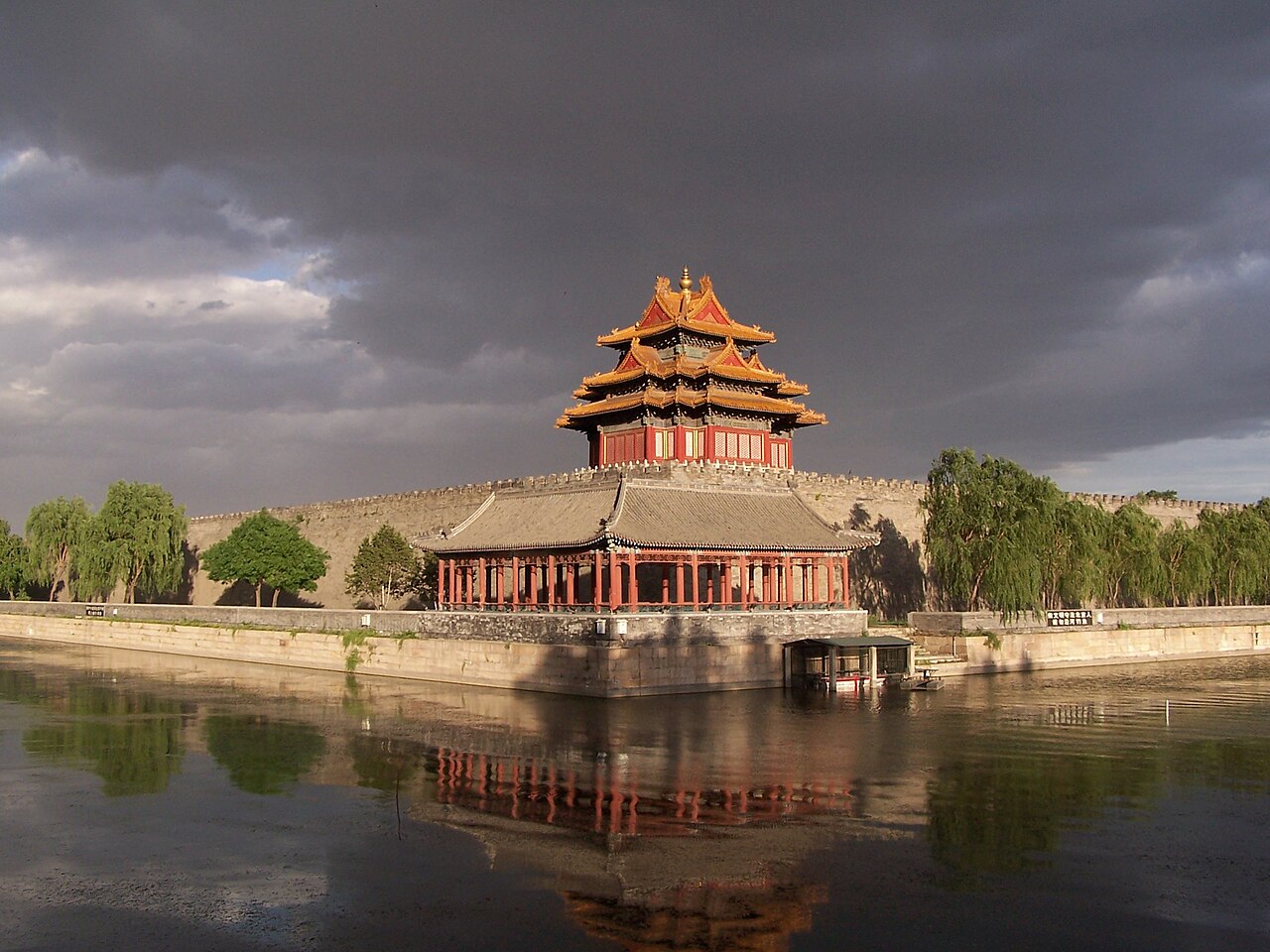
The Five Great Avenues (Wudadao)
A quiet grid of around 2,000 colonial-era villas — Renaissance, Greek, Gothic and hybrid — left by the concessions and now mostly private homes, embassies and cafés. Walk it slowly on a weekday morning.
Tianjin · Tianjin
Tianjin is the port city 30 minutes from Beijing by rail, with 2,000 colonial villas in the Five Great Avenues and 24 bridges on the Haihe. Private tours from US$149 a day.
The short version
The place itself
Tianjin is the city on Beijing's doorstep that most visitors skip, and that is exactly why it is worth the detour. It is one of China's four directly-administered municipalities, a working port of 13.6 million on the Bohai Sea, and it wears its history on its surface: after the Second Opium War a dozen foreign powers carved out concessions here, and a century later the city is a grid of European villas, banks and churches set beside a Chinese old town.
The Haihe River is the spine of it. It runs through the centre under 24 bridges, each different, and along its banks sit the Italian Style Town — a square of Tuscan villas and cafés — the century clock, and the Tianjin Eye, the only Ferris wheel in the world built on a bridge. At night the whole river lights up, and a short cruise is the single best introduction to the place.
Inland from the river, the Ancient Culture Street wraps around the Temple of the Empress of Heaven, the oldest of the three great Mazu temples in China. This is where Tianjin's folk crafts live: the clay figures of Niren Zhang, the woodblock New Year prints of Yangliuqing, the Wei family kites. Around the Drum Tower and the South Market food street you get the city at its most ordinary and its most alive.
You can come just to eat. Tianjin is the home of goubuli baozi, of the crisp-sweet eighteenth-street mahua, of ear-hole fried cakes, and above all of the jianbing — the mung-bean pancake folded around a fried cruller that is northern China's morning ritual. Pair the food with a walk along the river and a half-day among the villas, and a stopover becomes a proper short break.
Pins are plotted from real latitude and longitude on a 5° graticule. This is a schematic orientation diagram, not a political map — no boundaries are drawn.
A quiet grid of around 2,000 colonial-era villas — Renaissance, Greek, Gothic and hybrid — left by the concessions and now mostly private homes, embassies and cafés. Walk it slowly on a weekday morning.
The mother river of Tianjin, crossed by 24 bridges of wildly different styles. Take a night cruise from the Italian quarter and watch the Liberation Bridge and the Century Clock light up.
The old Italian concession beside the river, now low-rise Tuscan buildings around the Marco Polo square. Busiest in summer evenings, when the cafés spill out under the trees.
A French villa encrusted with four billion porcelain shards, ancient statues and crystal — the ten-year obsession of the collector Zhang Lianzhi. Small, strange and completely unlike anything else in China.
A rebuilt Qing-style street on the river's west bank beside the 14th-century Mazu temple, packed with shops selling Niren Zhang figures, Yangliuqing prints and Wei kites. Touristy, but the crafts are real.
The 120 m Ferris wheel built into the Yongle Bridge over the Haihe — the only one of its kind on earth. Ride it at dusk for the lit-up river below and the whole city laid out.
Tianjin Binhai International Airport (TSN), 13 km east of the centre, has daily international flights and dense domestic service. High-speed rail is the real story: the Beijing–Tianjin intercity line runs every few minutes and takes about 30 minutes, so most people arrive from Beijing rather than by air.
Inside the city the metro is modern and English-signed, and the flat centre is easy on foot. The Haihe riverfront, the Five Great Avenues and the old town are all within a few metro stops of one another; taxis are cheap and metered. For the Panshan or harbour day trips north and east of the city, a private car with a driver is the sensible choice.
| Month | Weather | Crowds | Verdict |
|---|---|---|---|
| January | 4°C / -4°C · dry, cold | Quiet | Avoid |
| February | 6°C / -1°C · dry, cold | Very busy | Avoid |
| March | 14°C / 5°C · dry, cold | Moderate | Good |
| April | 21°C / 12°C · clear and mild | Moderate | Best |
| May | 27°C / 18°C · clear and mild | Busy | Best |
| June | 31°C / 23°C · hot, humid | Moderate | OK |
| July | 32°C / 25°C · hot, humid | Busy | OK |
| August | 30°C / 24°C · hot, humid | Busy | OK |
| September | 26°C / 19°C · clear and mild | Moderate | Best |
| October | 20°C / 12°C · clear and mild | Very busy | Best |
| November | 12°C / 4°C · dry, cold | Quiet | Good |
| December | 5°C / -2°C · dry, cold | Quiet | Good |
Two days is the honest number. Day one is the river: the Italian quarter, the culture street, the Tianjin Eye at dusk and a night cruise. Day two is the Five Great Avenues on foot, then the Porcelain House and a proper breakfast crawl. A third day buys you a trip out of town — Panshan and the Dule Temple to the north, or the harbourside aircraft-carrier park to the east.
Plan these days properly Transport
China's High-Speed Rail: How to Book, What It Costs, How Fast It Goes
The fastest way to cross China is also the most pleasant. Here is how to book a ticket with a foreign passport, what the three classes actually give you, and how to survive a Chinese station at rush hour.
9 min read
Transport
China's High-Speed Rail: How to Book, What It Costs, How Fast It Goes
The fastest way to cross China is also the most pleasant. Here is how to book a ticket with a foreign passport, what the three classes actually give you, and how to survive a Chinese station at rush hour.
9 min read
 Planning
Best Time to Visit China: Month by Month, Region by Region
China is the size of Europe, so 'the best month' depends on where you stand. Here is the month-by-month answer for the north, the Yangtze valley, the south and the plateau.
8 min read
Planning
Best Time to Visit China: Month by Month, Region by Region
China is the size of Europe, so 'the best month' depends on where you stand. Here is the month-by-month answer for the north, the Yangtze valley, the south and the plateau.
8 min read
 Food
Chinese Food Culture: Eight Cuisines, One Table
There is no such thing as Chinese food. There is Cantonese, Sichuan, Hunan, Jiangsu, Zhejiang, Fujian, Anhui and Shandong — and knowing which one you are eating changes everything.
8 min read
Food
Chinese Food Culture: Eight Cuisines, One Table
There is no such thing as Chinese food. There is Cantonese, Sichuan, Hunan, Jiangsu, Zhejiang, Fujian, Anhui and Shandong — and knowing which one you are eating changes everything.
8 min read
It is worth a day or two in its own right, and it is only 30 minutes from Beijing by high-speed rail. The Five Great Avenues, the Haihe bridges and the food are things Beijing does not have in the same form. Think of it as the best half-day extension in northern China.
April to May and September to October. Spring is dry and mild with blossom, autumn is clear and golden. Summer is humid and busy along the river, and winter is cold and dry, though the snowy Tianjin Eye and the winter street food have their own appeal.
High-speed rail, and it is the easiest intercity journey in China: trains leave Beijing South every few minutes and take about 30 minutes to Tianjin, with some continuing to Binhai. Book a seat the day before in peak season; otherwise buy on the day.
Start with the street breakfast: jianbing guozi, a mung-bean pancake wrapped around a fried cruller, and guobacai, a savoury mung-bean porridge. Then ear-hole fried cakes, eighteenth-street mahua for the suitcase, and goubuli baozi at least once — famous, overpriced, and worth the story.
Two days covers it comfortably: the river and old town on day one, the Five Great Avenues and the food on day two. One day is possible if you move fast, and a third day is worth it if you want Panshan or the harbour outside the city.
Free itinerary design, a revised plan within one working day, and nothing charged until you approve the final version.