Sanfang Qixiang, the Ming lanes
Three lanes and seven alleys of Ming and Qing courtyard mansions, 40 hectares of them, still lived-in and free to wander. This is the address to walk slowly, ideally in the evening when the lanterns come on.
Fuzhou · Fujian
Fuzhou, Fujian's 2,200-year-old capital, hides the Ming lanes of Sanfang Qixiang and the dockyards where China's navy was born. Private tours from US$139 a day.
The short version
The place itself
Fuzhou is not a showpiece city, and that is its charm. It is the capital of Fujian and one of the oldest cities in China — founded in 202 BC — but it hides its age behind a modern surface of rivers, bridges and banyan trees. Locals will tell you the city's real shape with a phrase: mountains in the city, city in the mountains.
Its heart is Sanfang Qixiang, three lanes and seven alleys of white-walled, tile-roofed courtyard houses that amount to a living museum of Ming and Qing architecture. Around it lie a scatter of pagodas, temples and gardens — the West Lake on the city's edge, Xichan Temple in the western hills, the small Yu Mountain in the middle of town.
Downriver, the district of Mawei is where it gets more serious. Here, in 1866, the Qing founded the Fuzhou shipyard and its naval academy — the cradle of China's modern navy and one of the birthplaces of its modern industry and engineering. The China Ship Culture Museum and the old Luo Xing Pagoda mark the spot.
Fuzhou is also a city of small pleasures: fish balls and 'meat swallows' in the lanes, jasmine tea brewed everywhere, and Shoushan stone and bodiless lacquerware in the craft shops. Its mild, wet, subtropical climate means greenery all year — and rain, so bring an umbrella.
Pins are plotted from real latitude and longitude on a 5° graticule. This is a schematic orientation diagram, not a political map — no boundaries are drawn.
Three lanes and seven alleys of Ming and Qing courtyard mansions, 40 hectares of them, still lived-in and free to wander. This is the address to walk slowly, ideally in the evening when the lanterns come on.
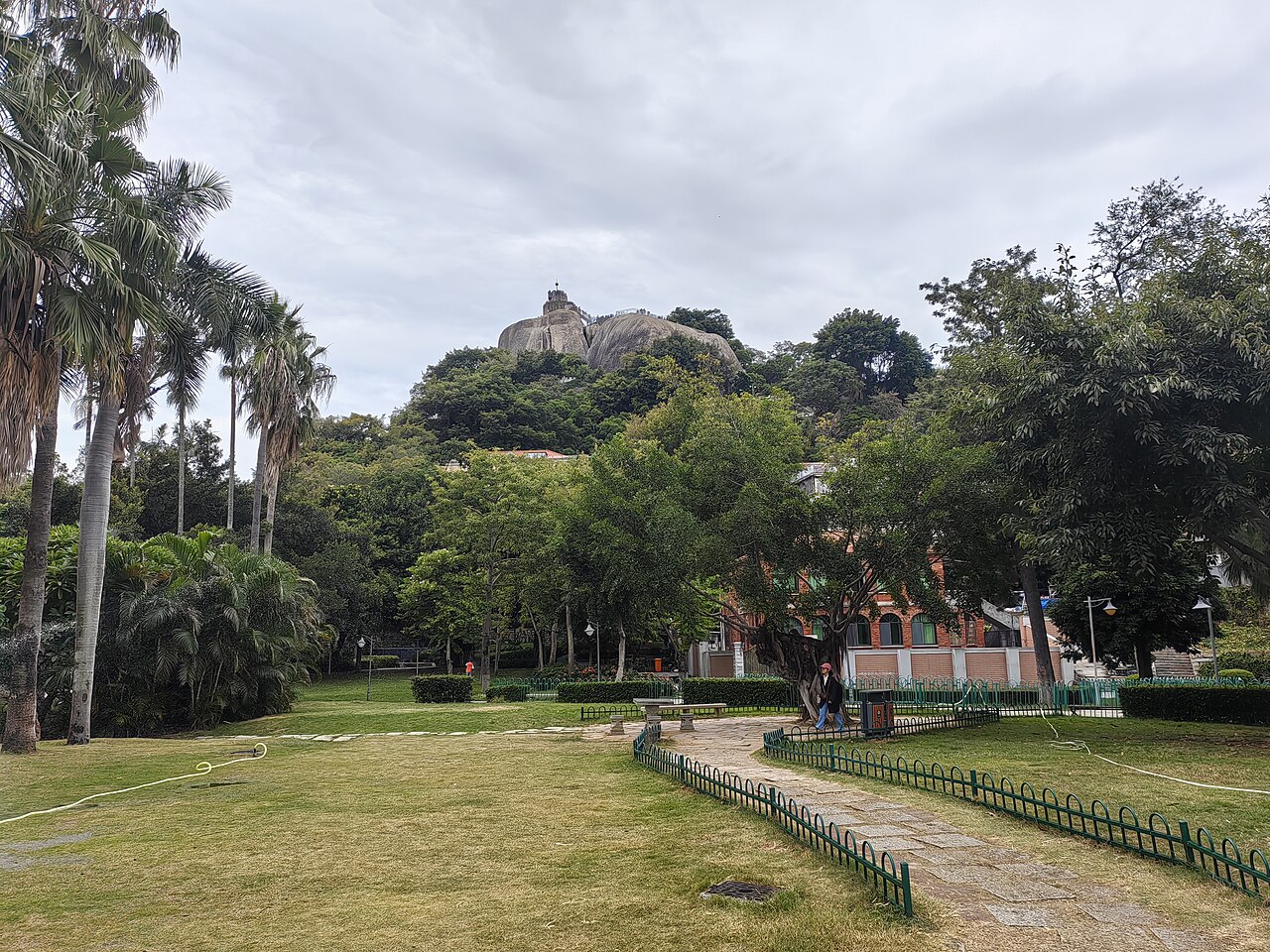
The city's own mountain, an easy morning's climb or cable-car ride up, with the 1,000-year-old Yongquan Temple in the basin at its shoulder. Go early for mist and the best of the mountain.
The riverside birthplace of China's modern navy — a 19th-century shipyard, naval academy and battlefields, and the Luo Xing Pagoda that once guided ships up the Min River.
A 1,700-year-old classical garden on the city's western edge, with its eight named beauty spots. Free, open late, and best at dusk or first thing in the morning.
Fish balls with a meat filling, 'meat swallow' wontons, lychee pork, taro purée and the famous Buddha Jumps Over the Wall — Fuzhou has one of China's most distinct regional kitchens.
Fuzhou sits on a belt of hot springs, and its jasmine tea has been a national standard for centuries. Both are worth a half-day of the itinerary: a soak, then a proper tea house.
Fuzhou Changle International Airport (FOC) lies 55 km southeast of the city on the coast, reached by hourly airport buses and a fast road in about an hour and a half. High-speed rail is the easier option if you are coming from Xiamen or Shanghai: Fuzhou and Fuzhou South stations link to the whole eastern network, with Xiamen about two hours away. There are also long-distance buses from Zhejiang and Guangdong.
In town, buses run at a flat ¥1 and a metro system covers the main axis; taxis start at ¥10. The fun option is the sightseeing double-decker, whose loop threads West Lake, Sanfang Qixiang, the Min River parks and Zhongting Street — buy a day ticket and hop on and off.
| Month | Weather | Crowds | Verdict |
|---|---|---|---|
| January | 12°C / 4°C · cool, damp | Quiet | Good |
| February | 14°C / 6°C · cool, damp | Very busy | Good |
| March | 18°C / 10°C · clear and mild | Moderate | Best |
| April | 24°C / 16°C · clear and mild | Moderate | Best |
| May | 28°C / 21°C · cool, damp | Busy | OK |
| June | 32°C / 25°C · very hot, humid | Moderate | OK |
| July | 35°C / 28°C · cool, damp | Busy | Avoid |
| August | 34°C / 27°C · cool, damp | Busy | Avoid |
| September | 29°C / 23°C · very hot, humid | Moderate | OK |
| October | 24°C / 17°C · clear and mild | Very busy | Best |
| November | 18°C / 11°C · clear and mild | Quiet | Best |
| December | 13°C / 6°C · cool, damp | Quiet | Good |
Two days is enough for the essentials: day one in the old town around Sanfang Qixiang, West Lake and the downtown low hills; day two on Gushan and at a temple. A third day is what makes Fuzhou feel complete — that is Mawei and the naval museums, which are half a day on their own, plus time for the hot springs. Add a fourth if you want to reach the coast or loop on to Xiamen.
Plan these days properly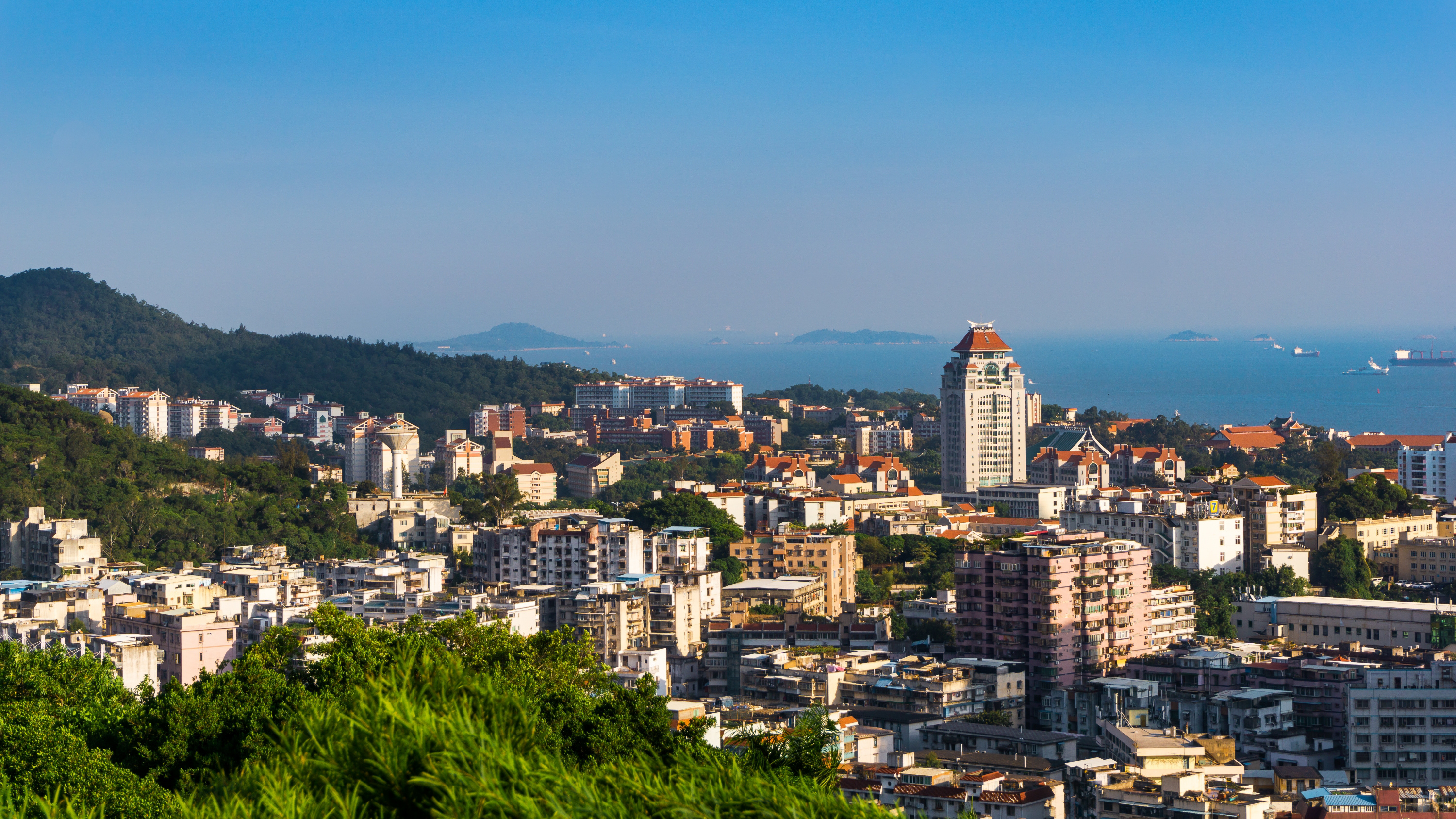 Xiamen
Fujian · 4 tours
Xiamen is China's breeziest seaside city — a subtropical island of 5.3 million where the car-free colonial islet of Gulangyu, a palm-lined coastal roa
Xiamen
Fujian · 4 tours
Xiamen is China's breeziest seaside city — a subtropical island of 5.3 million where the car-free colonial islet of Gulangyu, a palm-lined coastal roa
 Gulangyu
Fujian · 4 tours
Gulangyu is a 1.87 km² car-free island twenty minutes by ferry off Xiamen, and the single most-visited sight in Fujian — colonial villas, China's only
Gulangyu
Fujian · 4 tours
Gulangyu is a 1.87 km² car-free island twenty minutes by ferry off Xiamen, and the single most-visited sight in Fujian — colonial villas, China's only
It is a different trip and worth both. Fuzhou is older — 2,200 years — quieter and greener, with the Ming lanes of Sanfang Qixiang and the naval history of Mawei. It is only about 2 hours from Xiamen by high-speed rail, so people often do one on the way to or from the other.
October and November first, for clear cool days and the most sunshine of the year; March to May second, for the green season. Winter is mild and dry rather than cold, around 10–18°C. Summer is hot, humid and wet — Fuzhou is one of China's rainiest cities, so an umbrella is standard kit year-round.
Fuzhou has one of the most distinctive kitchens in China. Start with fish balls (the local ones hide a meat filling), 'meat swallow' wontons with their paper-thin wrappers, lychee pork, taro purée and guobianhu rice soup. The signature banquet dish is Buddha Jumps Over the Wall — 20-odd ingredients, slow-braised, and best ordered in advance.
Fly into Fuzhou Changle (FOC), 55 km from the centre and about 90 minutes by airport bus, or take high-speed rail — Xiamen is about 2 hours, Shanghai a few. In town, buses are ¥1 flat, there is a metro, and taxis start at ¥10. The sightseeing double-decker loop is a good low-effort way to cover the main sights.
Yes. The Three Lanes and Seven Alleys quarter is a free, open, 40-hectare historic district of Ming and Qing courtyard houses, most of them still intact and some still lived in. Individual halls inside may charge, but the lanes themselves cost nothing and are best in the evening.
Gushan and Yongquan Temple for a half day on the mountain, Mawei for the shipyard and naval museums, and the West Lake and Yu Mountain parks inside the city. Fuzhou is also a hot-spring city and the heart of China's jasmine-tea country, both worth building half a day around.
Free itinerary design, a revised plan within one working day, and nothing charged until you approve the final version.