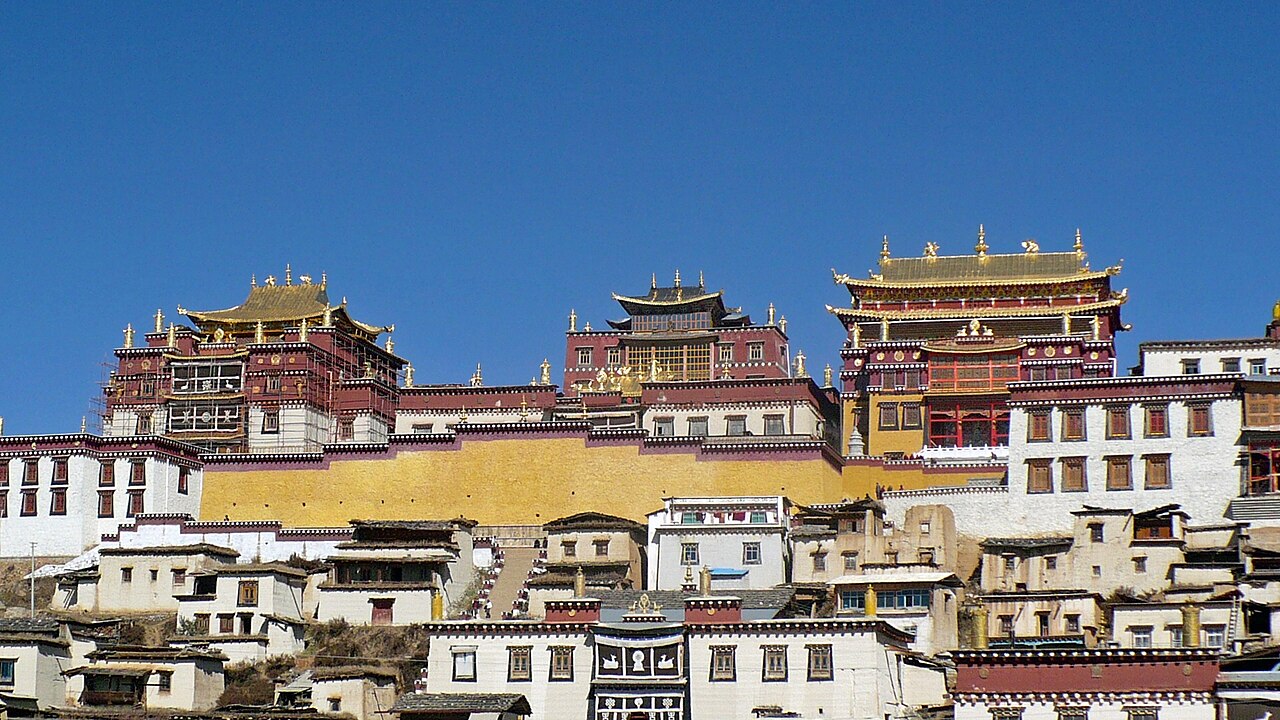
Lhasa means 'place of the gods' in Tibetan, and at 3,700 m it earns the name in more ways than one. This is the holy city of the Tibetan world and, increasingly, of everyone else too — hotels, banks, malls and brand stores have arrived, and the shiny new Potala Palace square barely matches the Lhasa in your imagination. Then you walk into a backstreet teahouse or stand still in the current of pilgrims on the Barkhor, and the old city is still there, breathing.
You can put your palms together in front of the Potala, watch devotion in front of the Jokhang, feel the warmth of prayer wheels under your fingernails, listen to market chatter in a sweet-tea house, lie in a sun-drenched chair, or wander the Lhasa River bank doing nothing at all. Climb the ridge behind Sera Monastery for a different angle on the city, look across Lalu Wetland to see how vast the Potala really is, or join the circle dance in Zongjiao Lukang Park beneath the palace walls.
Lhasa is a place that gets described and described again, and still feels undescribed. Whether it is the Potala, the Jokhang, the Barkhor or Norbulingka, something here will reach straight past your defences. Everyone who has never been is certain they will one day stand in front of the Potala. Everyone who has left knows they will come back.