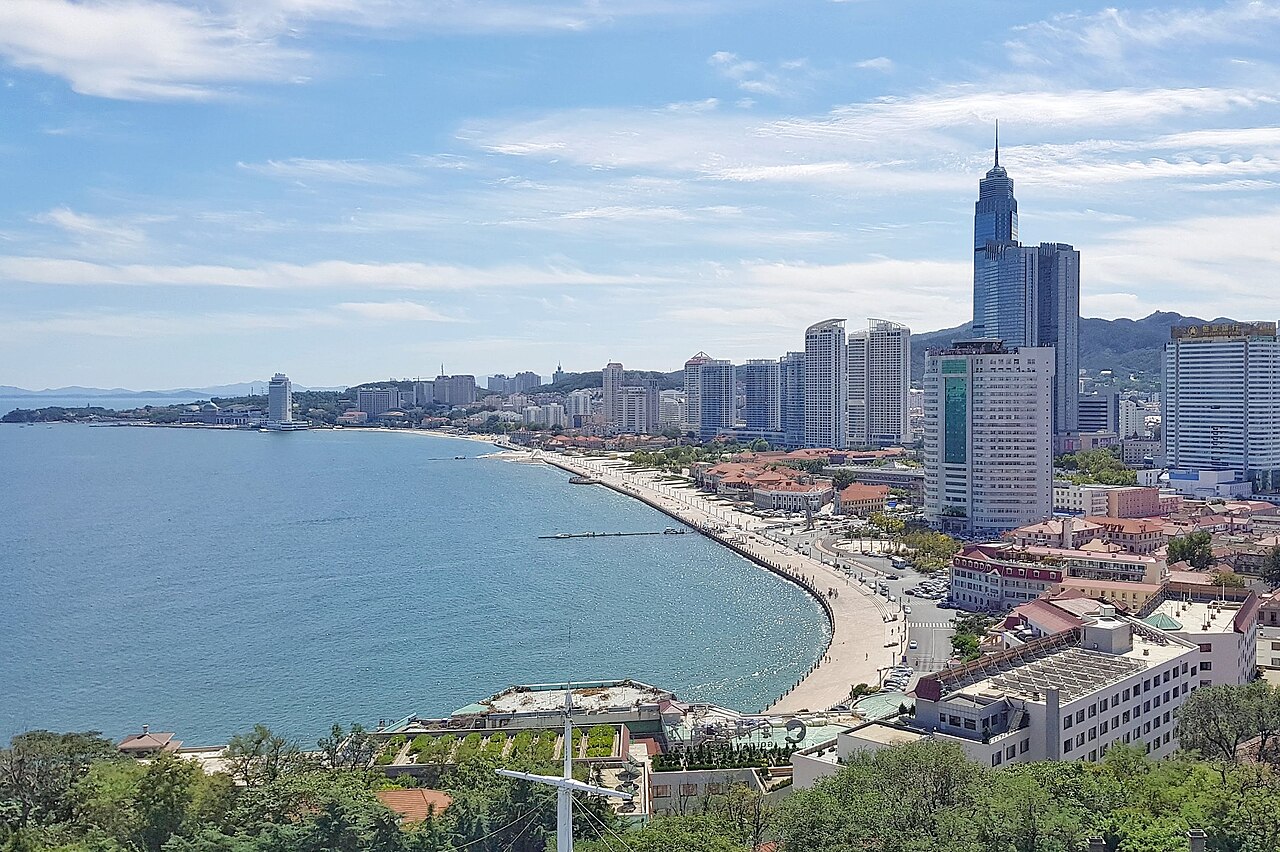
Lianyungang grew up around two things: the mountain that became the setting of China's favourite novel, and the port that became the eastern end of the New Eurasian Land Bridge — the rail line that runs from this Yellow Sea coast all the way to Rotterdam. It is a working city that happens to have a fairy-tale mountain in the middle of it, and the contrast is half the charm.
That mountain is Flower-Fruit (Huaguo) Mountain, the traditional home of the Monkey King, and the older name of the whole district is Haizhou, a walled town that has stood here for more than two thousand years. The novel's author is said to have taken the setting from this coast, and the hills above the city are still dotted with the rock formations his story named — Water-Curtain Cave, the Seventy-Two Caves, the Pagoda of King Ashoka.
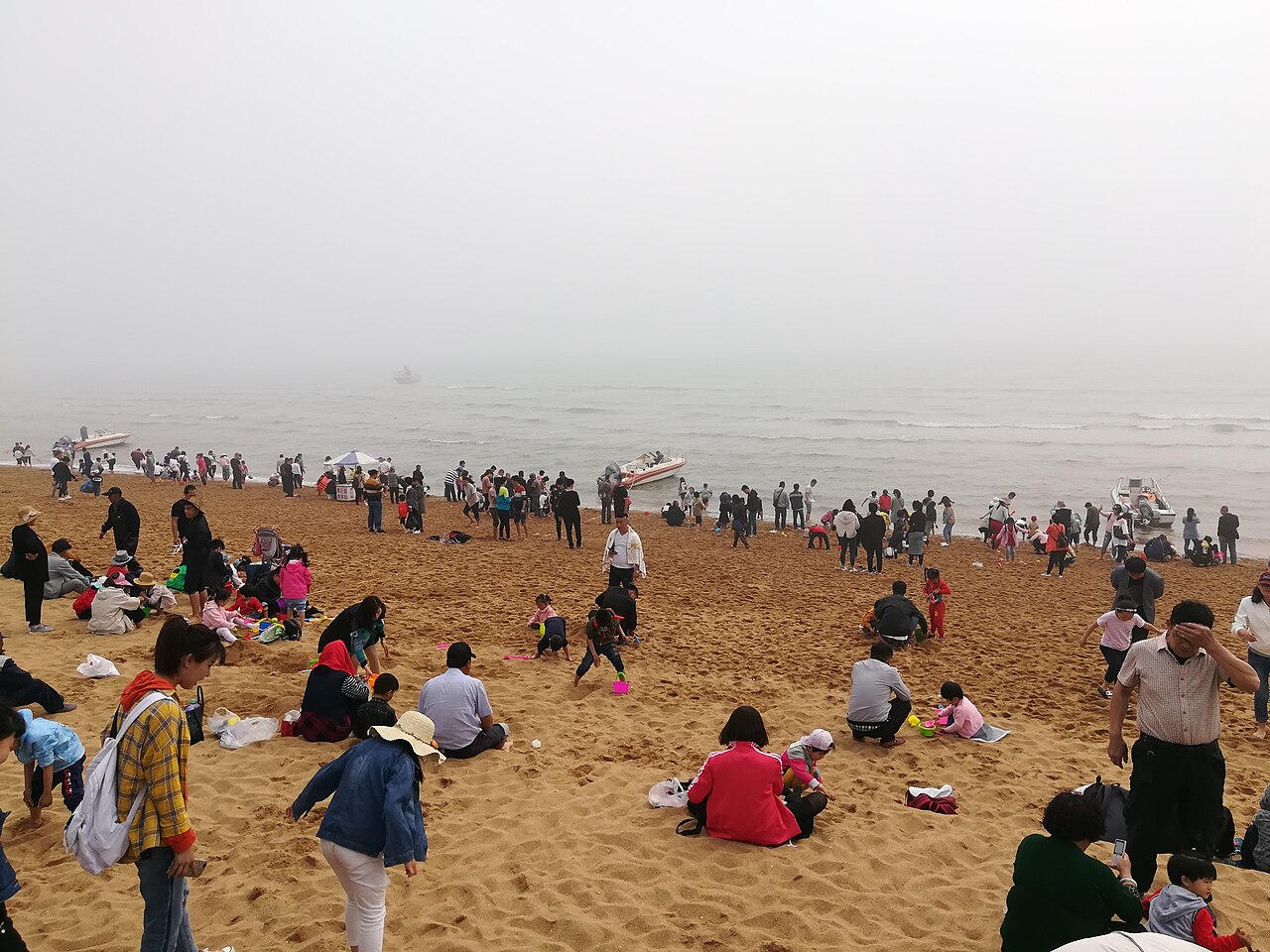
At the coast, the city does what Chinese seaside cities do: long broad beaches, a fishing fleet, and a menu of extremely fresh seafood. Jiangsu's largest island, Liandao, sits just offshore behind a long sea wall you can drive across, and its two beaches — the open Dashawan and the prettier, steeper Sumawan — are the reason people come in summer.
Lianyungang is honest about what it is: not as polished as Qingdao, not as famous as Xiamen, but cheap, calm and friendly, with a genuine mountain, a genuine island and genuinely good cheap seafood. Come in summer and autumn, and bring an appetite.