Dujiangyan is not a monument; it is a machine, and it has been running without pause for about 2,270 years. Built between 256 and 251 BC by Li Bing, the Qin governor of Shu, and his son, it splits the Min River and sends part of it to irrigate the Chengdu plain, which is why that plain became the 'Land of Abundance' and why UNESCO listed the works, with nearby Mount Qingcheng, in 2000. It is the oldest surviving no-dam irrigation system in the world and still in use.
The whole thing comes down to three deceptively simple pieces. The fish-mouth divider splits the river by shape alone, taking the inner channel toward the plain and the outer one down the original course. The Flying Sand Weir spills the extra water off in flood and throws the silt back into the main river. And the Bottle-Neck, a gap cut through a mountain ridge, meters out the water at a fixed width — no gates, no dam, just the geometry of the land.
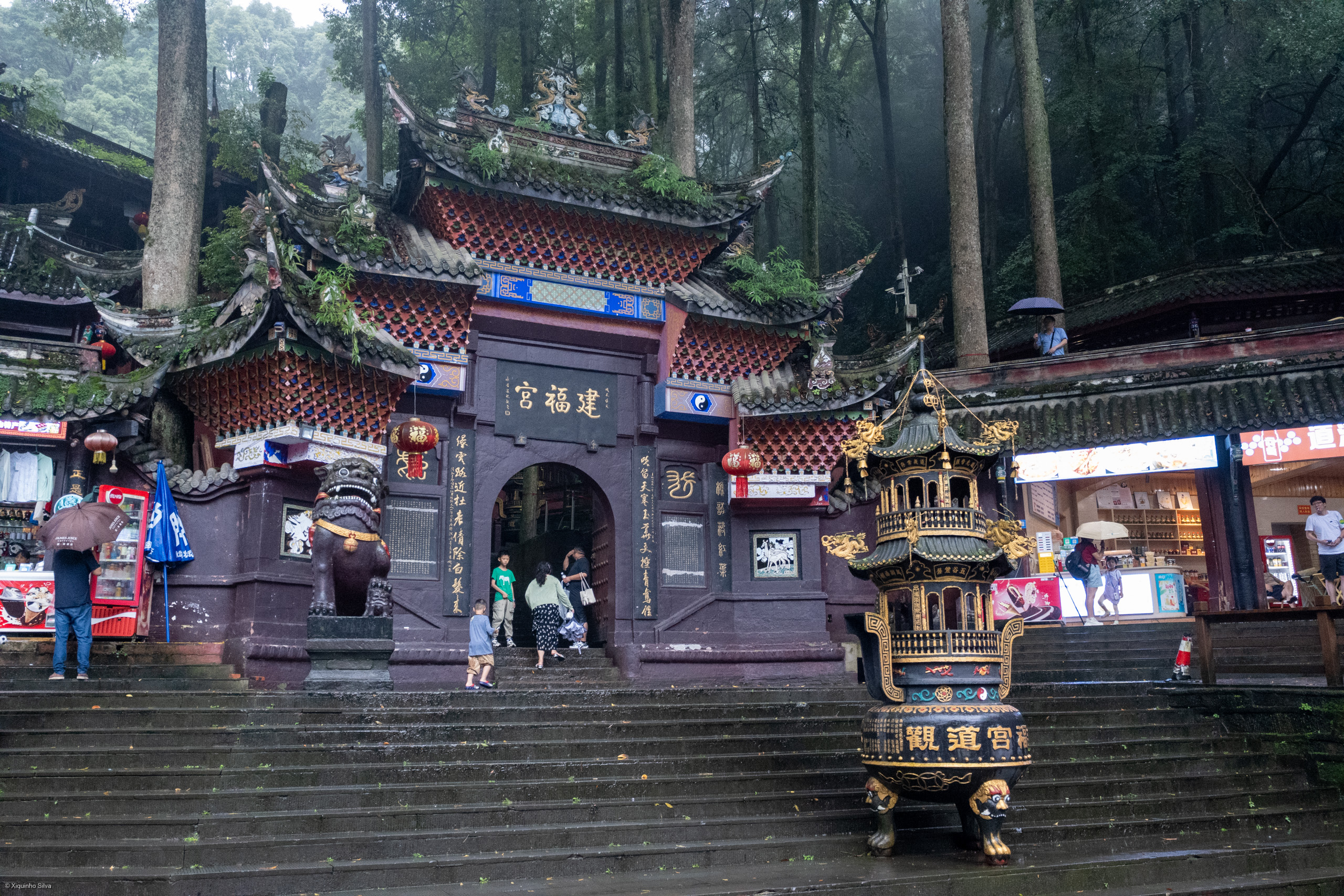
Around the three works, the visit is a walk through some of the oldest ground in Sichuan: the Leidui garden on the separated hill, with its bonsai and old trees; the Erwang Temple to Li Bing and his son; the wooden Anlan cable bridge across the river; the pavilion tower on Yulei hill; and the stub of the old Songmao trading road, once the route from Chengdu to Songpan. Cross the Nanqiao bridge and you are in Guanxian old town.
Come in the evening if you can. Dujiangyan keeps a slower pace than Chengdu — teahouses on the riverbank, cold beers and river fish along the Nanqiao 'night-beer' strip, and the lit-up bridge over the water. It is one of the most relaxed towns within an hour of the city, and the water is always moving under it.