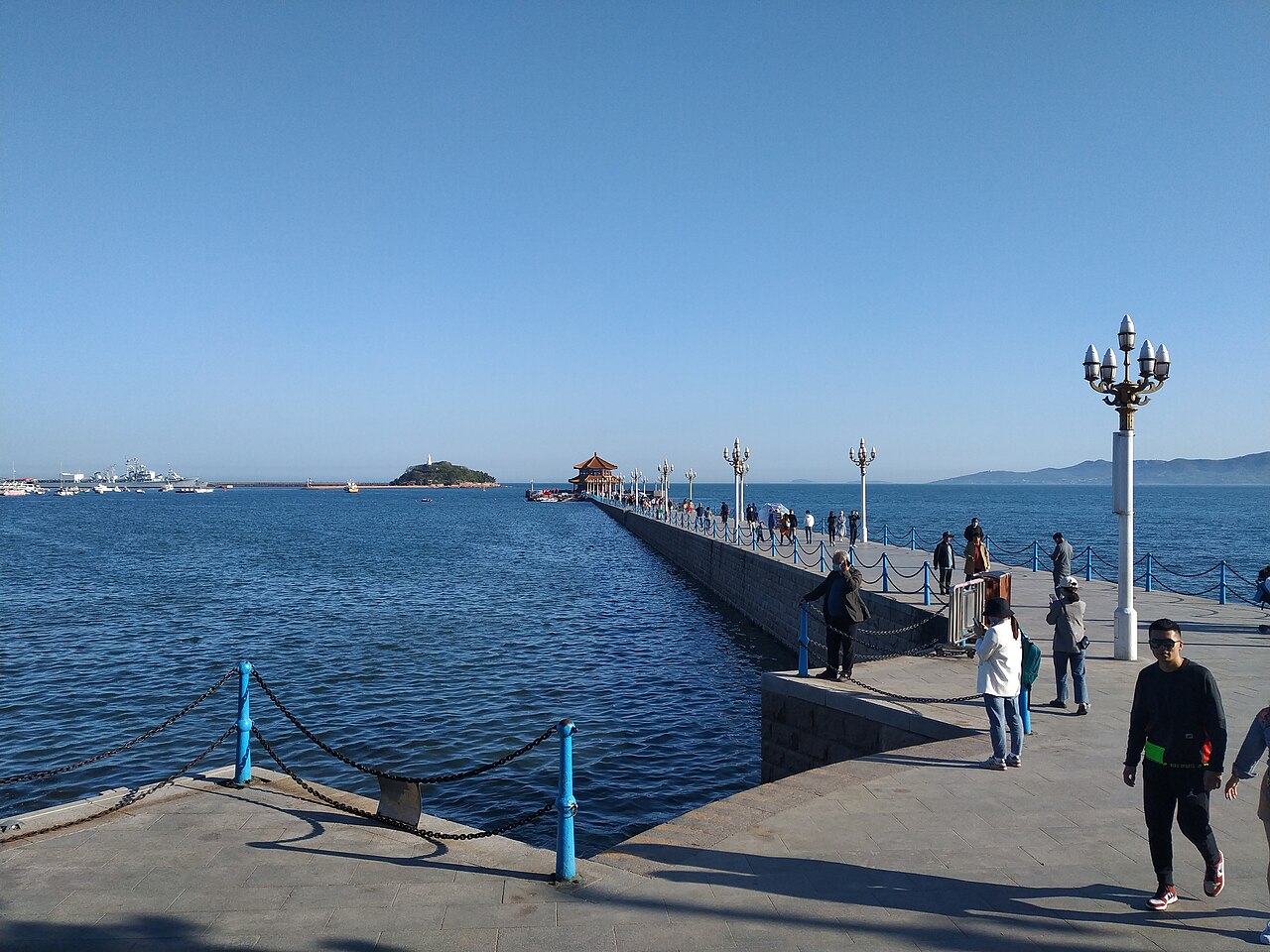
Penglai is where the Chinese imagination put the immortals. Emperor Wu of Han named it in 133 BC, and for two thousand years before and after, the story has been the same: somewhere out past this coast are islands with palaces on them, and if you find them you stop dying. Qin Shi Huang came looking in 219 BC. The Eight Immortals crossed here. On still days after rain, the mirage still shows up.
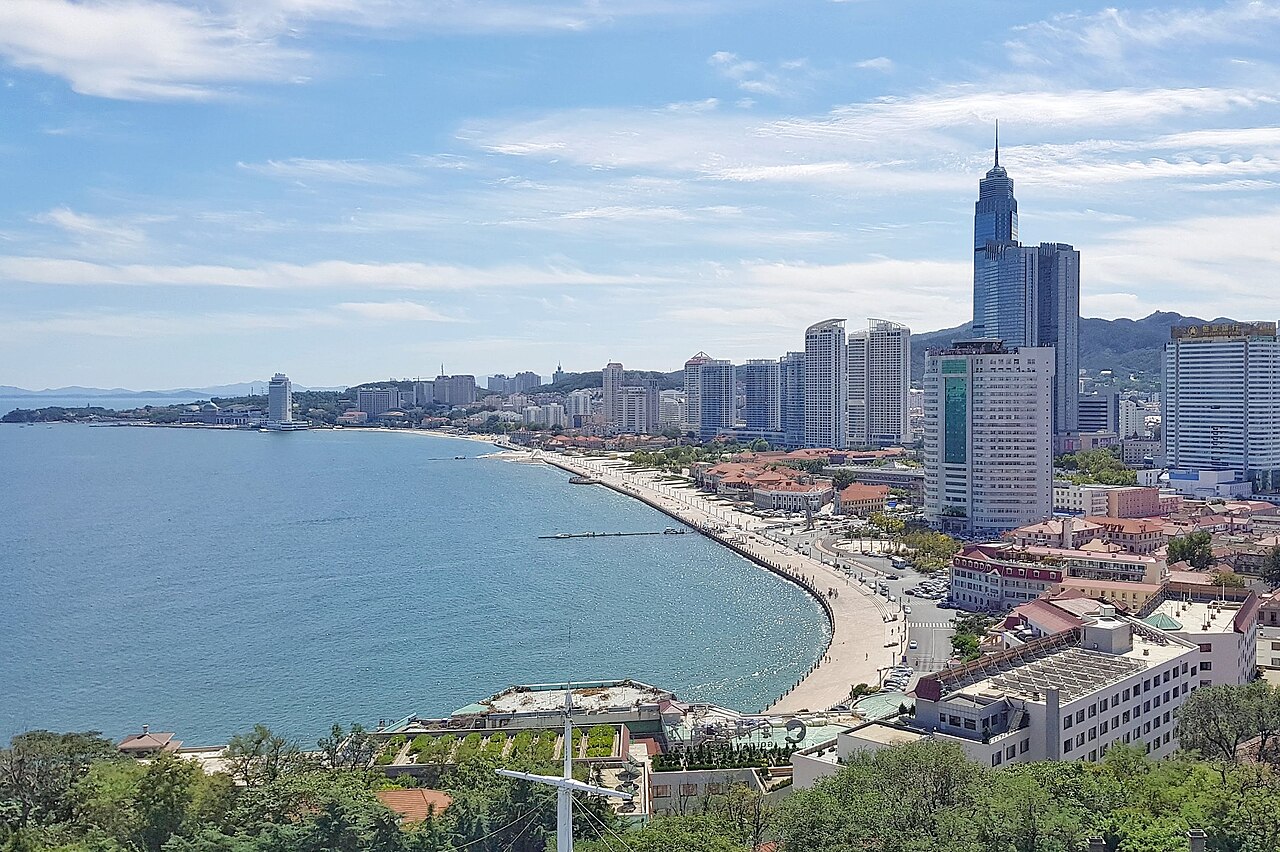
What actually exists is a small city on the north shore of the Shandong peninsula facing the Bohai Strait. Below the cliff is a walled harbour begun as a Song-dynasty boat station and rebuilt in stone in 1376 — 270,000 square metres of breakwater, dock, lighthouse, walls and gun platforms, and the most complete ancient naval base in the country. On top of the cliff stands Penglai Pavilion, one of China's four great towers: really six buildings in 32,800 square metres, from the Maitreya Temple and Dragon King Palace to the Tianhou Palace and the Hall of Lü Dongbin.
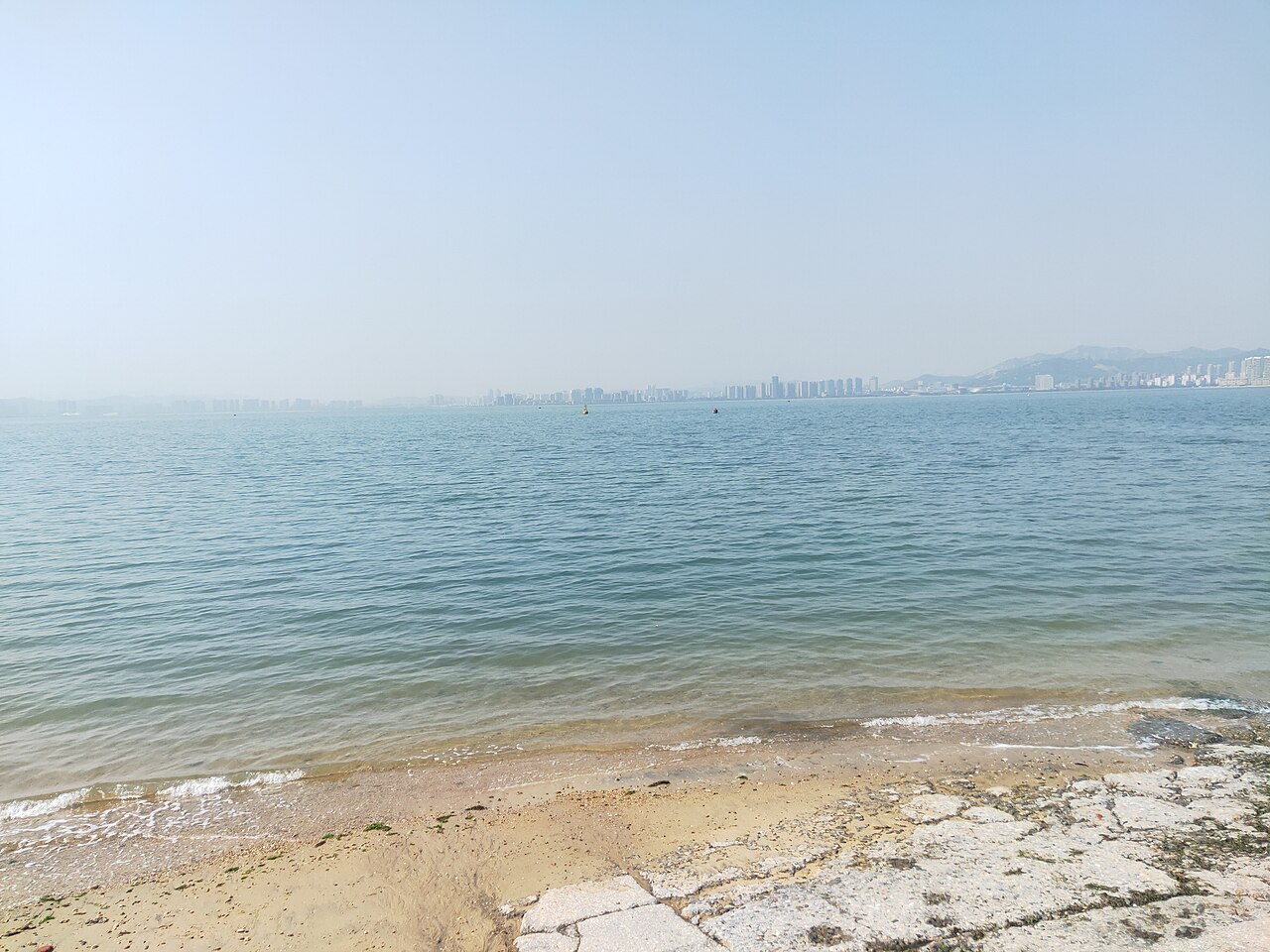
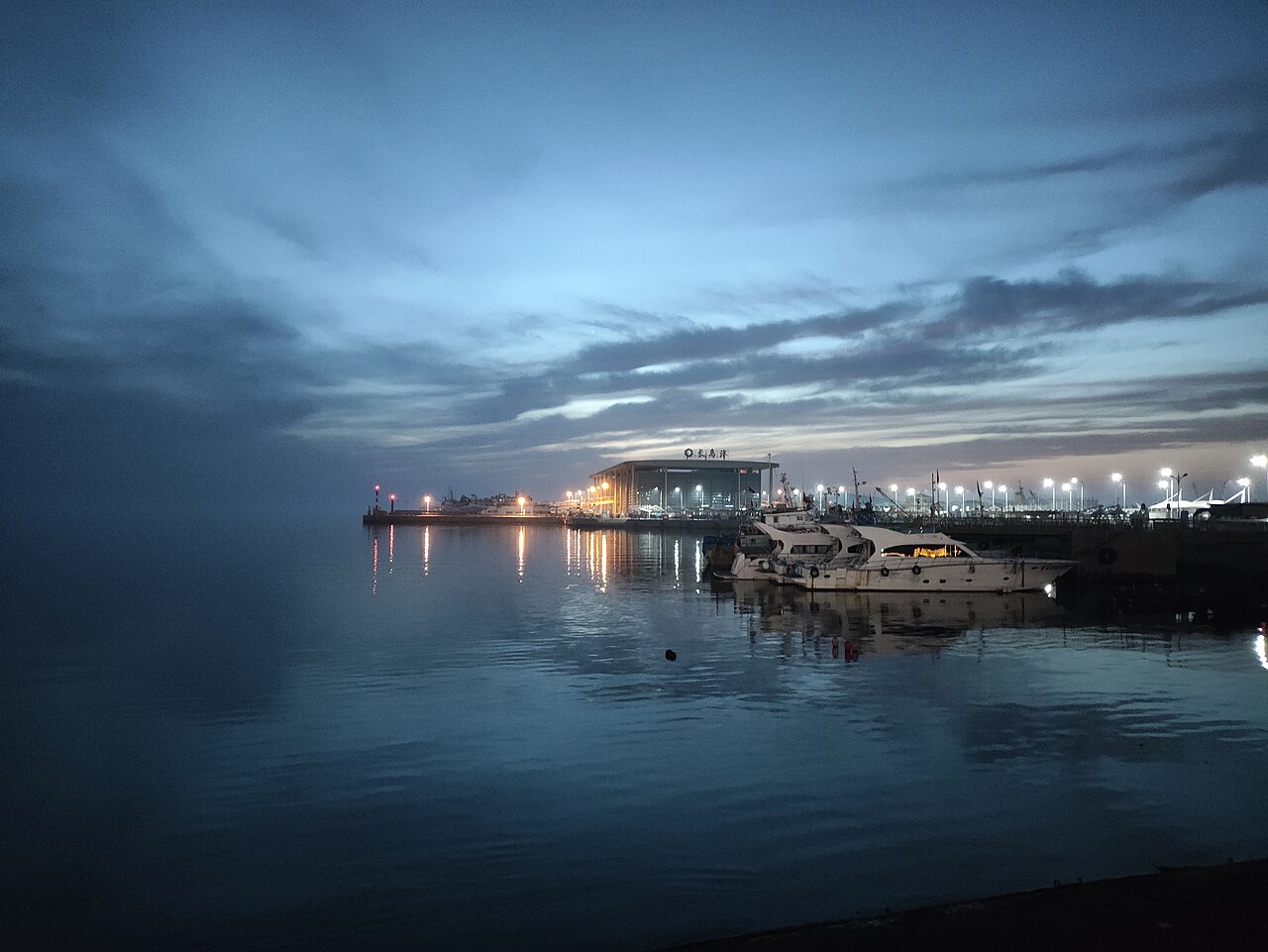
It is also, honestly, a resort. The coastline is long, the sand is decent, and the seafood is the argument for coming: plenty of fishing-family guesthouses will hand you their kitchen so you can cook whatever you bought at the market that morning, which is the cheapest good meal on this coast. Penglai is also the departure point for the Changdao islands, 7 nautical miles across the water.
Two or three days and the place feels generous rather than thin. The pavilion is a morning, the polar ocean world is half a day if you have children, and the rest is coast, wine and fish. The wineries around Penglai are among the best in China and many take visitors. May is the month for mirages; July and August for swimming; the rest of the year it is quiet and the sea is cold.