Stone Forest (Shilin)
A UNESCO karst landscape of limestone pinnacles two hours east of the city, and Yunnan's signature sight. The 'Ashima' rock, from the Sani legend, is the one everyone photographs — walk deeper to escape the crowds.
Kunming · Yunnan
Plan a private Kunming tour: the UNESCO Stone Forest, Dianchi Lake and its winter gulls, the Western Hills, and Yunnan's best noodles. Three days, from US$120 a day.
The short version
The place itself
Kunming is where most travellers meet Yunnan: a mild, sprawling provincial capital on a high plateau, ringed by hills and blessed with the kind of year-round spring weather that has earned it the nickname 'Spring City'. It is rarely the reason people come to Yunnan, and almost everyone passes through it — but it rewards a slower look.
The city spreads along the northern shore of Dianchi Lake, a 300 km² sheet of water that dominates the landscape. To the west, the Western Hills rise steeply above it, crowned by the Dragon Gate, a set of grottoes and walkways cut into a cliff face by hand over 72 years. In winter the lake and the city parks fill with red-beaked gulls from Siberia, a spectacle that turns an ordinary afternoon into something memorable.
East of the city lies the Stone Forest, a UNESCO-listed karst of limestone pinnacles that gives Yunnan its most photographed landscape, and the reason many people come at all. Closer in, Kunming is a city of markets, minority cultures and famously good food — the crossing-the-bridge rice noodles, the steam-pot chicken, the wild mushrooms that arrive every summer.
The altitude is real but modest at 1,890 m: most people feel nothing, a few feel a little breathless on the first day. It is warm in the sun and cool in the shade, wet from May to October and dry and bright the rest of the year. Come in almost any month and you will find flowers in bloom.
Pins are plotted from real latitude and longitude on a 5° graticule. This is a schematic orientation diagram, not a political map — no boundaries are drawn.
A UNESCO karst landscape of limestone pinnacles two hours east of the city, and Yunnan's signature sight. The 'Ashima' rock, from the Sani legend, is the one everyone photographs — walk deeper to escape the crowds.
A forested ridge above Dianchi Lake, reached by cable car or a steep walk, ending at the Dragon Gate — grottoes and passages chiselled into the cliff by one man and his team. The view over the lake from the gate is the best in Kunming.
Yunnan's largest lake, best on its northern shore. Walk the Haigeng Dam in winter and you are surrounded by red-beaked gulls; the water quality is 'distant-view only' on the near shore, so look out, not down.
The city's green gem, north of the centre and next to Yunnan University. In winter it is the easiest place to feed the gulls, and on any morning it fills with musicians, dancers and calligraphers writing on the paving with water.
A lakeside park on the Haigeng shore with recreated villages of 26 minority groups — Dai, Bai, Yi, Naxi, Mosuo and more. Touristy, yes, but an efficient introduction to the province's diversity, with song-and-dance shows through the day.
The Golden Horse and Jasper Rooster archways, the Nanping pedestrian street and the Jingxing Street flower-and-bird market are the pulse of the old city. This is where you eat crossing-the-bridge noodles and browse for flowers, birds and curiosities.
Five regions, one journey: imperial north, panda country, the karst rivers of Guilin and the skyline of Shanghai, with Hangzhou's West Lake.
From US$2,580/per person
View tourKunming Changshui International Airport (KMG), 25 km northeast of the centre, is the gateway to all of Yunnan and one of China's busiest airports, with routes across Southeast and South Asia plus every major Chinese city. Metro line 6 connects the airport to the city in about 25 minutes for ¥5; a taxi to the centre is around ¥100–120 and takes 30–40 minutes. Domestic check-in closes 30 minutes before departure, so leave the city at least two hours ahead.
High-speed rail has transformed the province: from Kunming South it is about 2 hours to Dali and about 3 to Lijiang, both far better than the old overnight trains. Long-distance buses run from five main stations, each serving a different direction — the west station for Dali and Lijiang, the east station for the Stone Forest. In town, the metro covers the centre and the railway stations, buses cost ¥1, and taxis start at ¥8 for 3 km; note that many taxis change shift between 5:30 and 7pm, when hailing one is genuinely hard.
| Month | Weather | Crowds | Verdict |
|---|---|---|---|
| January | 2°C / -12°C · bitterly cold, clear | Quiet | Avoid |
| February | 5°C / -9°C · bitterly cold, clear | Very busy | Avoid |
| March | 10°C / -3°C · bitterly cold, clear | Moderate | Good |
| April | 15°C / 3°C · bitterly cold, clear | Moderate | Good |
| May | 19°C / 8°C · bitterly cold, clear | Busy | OK |
| June | 22°C / 12°C · clear and mild | Moderate | Best |
| July | 23°C / 14°C · clear and mild | Busy | Best |
| August | 22°C / 13°C · clear and mild | Busy | Best |
| September | 19°C / 9°C · clear and mild | Moderate | Best |
| October | 14°C / 2°C · bitterly cold, clear | Very busy | Good |
| November | 7°C / -6°C · bitterly cold, clear | Quiet | Good |
| December | 2°C / -11°C · bitterly cold, clear | Quiet | Avoid |
Two days is the minimum: one for the Stone Forest, one for the city — Green Lake, the archways, the flower-and-bird market and a proper bowl of noodles. Three days is the comfortable answer and adds the Western Hills and Dianchi Lake, with the gulls in winter. A fourth day opens up the small lakeside towns or a trip up to the Yunnan Ethnic Village and around; anything longer and you are really using Kunming as a base for Dali, Lijiang and the rest of Yunnan.
Plan these days properly Transport
China's High-Speed Rail: How to Book, What It Costs, How Fast It Goes
The fastest way to cross China is also the most pleasant. Here is how to book a ticket with a foreign passport, what the three classes actually give you, and how to survive a Chinese station at rush hour.
9 min read
Transport
China's High-Speed Rail: How to Book, What It Costs, How Fast It Goes
The fastest way to cross China is also the most pleasant. Here is how to book a ticket with a foreign passport, what the three classes actually give you, and how to survive a Chinese station at rush hour.
9 min read
 Planning
Best Time to Visit China: Month by Month, Region by Region
China is the size of Europe, so 'the best month' depends on where you stand. Here is the month-by-month answer for the north, the Yangtze valley, the south and the plateau.
8 min read
Planning
Best Time to Visit China: Month by Month, Region by Region
China is the size of Europe, so 'the best month' depends on where you stand. Here is the month-by-month answer for the north, the Yangtze valley, the south and the plateau.
8 min read
 Food
Chinese Food Culture: Eight Cuisines, One Table
There is no such thing as Chinese food. There is Cantonese, Sichuan, Hunan, Jiangsu, Zhejiang, Fujian, Anhui and Shandong — and knowing which one you are eating changes everything.
8 min read
Food
Chinese Food Culture: Eight Cuisines, One Table
There is no such thing as Chinese food. There is Cantonese, Sichuan, Hunan, Jiangsu, Zhejiang, Fujian, Anhui and Shandong — and knowing which one you are eating changes everything.
8 min read
 Peoples
China's Ethnic Minorities: 55 Groups, and Where to Meet Them
Roughly one in twelve people in China is not Han. Their languages, crafts and festivals are the least visited part of the country, and in several regions the most rewarding.
8 min read
Peoples
China's Ethnic Minorities: 55 Groups, and Where to Meet Them
Roughly one in twelve people in China is not Han. Their languages, crafts and festivals are the least visited part of the country, and in several regions the most rewarding.
8 min read
 Yunnan
 · 4 tours
Yunnan Province is entered through Kunming, its capital, and it is the most varied province in China — 25 of the country's 56 ethnic groups, snow moun
Yunnan
Yunnan · 4 tours
Yunnan Province is entered through Kunming, its capital, and it is the most varied province in China — 25 of the country's 56 ethnic groups, snow moun
 Dali
Yunnan · 4 tours
Dali is a walled Bai town between a 4,000 m mountain and a 250 km² lake, and the phrase locals use for it is 'wind, flowers, snow, moon'. Two days cov
Dali
Yunnan · 4 tours
Dali is a walled Bai town between a 4,000 m mountain and a 250 km² lake, and the phrase locals use for it is 'wind, flowers, snow, moon'. Two days cov
 Shuhe
Yunnan · 4 tours
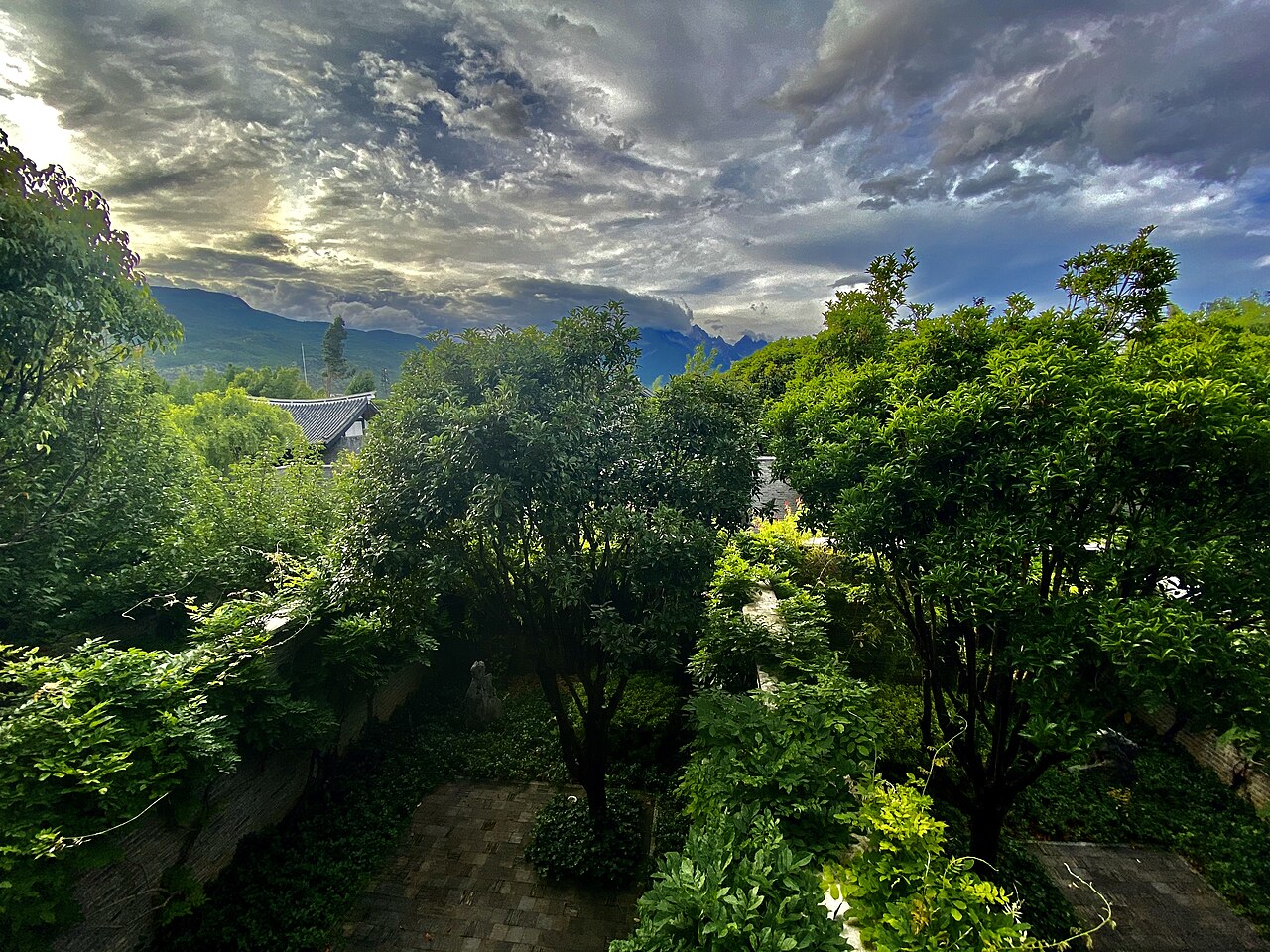
Shuhe is a 1,000-year-old Naxi village 4 km north of Lijiang's old town, and it is the calm version of Lijiang: same stone lanes and canals, a fractio
Shuhe
Yunnan · 4 tours
Shuhe is a 1,000-year-old Naxi village 4 km north of Lijiang's old town, and it is the calm version of Lijiang: same stone lanes and canals, a fractio
 Lijiang
Yunnan · 4 tours
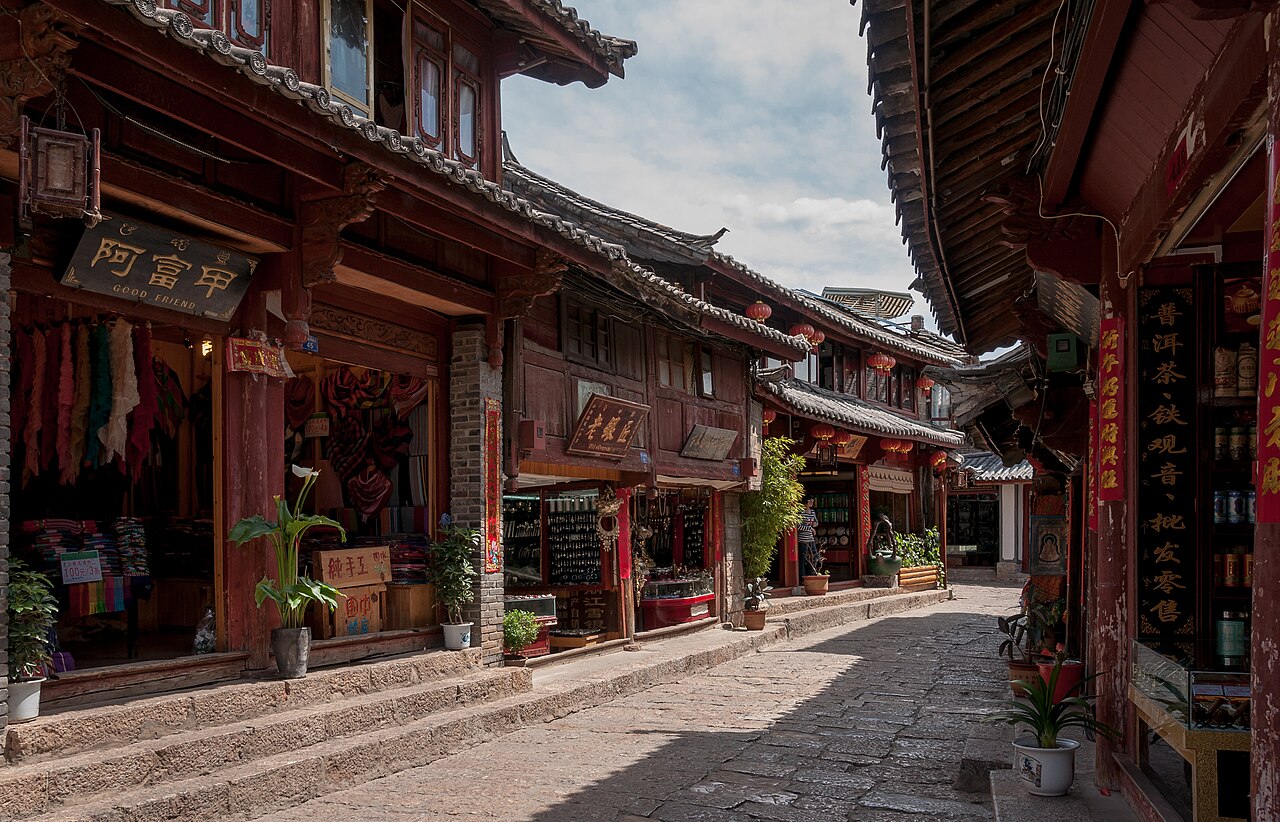
Lijiang is a UNESCO-listed Naxi old town of canals and cobbles below Jade Dragon Snow Mountain, at 2,400 m, and it is the cultural heart of north-west
Lijiang
Yunnan · 4 tours
Lijiang is a UNESCO-listed Naxi old town of canals and cobbles below Jade Dragon Snow Mountain, at 2,400 m, and it is the cultural heart of north-west
Its year-round spring climate and its flowers, above all — Kunming is called the 'Spring City' because the temperature barely moves from a 15°C average, and the 'Flower City' because it supplies cut flowers to much of China. Beyond that it is known for the Stone Forest karst, Dianchi Lake and its winter red-beaked gulls, and for excellent Yunnan food led by crossing-the-bridge rice noodles.
Two days minimum, three to do it well. Day one is the Stone Forest, an hour or two east by train or bus; day two is the city — Green Lake Park, the Golden Horse and Jasper Rooster archways, the flower-and-bird market and a bowl of crossing-the-bridge noodles. A third day adds the Western Hills, the Dragon Gate and Dianchi Lake, and is worth it in winter when the gulls are in.
Both. It is the transport hub for all of Yunnan, and many travellers only change trains here — but give it two or three days and it holds its own: the Stone Forest alone justifies the stop, the food is the best in the province, and the winter gulls and the old-town markets are genuinely charming. Treat it as the opening chapter of a Yunnan trip, not just the airport.
Rarely. At 1,890 m it is well below the threshold where most people feel real altitude effects, and only a few visitors notice mild breathlessness or a headache on the first day. Take it easy for the first day, drink water, and avoid heavy drinking; if you are heading on to Shangri-La at 3,200 m or the Tibetan plateau, save your acclimatisation for there.
High-speed rail, and it is now the easy answer: about 2 hours from Kunming to Dali and about 3 to Lijiang, with frequent departures from Kunming South. Buses from the west station take longer (4–5 hours to Dali, 8–10 to Lijiang), and flights connect both in under an hour. The old overnight sleeper trains still run and save a hotel night, but the high-speed line makes them unnecessary.
Start with crossing-the-bridge rice noodles — a bowl of near-boiling chicken broth into which you drop raw meat, vegetables and noodles to cook at the table. Then steam-pot chicken (qiguoji), and if you are here between June and September, wild mushrooms braised or in a pot. For cheap eats, look for douhua rice noodles, pea-flour porridge and the baked erkuai cakes sold at the old-town markets.
Free itinerary design, a revised plan within one working day, and nothing charged until you approve the final version.