Guling, the hill station on the summit
A whole resort town at 1,100 m, with a curving main street lined by 600-odd shops, hotels and restaurants. It is the hub for every sightseeing line and where you sleep, eat and start each day.
Lushan · Jiangxi
Mount Lushan rises 1,474 m above the Yangtze in northern Jiangxi. Private Lushan tours, Guling hill-station stays and waterfall hikes, guided, from US$149 a day.
The short version
The place itself
Lushan is not one peak but a whole granite massif standing alone on the Jiangxi plain, with the Yangtze on one side and Poyang Lake on the other. Its 90-odd ridges trap moisture rising off both, so cloud and rain are near-constant — which is exactly why it is beautiful. The mist moves in, the peaks dissolve, and the mountain does the thing Chinese painters have been chasing for a thousand years.
Poets got here first. Su Shi wrote the line every Chinese schoolchild knows — 'I cannot tell the true face of Lushan, because I am standing inside the mountain' — and Li Bai saw the waterfall and called it the Milky Way fallen from the sky. A thousand years later, in 1980, the film Romance on Lushan Mountain ran in a small cinema here so often it became a ritual: watch the film, then go see the places it was shot.
The other thing that makes Lushan unusual in China is that it has a town on top. Guling, at 1,100 m, was laid out by British missionaries in the late nineteenth century as a summer retreat and named after the English word 'cooling'. Nearly a thousand foreign-style villas still stand among the pines and camphor trees, and you eat, sleep and catch the sightseeing buses from the middle of them.
Come in summer for the cool and the thunderous waterfalls, or in the dead of winter for a snow-scape rare in southern China. Spring arrives late and autumn leaves early on the mountain, so pack a jacket even in July — the top is 7–10°C cooler than the city below.
Pins are plotted from real latitude and longitude on a 5° graticule. This is a schematic orientation diagram, not a political map — no boundaries are drawn.
A whole resort town at 1,100 m, with a curving main street lined by 600-odd shops, hotels and restaurants. It is the hub for every sightseeing line and where you sleep, eat and start each day.
Lushan's single most famous sight: a waterfall dropping in three tiers down a sheer cliff, the upper stage alone plunging more than 70 m. The saying goes that until you have seen it, you are not a true Lushan visitor.
A great notch in the eastern ridge where the mountain seems to open its mouth to drink Poyang Lake, and the best place in Lushan to watch the sun come up. Get there before dawn from Guling.
Five peaks in a row, likened to five old men sitting on the ground, at 1,436 m — the wildest, most dramatic corner of the mountain, and a childhood pilgrimage for anyone who grew up on the Saint Seiya cartoons.
Lushan's colonial villa district, with Meilu — Chiang Kai-shek's summer residence — at its centre. The timber shutters, stone footings and ivy tell a century of stories in one lane.
China's first screen kiss, shot all over the mountain and still screened every couple of hours in a small Guling cinema. Watching it, then walking its locations, is a Lushan institution.
Fly into Nanchang Changbei (KHN), the region's main gateway, or into the small Lushan airport at Jiujiang. From Jiujiang, buses and minibuses run up to Guling on the mountain top in about an hour for ¥12–15; the road has some 396 bends, so take motion-sickness pills if you are prone. High-speed rail reaches Jiujiang Station (about 52 minutes from Nanchang) and Lushan Station; from either, a taxi or bus gets you to the mountain bus station. A private car up costs about ¥70–100 and pays an ¥85 park vehicle fee.
On the mountain there are no ordinary city buses for visitors — you move on the sightseeing lines. The East line runs to Meilu, the Lushan Conference site, Hanpokou, the botanical garden, Wulao Peak and the Three Step Spring; the West line serves Huajing, Xianren Cave, the Great Heavenly Pool and the power-station dam. A seven-day pass is ¥80. Cable cars cover the steep bits: Sandie Quan has an upper cable car at ¥35 up, ¥55 down, or ¥80 return.
| Month | Weather | Crowds | Verdict |
|---|---|---|---|
| January | 12°C / 4°C · cool, damp | Quiet | Good |
| February | 14°C / 6°C · cool, damp | Very busy | Good |
| March | 18°C / 10°C · clear and mild | Moderate | Best |
| April | 24°C / 16°C · clear and mild | Moderate | Best |
| May | 28°C / 21°C · cool, damp | Busy | OK |
| June | 32°C / 25°C · very hot, humid | Moderate | OK |
| July | 35°C / 28°C · cool, damp | Busy | Avoid |
| August | 34°C / 27°C · cool, damp | Busy | Avoid |
| September | 29°C / 23°C · very hot, humid | Moderate | OK |
| October | 24°C / 17°C · clear and mild | Very busy | Best |
| November | 18°C / 11°C · clear and mild | Quiet | Best |
| December | 13°C / 6°C · cool, damp | Quiet | Good |
Two days is the minimum to see the mountain's four or five headline sights; three days is comfortable and lets you slow down. Use day one for the villa town and the Lushan Conference site, day two for the sunrise at Hanpokou plus Wulao Peak and the Three Step Spring, and day three for the western gorges — Huajing, Xianren Cave and Shimen Ravine. A fourth day buys you either the White Deer Grotto Academy (Bailudong Shuyuan) and a hot spring below the south gate, or simply the luxury of doing less.
Plan these days properly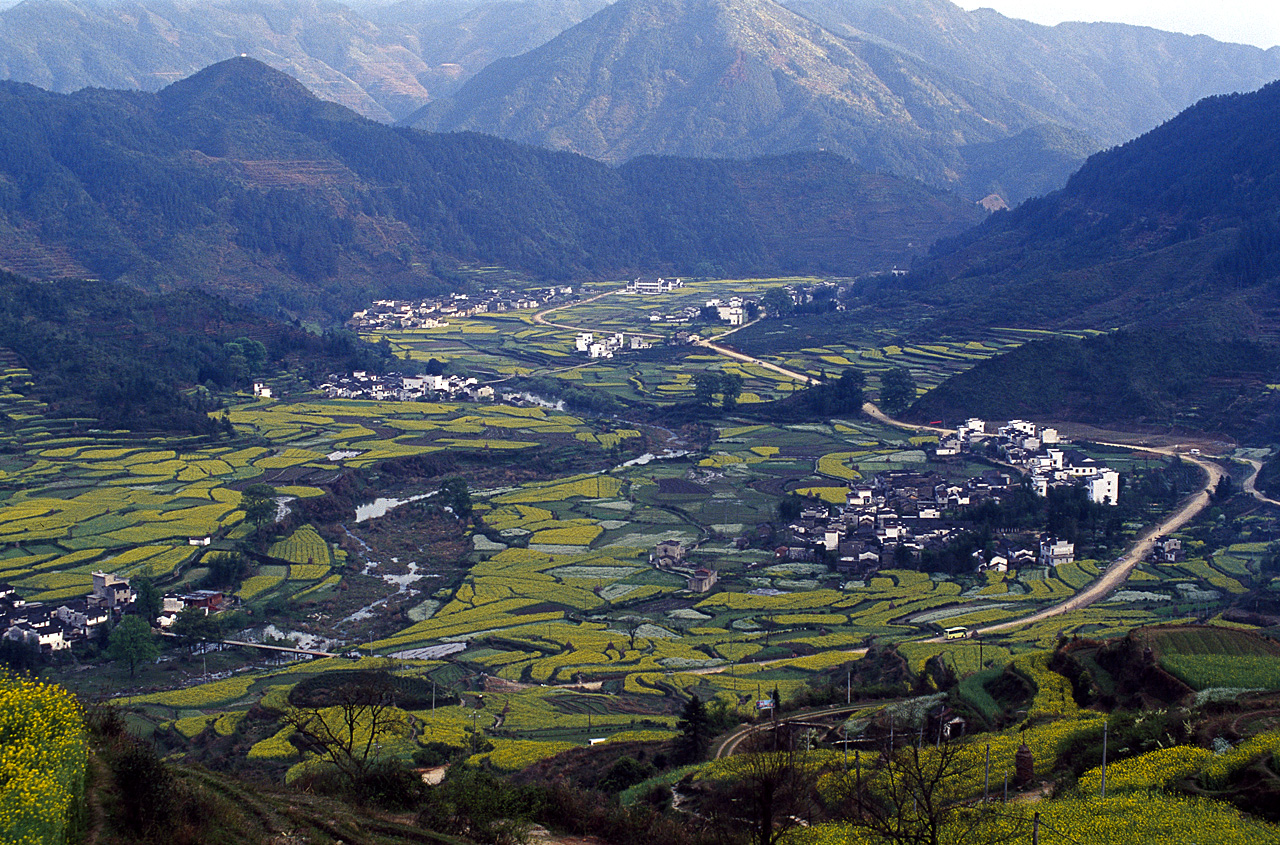 Wuyuan
Jiangxi · 4 tours
Wuyuan is a county of about 360,000 people in northeast Jiangxi, on the Anhui and Zhejiang borders, that China calls its 'most beautiful countryside'
Wuyuan
Jiangxi · 4 tours
Wuyuan is a county of about 360,000 people in northeast Jiangxi, on the Anhui and Zhejiang borders, that China calls its 'most beautiful countryside'
 Huangshan
Anhui · 4 tours
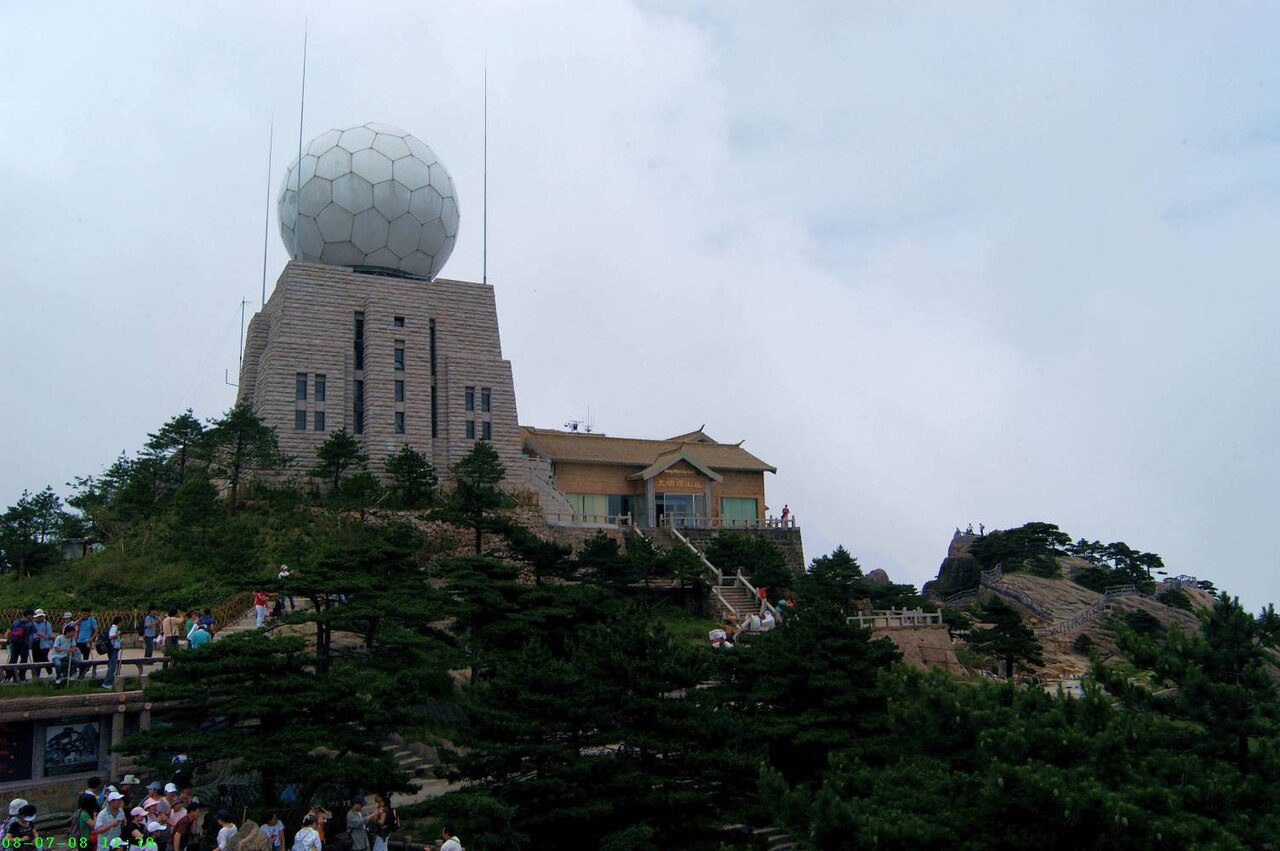
Huangshan — Yellow Mountain — is a UNESCO granite massif of 82 peaks in southern Anhui, famous for its twisted pines, sea of cloud and the saying that
Huangshan
Anhui · 4 tours
Huangshan — Yellow Mountain — is a UNESCO granite massif of 82 peaks in southern Anhui, famous for its twisted pines, sea of cloud and the saying that
Two days at a sprint, three days to enjoy it. The loop of Hanpokou, Wulao Peak and the Three Step Spring is one full day; the villa town, the Lushan Conference site and the western gorges are a second; and the White Deer Grotto Academy plus a hot spring below the south gate can be a third.
Yes — for the snow. Lushan snows about 30 days a year, most heavily from late December to late February, and a snow-covered southern mountain is a rare sight in China. The park ticket also drops to ¥135 and the crowds vanish. Just bring proper cold-weather clothing and expect some ice on the paths.
May to August, when the air on the mountain stays around 22°C while the Poyang basin below bakes at 39°C, and the waterfalls are at full flow. Winter is a distinctive second season for snow. Avoid the National Day and Spring Festival weeks, when Guling fills to bursting.
Stay on the mountain. Guling is where the hotels, food and transport are, and the road up takes an hour. Day-tripping from Jiujiang means spending three hours in transit and missing the sunrise, which is half the point. Book accommodation ahead in peak season — rooms are tight.
Buses and minibuses run from Jiujiang to the mountain bus station in Guling in about an hour for ¥12–15. The road climbs through 396 bends, so motion-sickness sufferers should prepare. Private cars are charged an ¥85 park fee, and tourist vehicles are not allowed up between 22:00 and 06:00.
The local trio is 'three stones and a tea': stone frog (a local frog cooked 'yellow-braised'), stone fish from the mountain streams, stone ear (a rock-growing fungus) and Lushan Cloud-Mist tea. Try them at a Guling restaurant — Shiniu, on the main street, is a long-standing favourite.
Free itinerary design, a revised plan within one working day, and nothing charged until you approve the final version.