City guide · Shaanxi

Mount Hua travel guide: the plank road in the sky, the 2am sunrise climb, and how to do Shaanxi's sharpest peak without wrecking your knees

Five granite peaks, one plank road bolted to a cliff face, and a sunrise that justifies the 2am start.

  • Known forFive Great Peaks granite, plank road, sunrise, Shaanxi
  • Typical spendAbout CNY 500–1,000 for 2 days
  • Ideal length2 days, 1 night on the mountain
  • PaceHard — 6–8 hours of climbing a day

Reviewed by our Beijing team Updated 2026-10-10

The short version

Mount Hua is worth 2 days: it's one of China's Five Great Peaks, a single block of granite rising to 2,154.9 m, 120 km east of Xi'an in Shaanxi, and the whole point is the exposure — the 370-step Thousand-Feet Precipice, the knife-edge ridge of Canglong Ling, and the Changkong Plank Road pegged into the south cliff. Entry is CNY 180 in high season (1 Mar–30 Nov) and CNY 100 in winter, cable cars are CNY 90 one-way up, and the gate ticket lasts 48 hours. Come April to October for greenery and clear air, or December to February if you want the pines under snow and the crowds gone.

  • The gate ticket is CNY 180 high season / CNY 100 low season and covers 48 hours, including the Xiyue Temple and Xianyu scenic areas but not the Huangfu Yu shuttle buses.
  • The North Peak cable car runs CNY 90 one-way or CNY 150 return in high season; the shuttle bus from the visitor centre to the lower station is CNY 30 one-way or CNY 50 return.
  • Climbing the Changkong Plank Road and the Yaozi Fanshen costs extra for the safety harness, and both close in snow or high wind — no exceptions.
  • Almost everyone who watches sunrise walks from Yuquan Yuan at 23:00 and reaches East Peak around 04:30, four to six hours of switchbacks in the dark.

City guide

First impressions

Photographs from the coast, and what other travellers wrote afterwards.

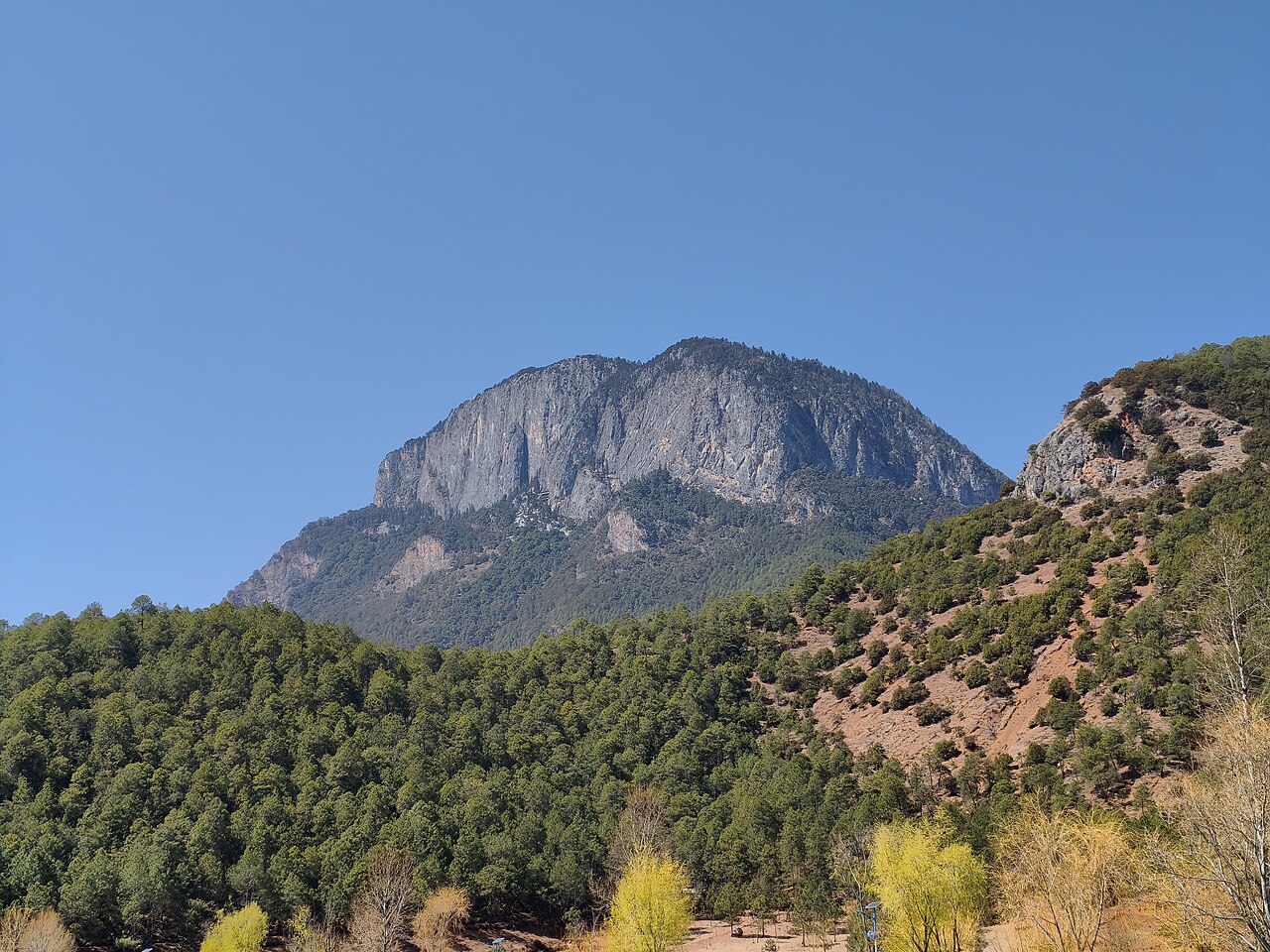
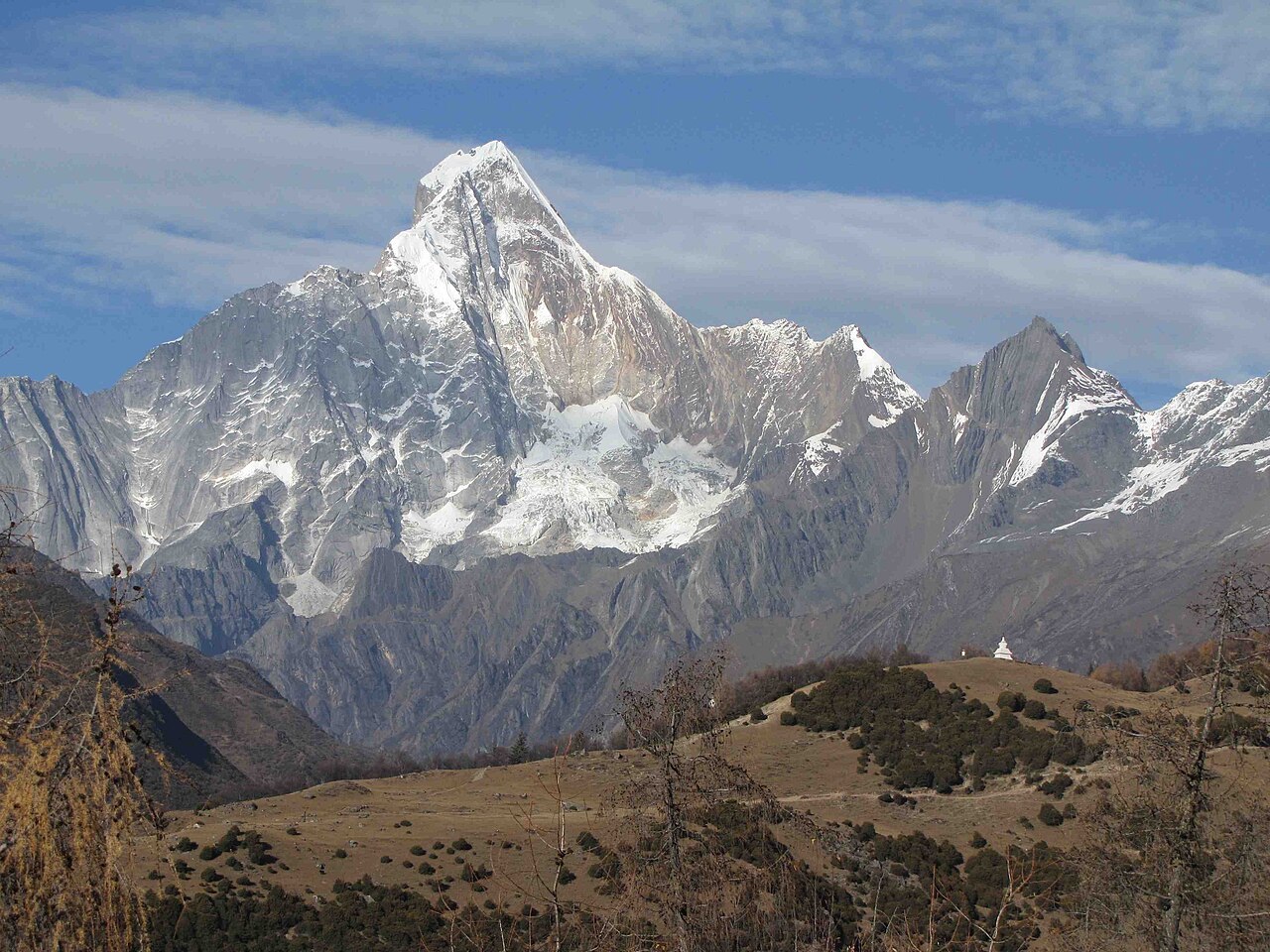
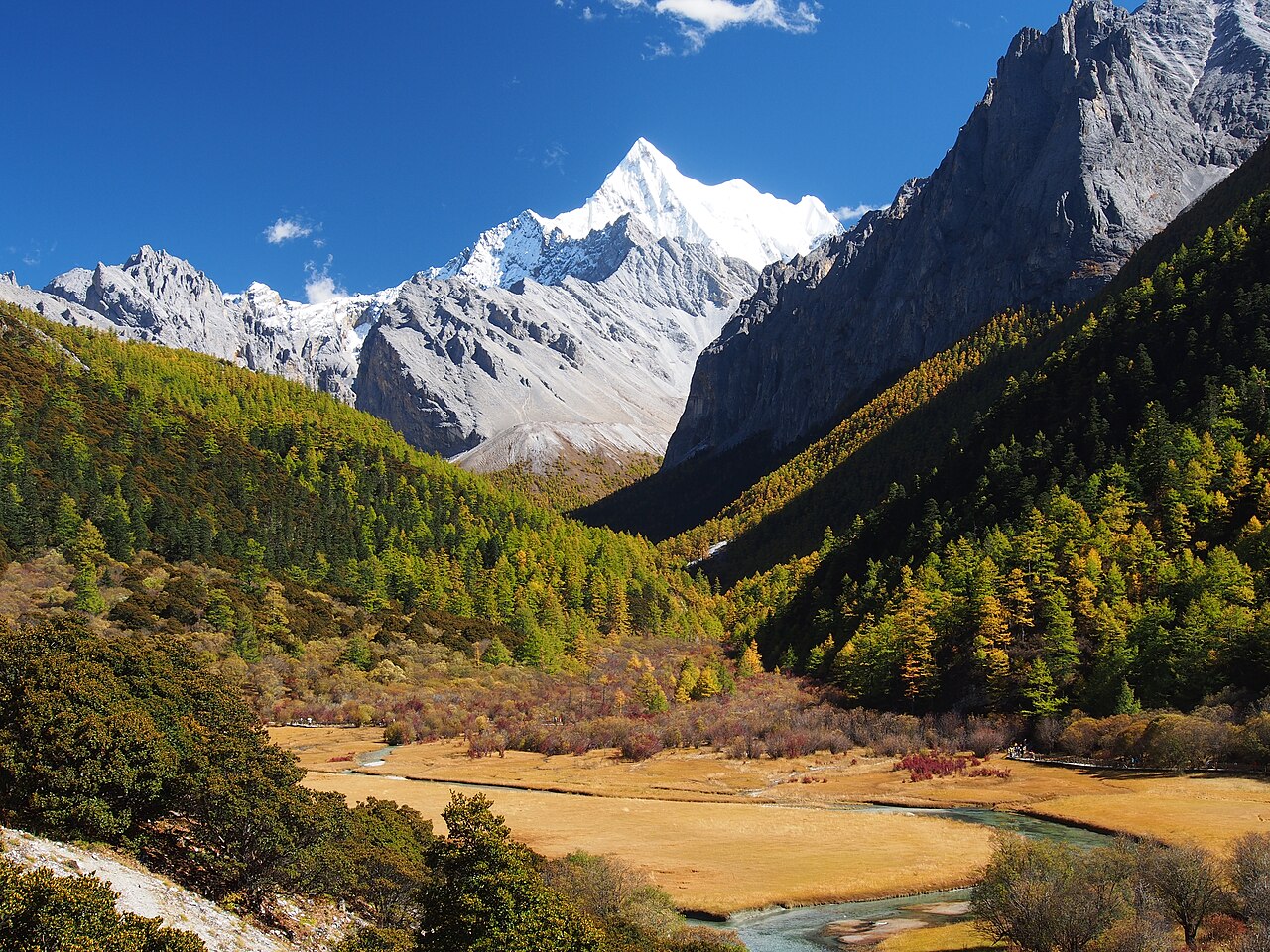
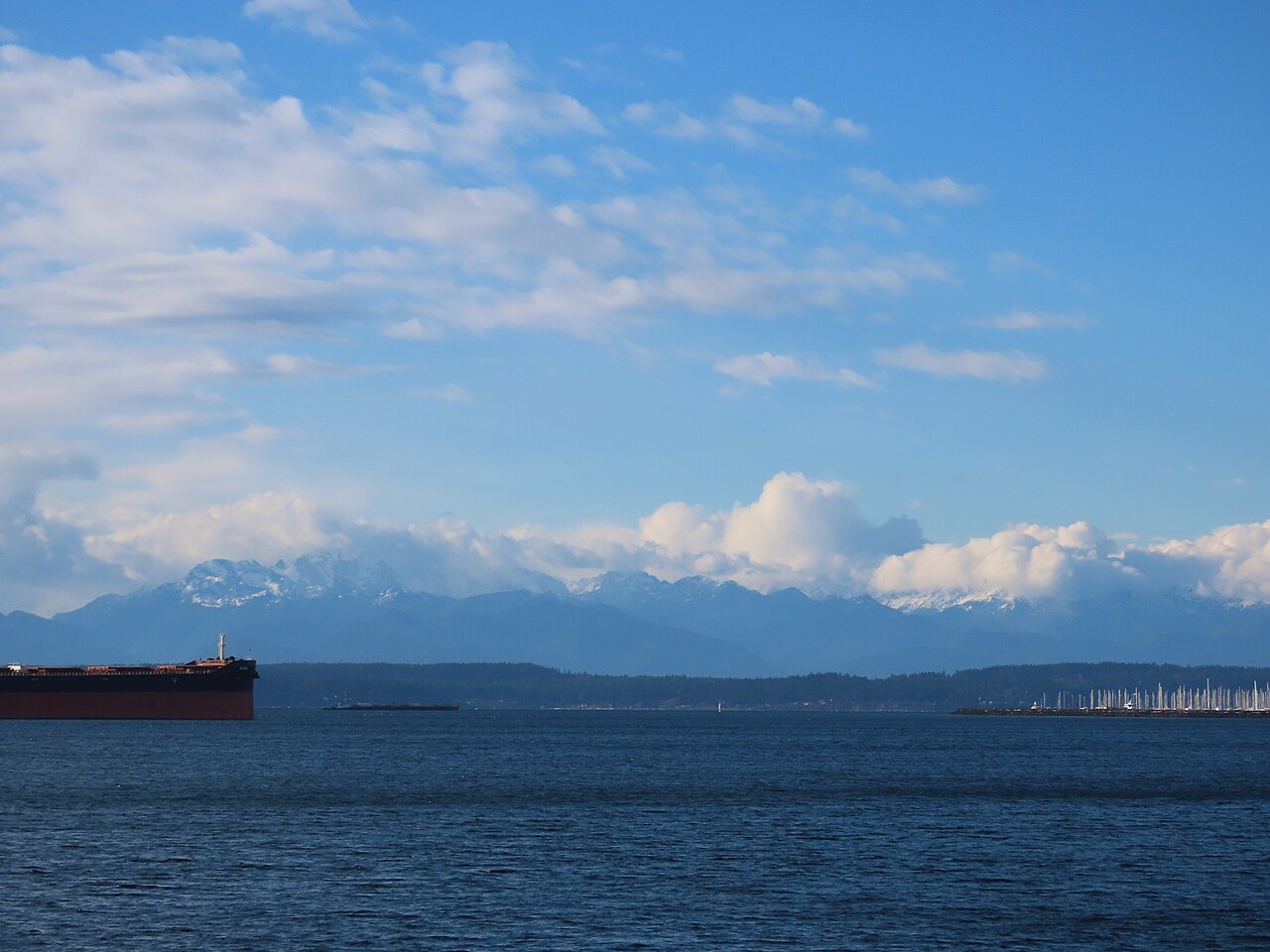
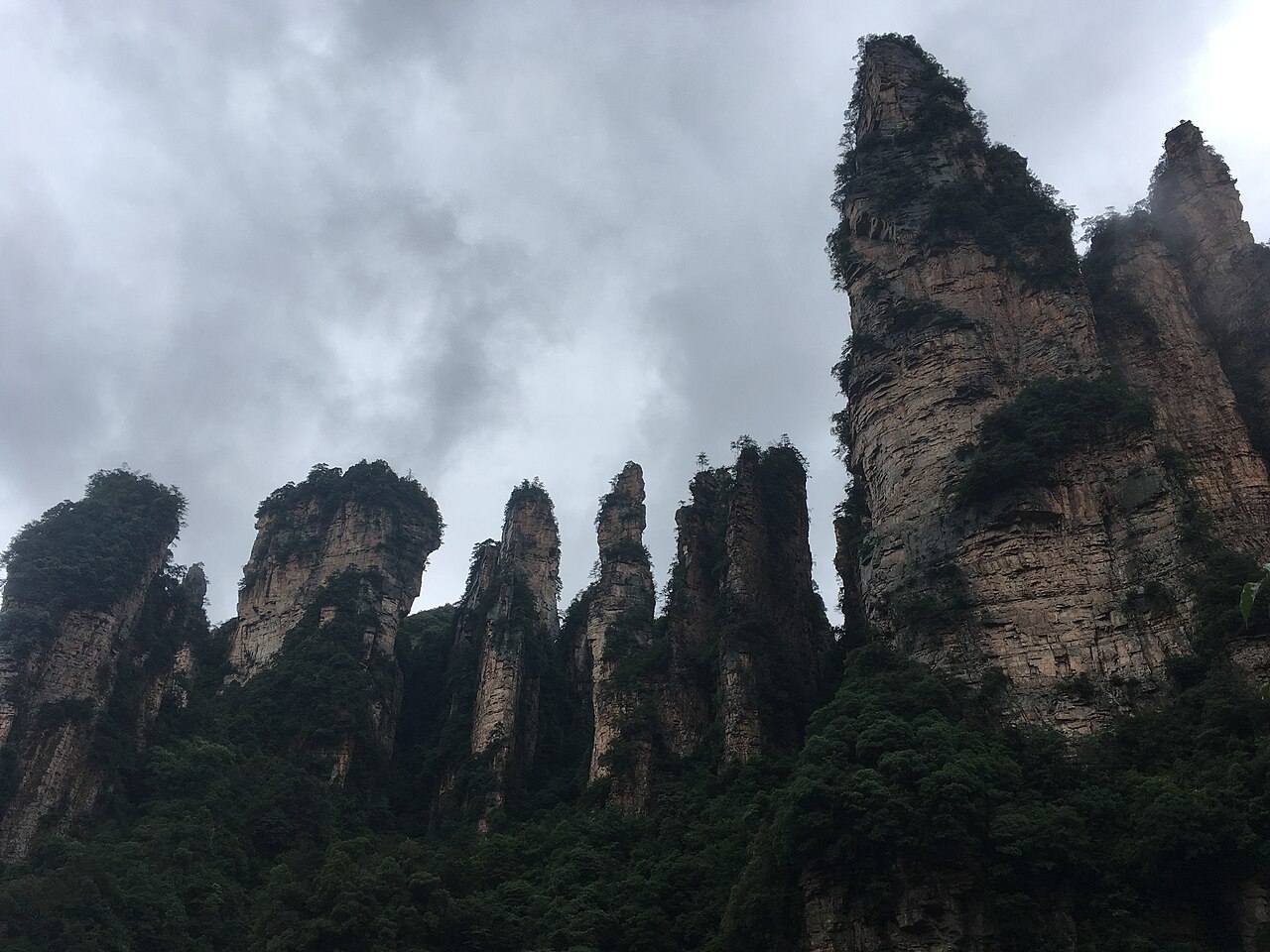
Dawn light on the granite face of Mount Hua's West Peak
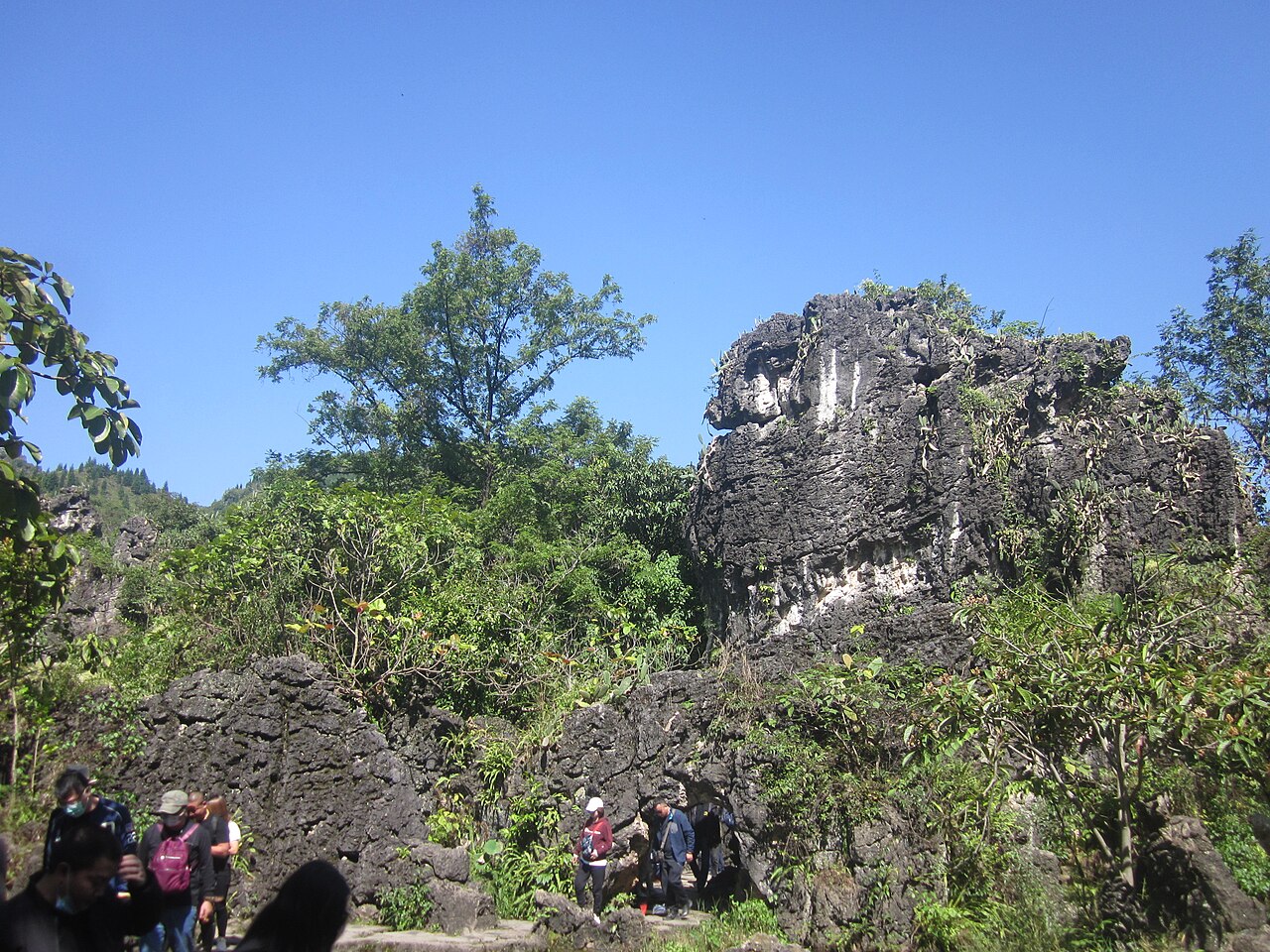
The Changkong Plank Road, bolted to the south cliff with a thousand metres of air below
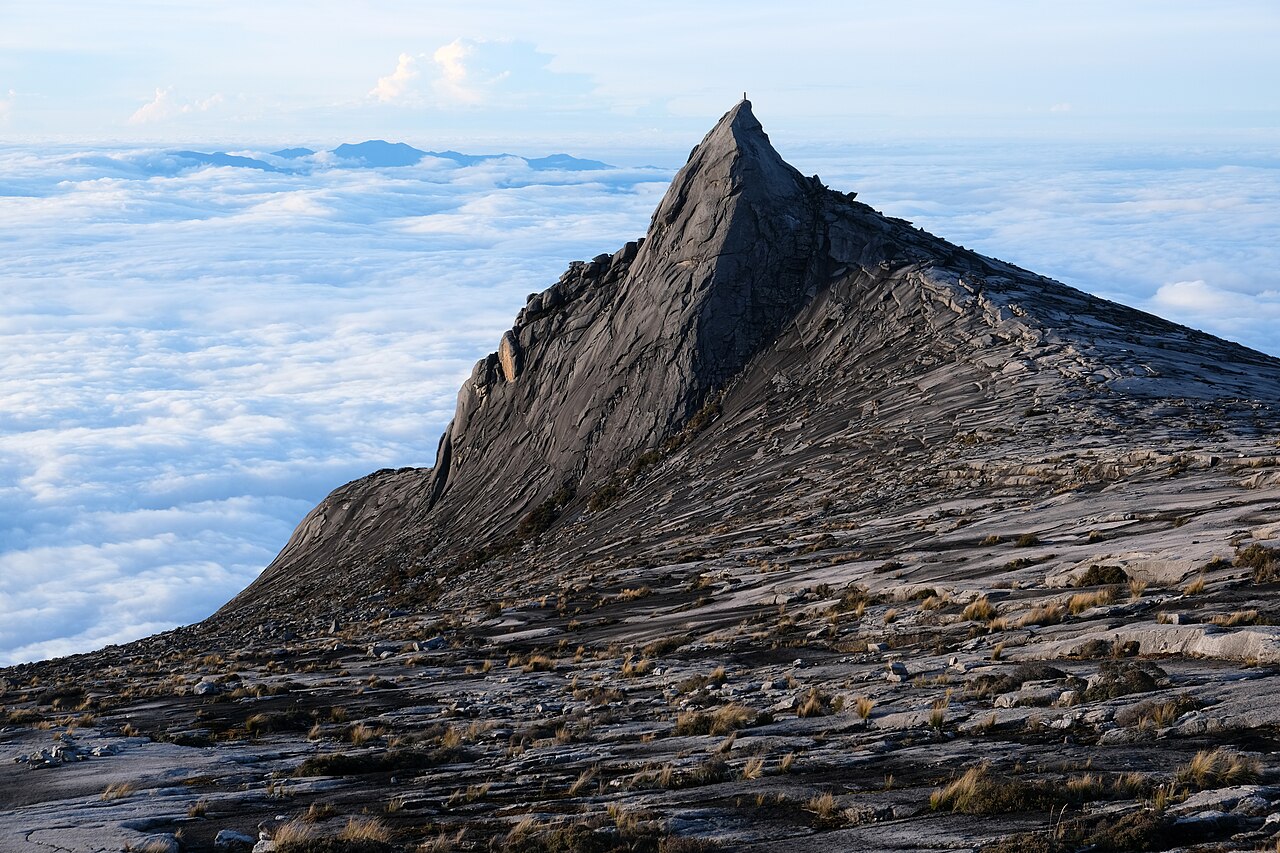
Canglong Ling, the Black Dragon Ridge, barely a metre wide
Cloud sea below North Peak, seen from the summit terrace

The first few kilometres of the night climb are actually easy going, just stone flags with a bit of a slope, and there are streetlights. I was smiling. But either way, rest when you need to and pace yourself — the mountain will still be there.

xiedaquan, 'Sixteen Hours Walking Mount Hua'

I'd wanted to come for years. Partly because it's close to home, partly because Mount Hua is properly famous. I read a lot of wuxia novels as a kid and the Huashan Sect was a name I'd heard a thousand times. I used to imagine myself like Linghu Chong, practising sword forms alone on the summit.

浮浮飞生, 'Two Days at Mount Hua: One Road Up Since Ancient Times'

You start walking at eleven at night with a torch strapped to your head, and for the first two hours it feels almost easy — wide stone steps, a gentle gradient, streetlights every fifty metres, other climbers chatting in the dark. Then you hit the Thousand-Feet Precipice: a crack in the cliff 370 steps deep, wide enough for one person, where you haul yourself up a chain hand over hand while the rock presses in on both shoulders. Above that comes the Hundred-Feet Gorge, then the Lao Jun Furrow, and by the time you reach North Peak your legs have stopped asking questions.

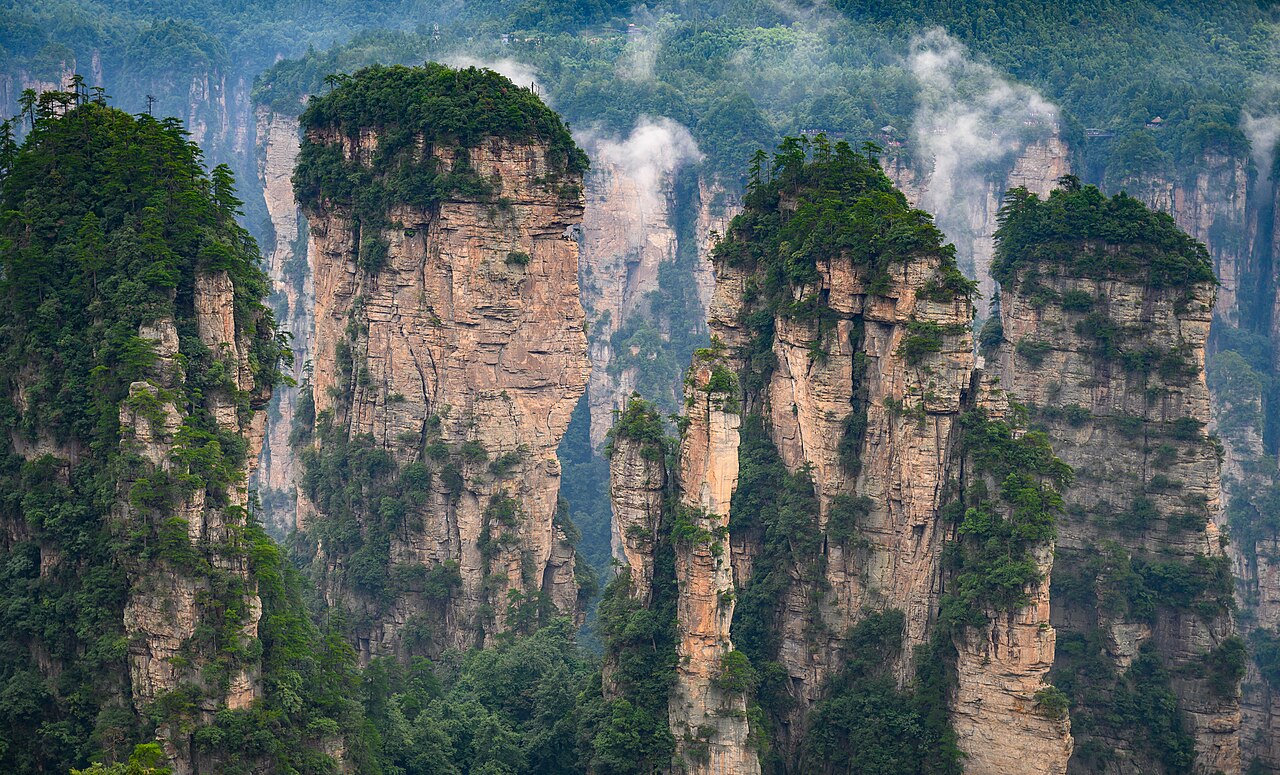
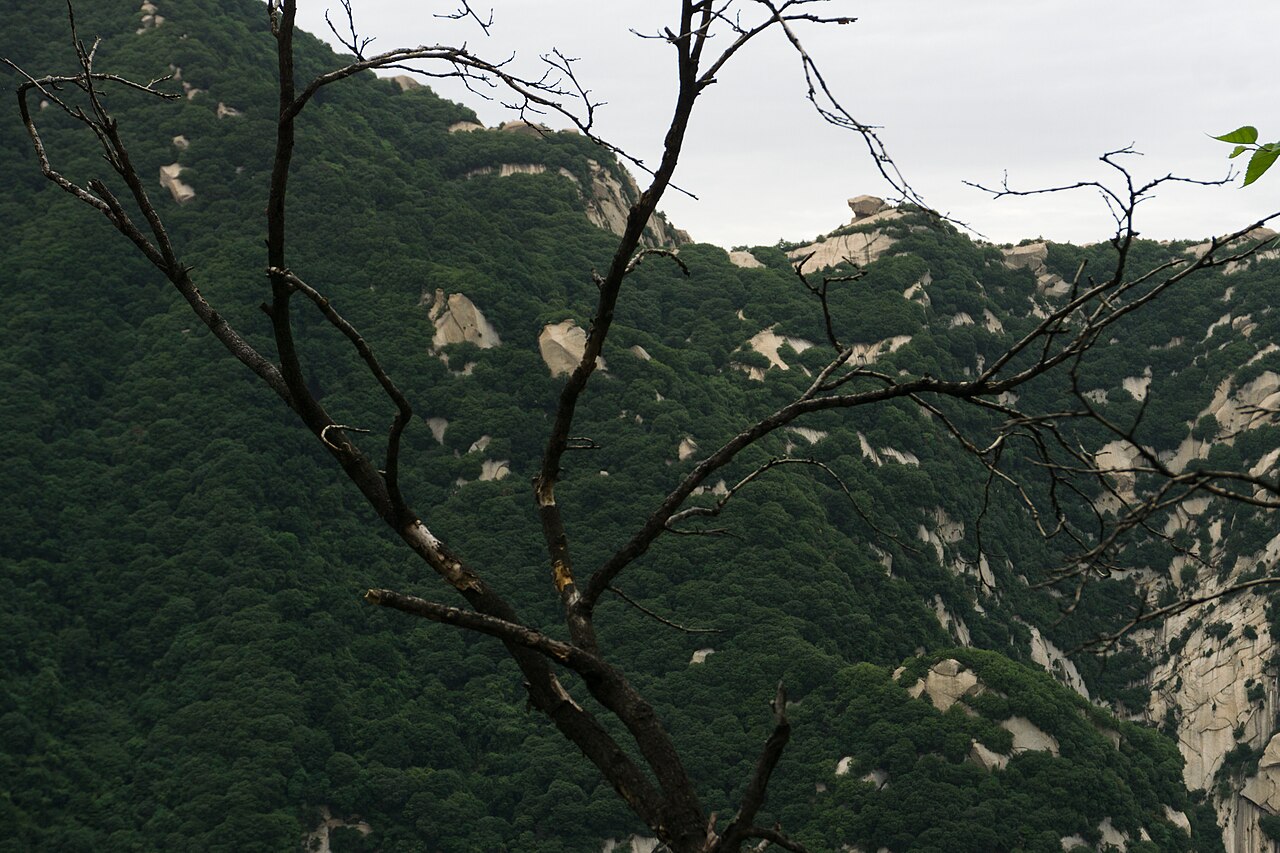
The mountain is one piece of granite, which is why it looks the way it does — no soft shoulders, no gradual ridges, just five peaks standing up out of the Wei River plain like knuckles. The South Peak is the highest at 2,160.8 m and on a clear day you can see the Yellow River, the Wei and the Jing rivers braided below you across the plain. The West Peak is a single slab with a sheer face on its north-west side, and the East Peak is where everyone stands at dawn with a rented army coat over their shoulders, waiting for the sun to come up behind a pine branch.

What makes Hua Shan different from other Chinese mountains is that the danger is the attraction. The Changkong Plank Road is a few planks bolted to the south cliff face with a drop of a thousand metres below; the Yaozi Fanshen is a bulge of rock you have to shuffle around backwards, gripping a chain, your heels over nothing. Both have harnesses and both have queues. Come on a weekday, come out of the Golden Week holidays, and come ready to say no to your own legs at least once.

Mount Hua

Don't leave without

Seven things that are worth rearranging a day for.

  1. Watch sunrise from East Peak's Chaoyang Terrace — leave Yuquan Yuan around 23:00 to make it
  2. Edge along the Changkong Plank Road at the South Gate of Heaven, harness clipped in, plank by plank
  3. Cross Canglong Ling, the black dragon ridge that's barely a metre wide with drops on both sides
  4. Climb the 370 steps of the Thousand-Feet Precipice and the 91 steps of the Hundred-Feet Gorge
  5. Stand on North Peak's terrace at dusk when the cloud sea rolls in below the ridge
  6. Eat a bowl of Huayin big-blade noodles in Huayin town before you go up — they're the local standard

Highlights

Five reasons Mount Hua earns its reputation as China's most dangerous mountain

The West Peak, a single slab of gr

At 2,082 m the West Peak is one enormous block of rock with a sheer 1,000 m cliff on its northwest face, cut so clean it looks like someone took a knife to it. This is the peak the whole mountain is named for — 'Hua' is an old word for flower, and from a distance the five summits open like a lotus. Come up late afternoon and stay for the sunset over the Wei River plain; it is the single best view on the mountain.
Sunrise from the East Peak, and wh

The East Peak (2,090 m) is where everyone watches the sun come up — the summit tilts east and the view runs clear over a hundred knife-edge ridges. To catch it you start walking from the foot of the mountain around 23:00, climb four to six hours in the dark, and arrive just before first light. It is brutal and it is the whole point of Mount Hua. Bring a headlamp, and rent a padded army coat at the top for the wait.

The Plank Road in the Sky, nailed

The Changkong Zhandao is a 100 m walkway of stone planks pegged into the waist of the South Peak, with a drop of hundreds of metres on both sides and nothing but a dangling chain to hold. The old local warning goes: 'be careful, be very careful — if you fall, your body ends up in Shangzhou.' You clip into a harness (rented on the spot) and edge along facing the rock. It is the most photographed few metres in Shaanxi, and yes, it is genuinely exposed.

The Sparrowhawk Turn, where you fl

Yaozi Fanshen is a three-sided overhanging boulder with a single chain down its face. You grip the chain, find the carved footholds, shuffle face-to-the-rock to the edge — and then the path simply stops, with a wooden bar wedged into a crack. You have to turn your body like a sparrowhawk and swing across to the far cliff. Below the turn sits the Chess Pavilion, a white stone pavilion on a rock spur that is one of the strangest sights on the mountain.
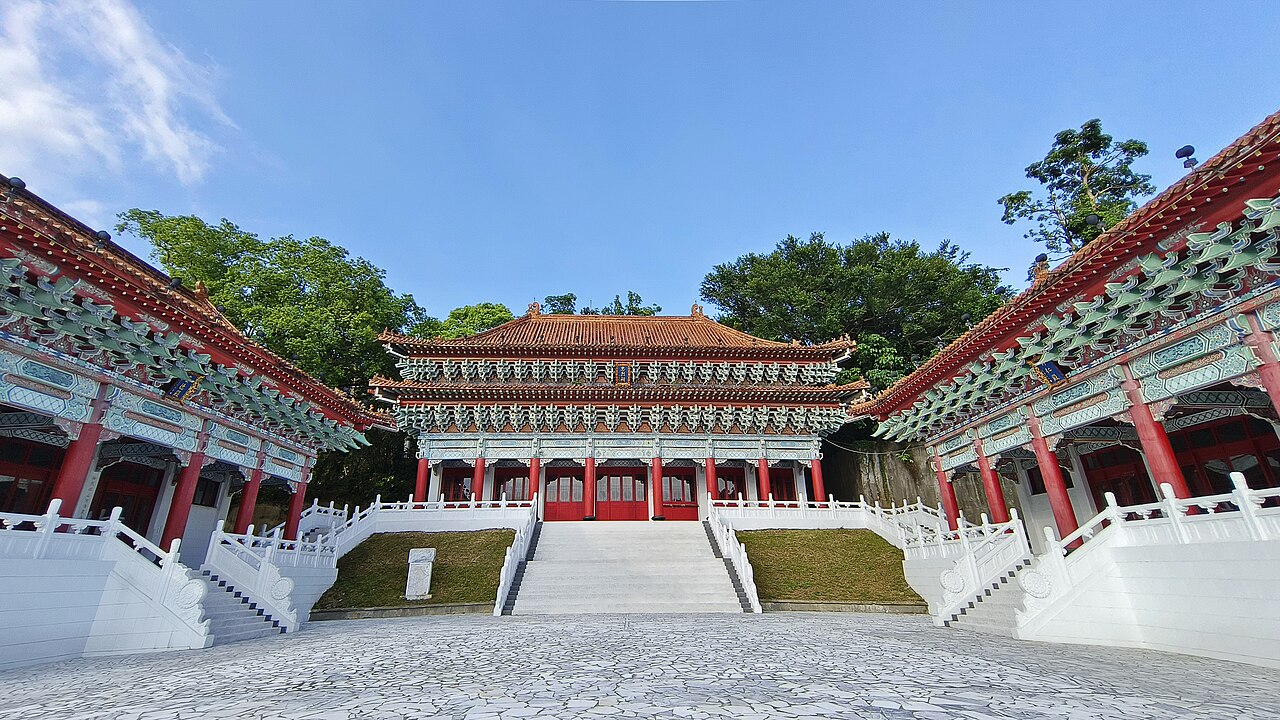
Clouds over the North Peak at dawn

The North Peak (1,614 m) is the lowest of the five and the first one most visitors reach, because the cable car lands ten minutes' walk away. Its flat 100 sq m summit platform is the best place on the mountain to watch cloud seas roll between the ridges — and it is the crossroads where the cable car, the classic footpath and the routes to the other four peaks all meet. If you have one afternoon and no legs left, this is still a real Mount Hua experience.

Itineraries

Two three-day ways to climb Mount Hua — one on foot, one on cable cars

The classic walk-up: the ancient p

3 days days

The full 'one road up Mount Hua' route on foot — the same stone steps people have climbed since the Tang dynasty — with a night on the mountain for sunrise. This is the trip for anyone who wants to say they actually climbed it. Expect 8–10 hours of walking on day one.

  1. Day 1

    Yuquan Temple to the North Peak, t

    Start at Yuquan Temple, the Taoist gateway at the foot of the mountain, then follow the old Huashan Valley path: Wuli Pass, Sha Luo Flat, Mao Nu Cave, Qing Ke Flat.

    The names get serious from here — Hui Xin Stone ('the stone that turns you back'), the Thousand-Foot Niche with 370 steps barely wide enough for one person, the Hundred-Foot Gorge with 91 steps in 46 m, and Lao Jun's Plough Ditch, where you climb on all fours.

    Push past the North Peak and over Canglong Ridge, a 100 m blade of rock less than a metre wide with drops on both sides, to Jin Suo Pass. Sleep at a summit guesthouse or at Zhen Yue Palace.

    Stops: Yuquan TempleHui Xin StoneThousand-Foot NicheHundred-Foot GorgeNorth PeakCanglong RidgeJin Suo Pass

  2. Day 2

    Sunrise, then all five peaks

    Set an alarm for well before dawn and walk to the East Peak viewing terrace. The wind up there is freezing even in summer — rent a coat the night before.

    After sunrise, work the loop: Middle Peak (Jade Maiden Peak), South Peak at 2,160.8 m for the panorama over the Yellow River and Wei River plains, then the West Peak for the axe-cleaved boulder and the sunset.

    If you want the two famous thrill walks, do them today: the Plank Road in the Sky hangs off the South Peak, the Sparrowhawk Turn sits below the East Peak. Both need a harness and both have queues.

    Stops: East Peak sunriseMiddle PeakSouth PeakPlank Road in the SkyWest Peak

  3. Day 3

    Down the hard way, then hot food i

    Walk down via the Golden Lock Pass and the North Peak, retracing the old path — the descent is harder on the knees than the climb.

    Alternatively, if your legs have had enough, take the cable car from the North Peak down to Wa Miao Gou and the shuttle bus to the visitor centre.

    Back in Huayin town, eat. Order a bowl of Hanyin da dao mian (hand-cut wide noodles) or xue mian, the local buckwheat 'instant noodle' that predates the instant noodle by about a thousand years.

    Stops: Golden Lock PassNorth PeakWa Miao GouHuayin old town

The cable-car trip: big views, min

3 days days

A much gentler three days that still gets you sunrise and all five peaks, using the cable car and sleeping one night on the mountain. Do this if you are travelling with parents, short on time, or just not interested in proving anything.
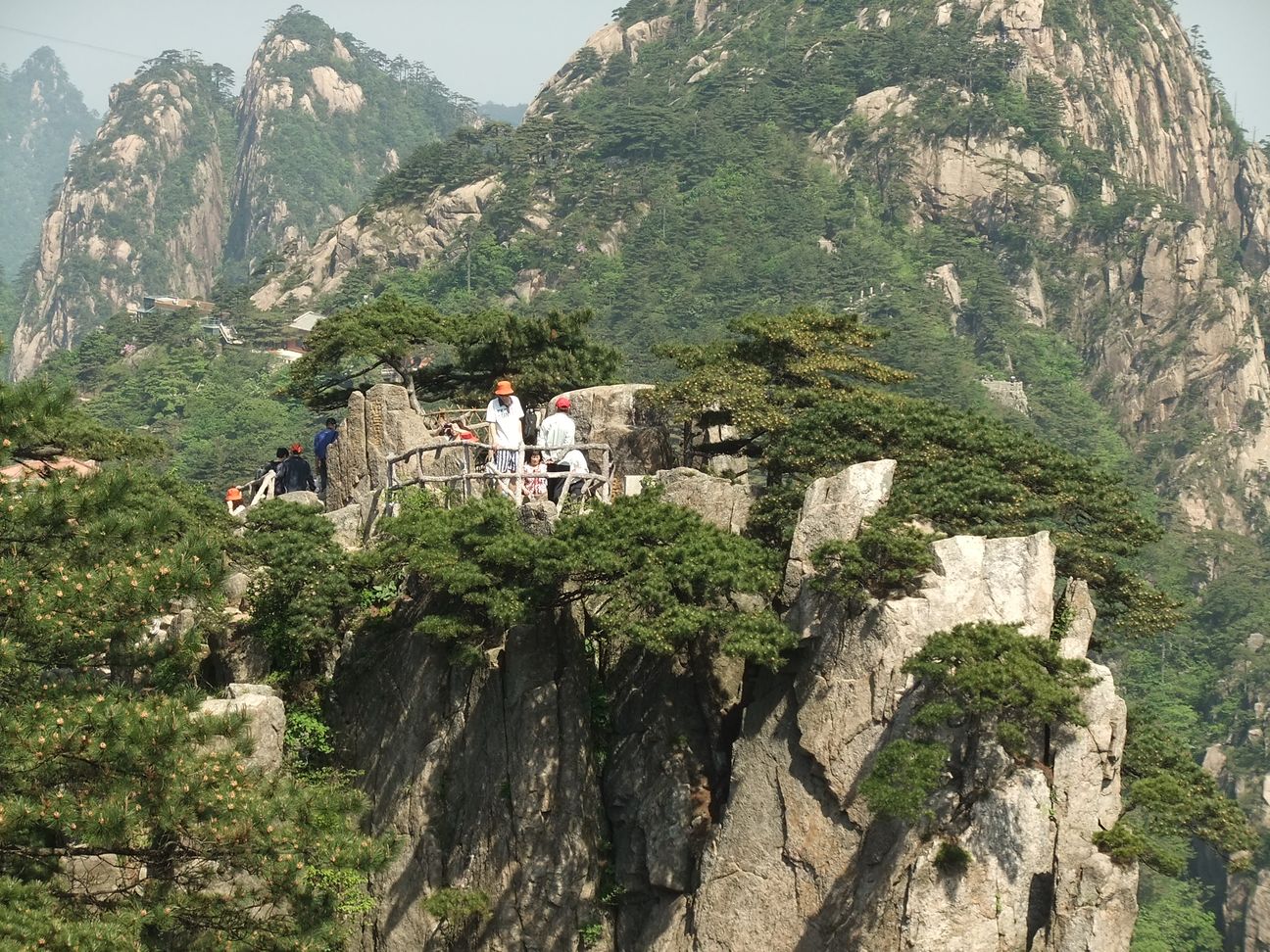
  1. Day 1

    Xi'an to Huashan by high-speed rai

    Take the high-speed train from Xi'an to Huashan Station — about 123 km, roughly 1.5–2 hours, tickets CNY 18–30. From the station it is 7 km to the mountain gate; a local bus costs CNY 3, a taxi CNY 15–20.

    At the visitor centre, buy the mountain ticket (CNY 180 peak season 1 March–end November, CNY 100 low season, valid 48 hours and including Xi Yue Temple, Xian Yu Valley and the internal shuttle) plus the shuttle bus to Wa Miao Gou (CNY 30 one way / 50 return in peak season, CNY 20 / 30 in low season).

    Ride the cable car to the North Peak — 7–8 minutes, CNY 90 one way in peak season (CNY 65 low season), CNY 150 return (CNY 120 low season). Walk ten minutes to the North Peak hotels and sleep high.

    Stops: Xi'an North StationHuashan StationVisitor CentreWa Miao GouNorth Peak

  2. Day 2

    Sunrise, the South Peak and the Pl

    Walk from the North Peak through Canglong Ridge to Jin Suo Pass and on to the East Peak for sunrise — around 1.5–2.5 hours at an easy pace.

    Spend the day crossing the summits: South Peak for the highest point and the Plank Road in the Sky, West Peak for the cliff and the sunset.

    Sleep at the West Peak hotel or the East Peak hotel if you want a second sunrise. Beds start around CNY 95–120 and you should book ahead — they sell out constantly.

    Stops: East Peak sunriseSouth PeakPlank Road in the SkyWest Peak

  3. Day 3

    West Peak down, and a stop at Xi Y

    Descend by the West Peak cable car or walk down the old path if you have the legs, then take the shuttle back to the visitor centre.

    On the way out, stop at Xi Yue Temple, included in your mountain ticket and the place where emperors performed the sacrifices to the western peak for two thousand years.

    Catch an afternoon train or bus back to Xi'an — the last tourist bus back leaves around 17:00, and the last long-distance bus from Huashan runs at 19:30.

    Stops: West Peak cable carXi Yue TempleHuashan Station

Sights

The five peaks and the walks that make grown adults grip the chain

Peak · 2,082 m

West Peak (Lian Hua Feng)

A single intact block of granite with a 1,000 m cliff on its northwest side, so sheer it looks machined. This is the peak of the legend of the Lotus Lantern, where the goddess San Sheng Mu was said to be buried under the mountain until her son split it open — the Axe-Cleaving Stone on the summit is the supposed evidence. It is also where most people watch the sunset, and the West Peak cable car makes it the easiest high summit to reach.

Altitude
2,082 m
Access
West Peak cable car, or 5–6 hours on foot from the west gate
Best time
Late afternoon for sunset
Don't miss
Axe-Cleaving Stone, Lotus Cave, She Shen Cliff

Tip If you are only doing one peak, do this one. The West Peak cable car takes you most of the way and the summit is a 20-minute walk — and the view down the cliff edge at golden hour is the shot everyone comes for.

Peak · 2,160.8 m

South Peak (Luo Yan Feng)

The highest point on Mount Hua and the highest of all the Five Great Peaks. The summit has two tops — the eastern one is covered in pines and cypresses that give the peak its old name, 'Falling Goose'. From up here you look down on the Loess Plateau and the Wei River plain, and on a clear day you can pick out the Yellow River and the Jing River. It is also the launch point for the Plank Road in the Sky.

Altitude
2,160.8 m
Access
On foot from Jin Suo Pass, roughly 1 hour from the East Peak
Best time
Midday, for the clearest long views
Nearby
Plank Road in the Sky, Bi Zhao Cliff

Tip This is the peak where you understand how high you actually are. Give yourself at least an hour up here; the walk between the two summits is short but the panoramas keep pulling you back.

Peak · 2,090 m

East Peak (Chao Yang Feng)

The sunrise peak. It leans east with a sheer drop on three sides and a viewing terrace at the very top, which is why every night climber on the mountain ends up here at 5am. The peak is also covered in ancient pines and holds the Yang Gong Pagoda, built by General Yang Hucheng to mark his own visit, with his calligraphy carved on all four faces. The Sparrowhawk Turn and the Chess Pavilion are both just below.

Altitude
2,090 m
Access
2–3 hours' walk from the North Peak; 4–6 hours from the foot overnight
Best time
Arrive by 05:00 for sunrise
Don't miss
Yang Gong Pagoda, Chess Pavilion, Sparrowhawk Turn

Tip The wind at the East Peak terrace at dawn is savage — rent a padded military coat at the summit hotels the night before, or you will spend the best ten minutes of your trip shivering instead of watching.

Thrill walk · South Peak

The Plank Road in the Sky (Changko

A walkway of stone planks driven into the vertical waist of the South Peak, just outside the South Heaven Gate. Above and below you is nothing but cliff; the path is about a foot wide, held by iron chains and supported by pegs hammered into the rock. It is the number one 'dangerous path' on Mount Hua and the reason half the people who come here come at all.

Length
About 100 m
Safety
Harness and lanyard rented on site for a small fee
Location
Just outside the South Heaven Gate, South Peak
Difficulty
High exposure — not for anyone with a fear of heights

Tip Go early. The plank road takes one person at a time in each direction and the queue can run an hour by mid-morning. If you genuinely cannot face it, the platform at Hui Shen Tai above still gives you the full view of the plank road and the East Peak.

Historic path · below the North Peak

Thousand-Foot Niche and Hundred-Fo

Two of the oldest and steepest sections of the ancient 'one road up Mount Hua'. The Thousand-Foot Niche is a crack in the cliff with 370 steps cut into it, wide enough for one person, chains on both sides — look up and you see a strip of sky, look down and it is a well shaft. The Hundred-Foot Gorge follows, only 46 m long with 91 steps, and there is a boulder wedged overhead that has been threatening to fall for several centuries.

Thousand-Foot Niche
370 steps, one-person width
Hundred-Foot Gorge
46 m long, 91 steps
Carved in
Late Ming / early Qing, reinforced in the Republican era
Location
Between Qing Ke Flat and the North Peak

Tip Do these on the way up, not the way down — descending a one-person-wide stairwell that a thousand other people are climbing is genuinely unpleasant, and the 1985 twin-lane path only covers part of the route.

Food

What to eat in Huayin: noodles with altitude

Huayin big-blade noodles (大刀面)

The mountain's signature noodle, named with the same swagger as the peak itself. A heavy blade shaves the dough into ribbons, served with chili oil and vinegar. Around 12–18 yuan a bowl in the town below.

Xue mian (踅面)

A coarse-grain noodle unique to Heyang County and the Weinan area, and arguably China's oldest instant noodle — cooked, cooled and reheated to order. Locals are fiercely loyal to it; you'll find it for 8–12 yuan.

Mashi pao (麻食泡)

Huayin's answer to Xi'an's lamb paomo: a bowl swimming in a slick of chili oil and rendered fat, with jade-green tofu, golden vermicelli, white scallion and yellow garlic poking through, and chunks of guokui bread buried at the bottom. One bowl is a meal.

Cold rice noodles and liangfen (凉皮

The reliable cheap eats — slippery, garlicky, chili-laced, and the fastest thing to grab before a night climb. Expect 6–10 yuan from any street stall.

Yellow River catfish (黄河鲇鱼)

Braised in a clay pot with soy and scallion, this is the local special-occasion dish from the river that runs below the mountain. Look for it in the sit-down restaurants in Huayin city rather than on the mountain.
Where to eat

Restaurants and eating streets worth the detour

Street food · best before a night climb

Yuquan Night Market

The eating street at the foot of the mountain, northeast corner of the Yuquan Road crossroads. It runs until about 2am, which makes it the obvious last stop before you start walking. Eat at 20:00–21:00, rest a little, then head up.

Location
Northeast corner of Yuquan Road crossroads, Huayin
Hours
Until roughly 02:00
Expect to pay
10–30 yuan per person
Best for
A hot meal before an overnight ascent

Local snack district

Huayin city centre (华阴市区)

The town sits 120km east of Xi'an and has a long snack culture of its own. The best bowls often come from shops that barely look like shops, or from a single rolling cart. Don't judge by the frontage.

Location
Huayin town, 7km from the mountain gate
Known for
Big-blade noodles, mashi pao, guokui bread
Price level
Cheap — most dishes under 20 yuan
Tip
Supermarkets close around 23:30

Rental and supplies

Shops by the Yuquan yuan trailhead

The row of small shops at the walking trailhead sells snacks, water and gear, and also rents what you might have forgotten. Anything you rent has to go back to the same shop, so if you descend by cable car you'll need to return to Yuquan yuan.

Rents
Torches, hiking poles, rubber-soled shoes (all sizes)
Shoes
Cleaned between rentals
Water
5–8 yuan a bottle on the mountain
Closing
Most shops shut around 23:30

Convenience, not cuisine

Mountain-top restaurants

There is food on the mountain and it is expensive for what it is. The honest advice is to carry your own: high-calorie, low-weight, low-volume — chocolate, compressed biscuits, sausage. That said, a bowl of hot noodles at 2,000m in the cold is worth more than it costs.

Where
Near the peaks and at the cable-car stations
Quality
Ordinary, priced for altitude
Better plan
Bring your own food up
Water
2–3 bottles per person is the usual recommendation

Sleeping

Sleeping on the mountain or under it

Cheapest · foot of the mountain

Yuquan Road farmstays (山下住宿)

A cluster of star-rated hotels and family-run farmstays at the base, mostly run by local households. Ten minutes' walk to Yuquan yuan, which means ten minutes to the start of the classic trail. In low season rates drop as far as 40% off — and you should haggle regardless of the posted price. The earlier you arrive, the better your bargaining position.

Price
Dorm beds from about 15 yuan; doubles about 120 yuan; private rooms 200–300 yuan
Farmstay range
50–200 yuan
To the trailhead
10 minutes on foot to Yuquan yuan
Tip
Tell reception you're climbing for sunrise and they'll wake you

On the mountain · best for the classic route

Yuntai Shanzhuang / North Peak Hot

Sitting on the north peak where the cable car, the historic trail and the path to the three outer peaks all meet. Rooms are basic and there is no hot water for showers, but the position saves you a brutal pre-dawn climb. Staff will walk you through the nearby sights — the Zhiqiu Huashan trail, the cable car, Canglong Ridge, and the full mountain panorama.

Price
Beds from 95 yuan
Address
North Peak, Mount Hua scenic area, Shaanxi
Phone
0913-4360508
Access
3–4 hours on foot from the west gate, or 10 minutes from the cable car
Note
Book ahead — it fills up

On the mountain · sunrise address

East Peak Hotel (东峰宾馆)

If your whole reason for coming is the sunrise, sleep as close to it as possible. The East Peak hotel sits among thirty-odd sights — Xianzhang Cliff, Chaoyang Terrace, the Sparrowhawk Turn, Yinfeng Pavilion, the long-air plank walk — and offers rooms in three grades so you can pick your comfort level. Beds from 120 yuan.

Price
Beds from 120 yuan
Address
East Peak, Mount Hua, Huayin, Weinan, Shaanxi
Phone
0913-4360508
Access
Roughly 10 minutes from the top cable-car station
Note
Mountain accommodation has no shower water

Getting there & around

Trains, buses and the cable car that saves your legs

High-speed train from Xi'an

The fastest, cheapest and least stressful way in. Trains run all day from Xi'an North to Huashan North station, about 30–40 minutes, and a second-class seat costs roughly CNY 55–70. From Huashan North, a shuttle bus (CNY 3) or a taxi (CNY 15–20) covers the last 7 km to the visitor centre or to Yuquan Yuan. Book on the 12306 app or at the station; morning departures sell out on weekends and holidays, so reserve a day ahead.

Station
Huashan North (华山北), on the Zhengzhou–Xi'an high-speed line
Journey time
30–40 min from Xi'an North
Fare
About CNY 55–70 one way, second class
Last leg
Shuttle CNY 3 or taxi CNY 15–20 to the mountain gate

Bus from Xi'an

Two options. The tourist line 1 leaves Xi'an Railway Station east square at 08:00 and returns from Huashan at 17:00, CNY 28. Regular buses from the Chengdong (Tangdu) coach station run every ten minutes to Huayin, CNY 33, and you ask the driver to drop you at the Huashan gate; the last one back leaves at 19:30. There are also private minibuses to the Huashan reception centre (Yuquan Hotel) at CNY 30 one way, CNY 50 return, last departure from Xi'an at 17:00.

Tourist line 1
Xi'an Railway Station east square, 08:00 out, 17:00 back, CNY 28
Chengdong coach station
Every 10 min to Huayin, CNY 33, last return 19:30
Private minibus
CNY 30 one way / CNY 50 return to Yuquan Hotel
Journey time
About 2 hours

Air and self-drive

Fly into Xi'an Xianyang International Airport, 138 km away. An airport shuttle to the railway station costs CNY 25, then switch to a train; a taxi from the airport to Xianyang station is about CNY 28 for 12 km, and trains on to Huashan run CNY 20–23. Driving from Xi'an is 118 km on the Xitong expressway, about 2 hours with roughly CNY 90 in tolls. A taxi all the way from Xi'an runs CNY 300–400 one way.

Airport to mountain
138 km, about 1.5 hours by car
Airport shuttle
CNY 25 to Xi'an Railway Station
Drive from Xi'an
118 km, about 2 hours, tolls around CNY 90
Taxi from Xi'an
CNY 300–400 one way

Cable car and mountain shuttle

The Huangfu Valley road runs 7.6 km from east of Yuquan Yuan to Wamiao Gou, where the cable car lifts you to North Peak in seven or eight minutes. The shuttle bus is CNY 30 one way / CNY 50 return in peak season (5 March–25 November) and CNY 20 / CNY 30 off season (26 November–4 March). The cable car itself is CNY 90 one way, CNY 150 return in peak season, and CNY 65 / CNY 120 off season, running 07:00–19:00 in peak season and 09:00–17:00 in winter. Note the mountain ticket does not include this shuttle.

Shuttle road
7.6 km, Huangfu Valley to Wamiao Gou
Shuttle fare
CNY 30 one way / 50 return peak; CNY 20 / 30 off season
Cable car
CNY 90 one way / 150 return peak; CNY 65 / 120 off season
Cable hours
07:00–19:00 peak, 09:00–17:00 winter

Shopping

What to carry home from Huayin

Huashan shadow puppets

Cut from top-grade ox hide and put through tanning, tracing, carving, painting, pressing and assembly, these are proper folk art rather than airport tat. Subjects come from traditional opera and the Huashan legends, and they pack flat — the best-value souvenir on the mountain. Buy from stalls on the trail or in Huayin town, and bargain politely rather than picking a fight over a few yuan.
Huashan paper cuts

Sold at the stalls along the trail and in town, cut for windows, door curtains, ceilings and kang surrounds, and also used on ceramics, embroidery and printed cloth. Styles vary from delicate and bright to blunt and bold depending on the village they come from — a light, flat, unbreakable thing to slip into a suitcase.

Huashan embroidery

Practical and decorative at once: curtains, door hangings, insoles and saddle blankets worked with flowers, birds, fish and opera figures. The local style leans coarse, free and loud in colour, which is exactly why it looks good on a wall at home. Look for it in Huayin town rather than at the summit, where prices climb with the altitude.

Straw weaving and trail trinkets

Villagers set up stalls the length of the climbing route selling straw-woven goods and small handicrafts with a strong Shaanxi flavour. They are cheap, light and make decent gifts, but check the price before you pick anything up and keep the haggling friendly — this is someone's living, not a game.

Practical info

Numbers, hours and the rules that keep you safe

Huashan is a genuine mountain, not a theme park: weather changes fast, the chains are cold, and the staircases are narrow enough that two people cannot pass. Read the hours and fares above, pack for one season colder than the valley, and give yourself a buffer day if the forecast turns.

Mountain ticketCNY 180 peak season (1 March–end November), CNY 100 off season (1 December–end February). Valid 48 hours and covers the Xiyue Temple, Xianyu scenic area and the visitor-centre transport, but not the Huangfu or Wengyu shuttle buses.
Opening hoursWest gate open 24 hours. East gate 07:00–19:00 in peak season, 09:00–17:00 in winter. The cable car follows the same seasonal pattern.
Best monthsApril to October is the main season. Autumn brings moderate temperatures and red leaves across the ridges; spring is misty and full of wild flowers; summer is clear, cool up top and good for waterfalls and cloud seas. The temple fair falls on the fifteenth day of the third lunar month and fills the mountain with pilgrims.
What to packSoft-soled trainers or rubber-soled cloth shoes — never new boots. Gloves for gripping chains, a head torch for night climbs, a light rain shell, and warm layers even in summer because the summit wind is cold. Bring 2–3 bottles of water per person; refills on the mountain cost CNY 5–8. A stick helps lower down but you will want both hands free on the exposed sections.
Money and shelterVillage guesthouses at the foot of the mountain run CNY 50–200, about ten minutes' walk from Yuquan Yuan. On the mountain, beds start around CNY 95–120 at North Peak and East Peak hotels; West Peak Hotel beds start at CNY 100, tel 0913-4360508. Peak-season rooms sell out, so book ahead, and in the low season you can sometimes negotiate down to 60 percent. Ignore posted rates and haggle — the earlier you arrive, the better your chances.
Safety and emergenciesDo not attempt Changkong Plank Road or Yaozi Fanshen if you are unsure of your grip or the weather has turned. Winter snow is safer when untrodden and slicker once packed down; crampons help. In an emergency, Huashan Xiehe Hospital is on Huashan West Road, tel 0913-4352815. Tourist complaints 0913-4362692, tourist information 0913-4361979.
Etiquette and small printBuy your ticket in advance on busy dates, keep your 48-hour ticket if you plan to visit Xiyue Temple, and carry your passport or ID for the ticket check. Stalls along the trail are cash and mobile-payment friendly, but bring small notes for the shuttle bus.

Background

How Mount Hua became China's most feared mountain

A single block of granite, and a n

Mount Hua is one of the Five Great Mountains of China, the western one, standing 2,154.9 metres above sea level about 120 km east of Xi'an in Huayin, Shaanxi. The whole massif is essentially one enormous block of granite — geologists call it a granite batholith — which is why the peaks rise as sheer white walls instead of gentle cones. Seen from a distance the five peaks open like a lotus, and the character hua in the mountain's name is an ancient word for flower. That is the paradox you will feel all day: it looks like a flower and it climbs like a wall.

From a forbidden peak to a mountai

Before the Tang dynasty almost nobody reached the summit. Emperors sacrificed to the western peak down in the Xiyue Temple at the foot of the mountain rather than climb it, and it was only when Daoism flourished and monks began building shrines on the slopes that a trail was hacked up the northern valley — the route still known as the single road up Mount Hua. The mountain then filled up with stories: Song Taizu, the founding emperor of the Song, supposedly lost the entire mountain to the Daoist immortal Chen Tuan over a game of chess at the pavilion on the South Peak, which is why locals still joke that Mount Hua never paid grain tax. In the twentieth century the mountain added a modern legend when PLA scouts scaled the supposedly impregnable North Peak in 1949 — the story filmed in 1953 as Taking Mount Hua by Strategy. If you want the full historical walk-through with a local storyteller, our Mount Hua private tour covers the trail and the temples at a pace that suits you.

Further reading

Watch, read and listen before you climb

Film

Taking Mount Hua by Strategy (1953

Directed by Guo Wei, Beijing Film Studio, 120 minutes

A black-and-white war film about the 1949 assault in which PLA scouts climbed the cliffs behind Nationalist lines and took the North Peak. Watch it before you ride the cable car past the spot and the mountain stops being scenery — you start looking for handholds.

Book

Mount Hua: A Collection of Strange

Wu Changjie

A painter's survey of the five peaks — East (Chaoyang), West (Lotus), South (Falling Goose), North (Cloud Terrace) and Centre (Jade Maiden) — with the kind of close observation you only get from someone who sat in front of each cliff for days. Useful for deciding which peak you actually want to be standing on at sunrise.

Music

Mount Hua

Wallace Chung (Zhong Hanliang), from Visual Animal

The title track of Chung's 2010 album, recorded after he set up his own studio. It is polished Mandarin pop rather than mountain music, but the name does the work: put it on the bus from Xi'an and you arrive in the right mood.

The questions visitors ask us most about Mount Hua, answered plainly.

Frequently asked questions

Prices and practical details are reviewed every month by our Beijing team and updated the day a rule changes.

Is Mount Hua worth visiting, or is it just a hard climb?

It's worth it for the exposure, not just the exercise — the plank road, the ridge crossings and the sunrise are experiences you can't get on a gentler mountain. If you only want scenery, take the West Peak cable car up and walk the loop between the peaks; you'll still see the granite and the cloud sea without the night climb.
What's the best time of year to climb Mount Hua?

April to October is the main season, with the best combination of clear air, green pines and manageable temperatures. Autumn is arguably the finest — mild days and red leaves on the cliffs. Winter (December to February) is beautiful under snow and much quieter, but the plank road and Yaozi Fanshen often close, and you'll want crampons or at least a rented pair of cleats.

How do I get to Mount Hua from Xi'an?

High-speed trains from Xi'an North to Huashan North take about 30–40 minutes and cost roughly CNY 55–75; slower trains to Huashan Station take 1.5–2 hours for CNY 18–30. From either station it's a short taxi or bus ride to the visitor centre or Yuquan Yuan. Tourist buses leave Xi'an Railway Station east square in the morning and take about 2 hours.
Can I climb Mount Hua in one day?

Yes, if you take the cable car both ways — start early, ride up to North Peak, walk the loop to East, South and West Peaks, and you'll be down by late afternoon. Doing it on foot in one day is possible for fit hikers but leaves no margin, and you'll miss the sunrise, which is the reason most people come.
Is the Changkong Plank Road safe?

It has a fixed cable and harness system and thousands of people do it every year, but it is genuinely exposed — a fall would be fatal, and the operation closes in snow, ice or high wind. You pay a separate fee for the harness, you clip in and out at fixed points, and if you're afraid of heights you should look at it from the South Gate of Heaven rather than step onto it.

Where should I sleep on Mount Hua?

East Peak Hotel is the classic choice for sunrise, with beds from around CNY 120 and views over the Chaoyang Terrace; West Peak Hotel and North Peak's Yuntai Villa are the other main options, from around CNY 95–100 per bed. Rooms are basic, there's no hot water for showers on most peaks, and you must book ahead — the mountain fills up, especially on weekends and holidays.

Related reading

Related reading

Visas Do I Need a Visa for China? Requirements, Costs and How to Apply China's entry rules changed more in the last three years than in the previous twenty. Here is exactly who needs a visa, what it costs, how long it takes and which passports now walk straight through. 9 min read Visas China's 240-Hour Visa-Free Transit: Who Qualifies and How It Works Ten days in China with no visa application, no fee and no fingerprints — if you hold the right passport and leave for a third country. Here is the rulebook, port by port. 8 min read Money Paying in China: Alipay, WeChat Pay, Cards and Cash Roughly nine in ten urban payments in China now run through a phone. Set up two apps before you fly, carry a modest cash float, and you will never be stuck at a till. 8 min read Transport China's High-Speed Rail: How to Book, What It Costs, How Fast It Goes The fastest way to cross China is also the most pleasant. Here is how to book a ticket with a foreign passport, what the three classes actually give you, and how to survive a Chinese station at rush hour. 9 min read Planning Best Time to Visit China: Month by Month, Region by Region China is the size of Europe, so 'the best month' depends on where you stand. Here is the month-by-month answer for the north, the Yangtze valley, the south and the plateau. 8 min read Planning What to Pack for China: The Complete 2026 Checklist Twenty thousand steps a day, three climate zones and a phone that has to do everything. This is the list we give our own travellers, minus the things they never used. 7 min read Food Chinese Food Culture: Eight Cuisines, One Table There is no such thing as Chinese food. There is Cantonese, Sichuan, Hunan, Jiangsu, Zhejiang, Fujian, Anhui and Shandong — and knowing which one you are eating changes everything. 8 min read Traditions Chinese Tea Culture: Six Classes, One Pot, Two Fingers Tea in China is not a beverage category, it is a social technology: it fills silences, seals deals and sets the pace of a meal. Here is how to sit down in one and not look lost. 7 min read Traditions Chinese Festivals: The Calendar, the Dates and the Crowds Lunar dates mean the calendar moves every year — and two of the festivals move several hundred million people at once. Plan around them or plan into them, but never by accident. 8 min read Etiquette Chinese Etiquette: What Matters, What Does Not, and Why Most etiquette advice for China is either obvious or wrong. These are the dozen behaviours that actually change how you are treated, and the reasoning behind each. 7 min read

Tell us your dates.
We'll do the rest.

Free itinerary design, a revised plan within one working day, and nothing charged until you approve the final version.

  • The gate ticket is CNY 180 high season / CNY 100 low season and covers 48 hours, including the Xiyue Temple and Xianyu scenic areas but not the Huangfu Yu shuttle buses.
  • The North Peak cable car runs CNY 90 one-way or CNY 150 return in high season; the shuttle bus from the visitor centre to the lower station is CNY 30 one-way or CNY 50 return.
  • Climbing the Changkong Plank Road and the Yaozi Fanshen costs extra for the safety harness, and both close in snow or high wind — no exceptions.

No spam. No sales calls. Just a real itinerary from a real person.