City guide · Gansu

Lanzhou travel guide: beef noodles at dawn, the Yellow River at dusk, and a Silk Road city most travelers only pass through

A city split in half by the Yellow River, where beef noodles are a breakfast ritual and the Silk Road still runs through the streets.

  • Known forBeef noodles, the Yellow River, Silk Road history
  • Typical spendAbout CNY 800 for 2 days
  • Ideal length2 days, more with side trips
  • PaceEasy — the riverfront is walkable

Reviewed by our Beijing team Updated 2026-10-10

The short version

Lanzhou is worth 2 full days, not just an airport stopover: the Yellow River cuts straight through the city, the 1907 Zhongshan Iron Bridge and free White Pagoda Park sit on the same riverfront walk, and a bowl of hand-pulled beef noodle soup costs as little as CNY 8–11. The Gansu Provincial Museum, home of the bronze Flying Horse of Gansu, is free and closed Mondays, and the night market on Zhengning Road serves lamb skewers and milk-egg fermented rice from 6pm until well past midnight. Come in early autumn, when the fruit stalls are overflowing and the annual Silk Road Festival runs in September.

  • Lanzhou beef noodles have eight noodle widths — the standard order is 'er xi' (细); a bowl runs CNY 8–11, and most noodle shops close by mid-afternoon because locals eat them for breakfast.
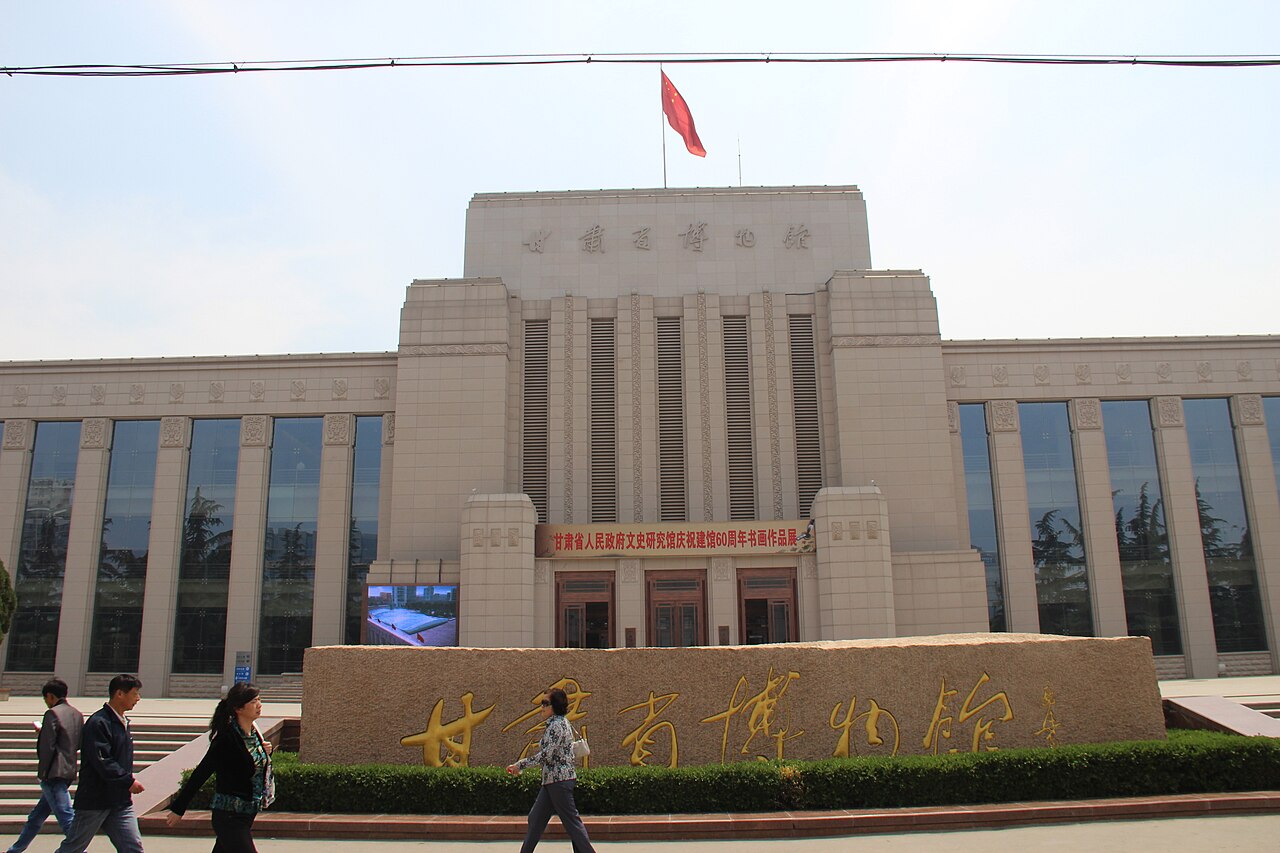
  • The Gansu Provincial Museum is free, open 09:00–17:00 with last entry at 16:00, and closed Mondays — its star exhibit is the Flying Horse of Gansu, a Han-dynasty bronze galloping on a swallow.
  • White Pagoda Park, Zhongshan Iron Bridge, the Yellow River Mother sculpture and the Waterwheel Park are all free and linked on one riverside promenade you can walk in half a day.
  • Zhongchuan Airport is 70 km from the city, roughly an hour by road; the airport shuttle costs CNY 30, a taxi runs CNY 180–200, and shared rides are CNY 40–100 per person.

City guide

First impressions

Photographs from the coast, and what other travellers wrote afterwards.

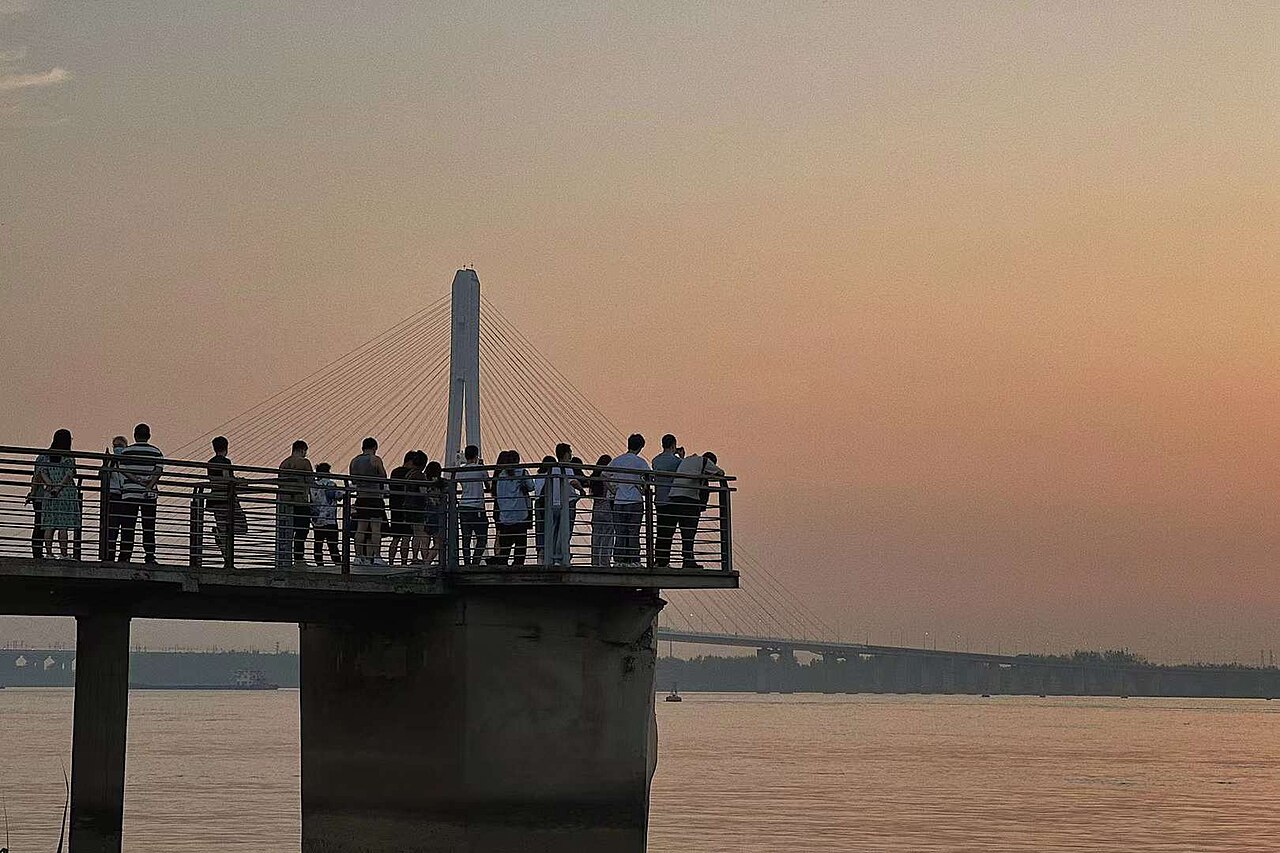
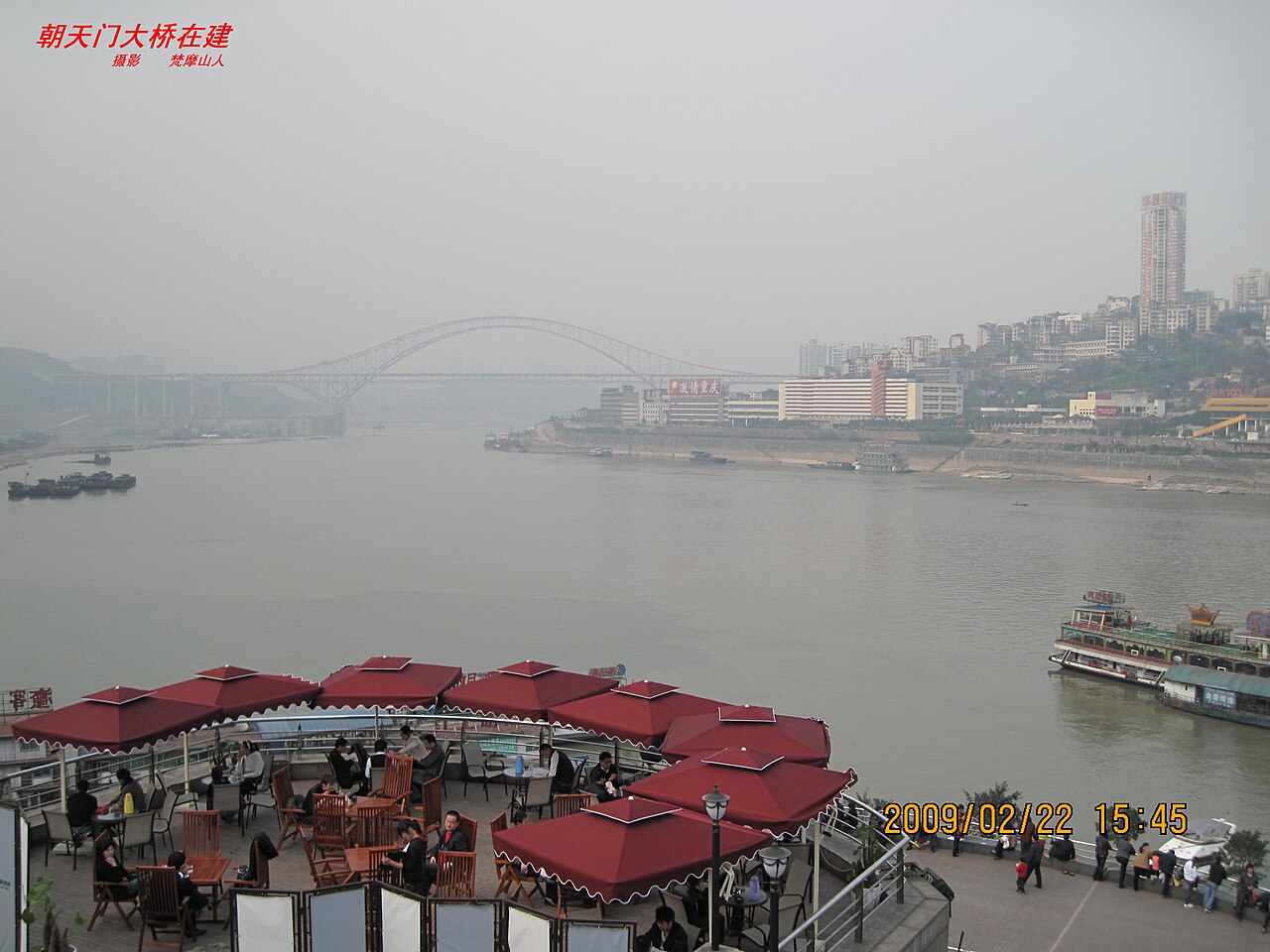
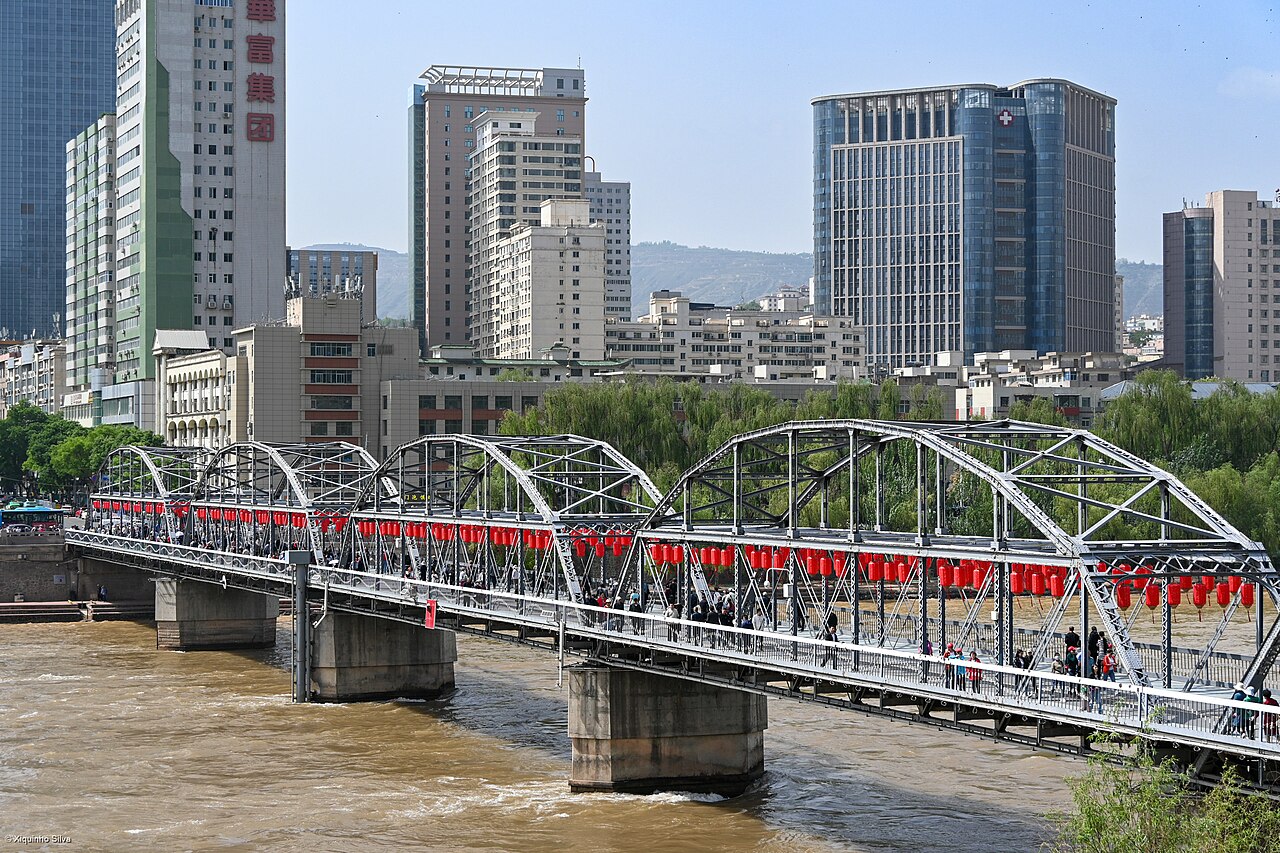
The 1907 Zhongshan Iron Bridge, the first steel bridge across the Yellow River
A bowl of Lanzhou beef noodles — clear broth, white radish, red chili oil, green herbs
The Yellow River Mother sculpture on the south bank of the river
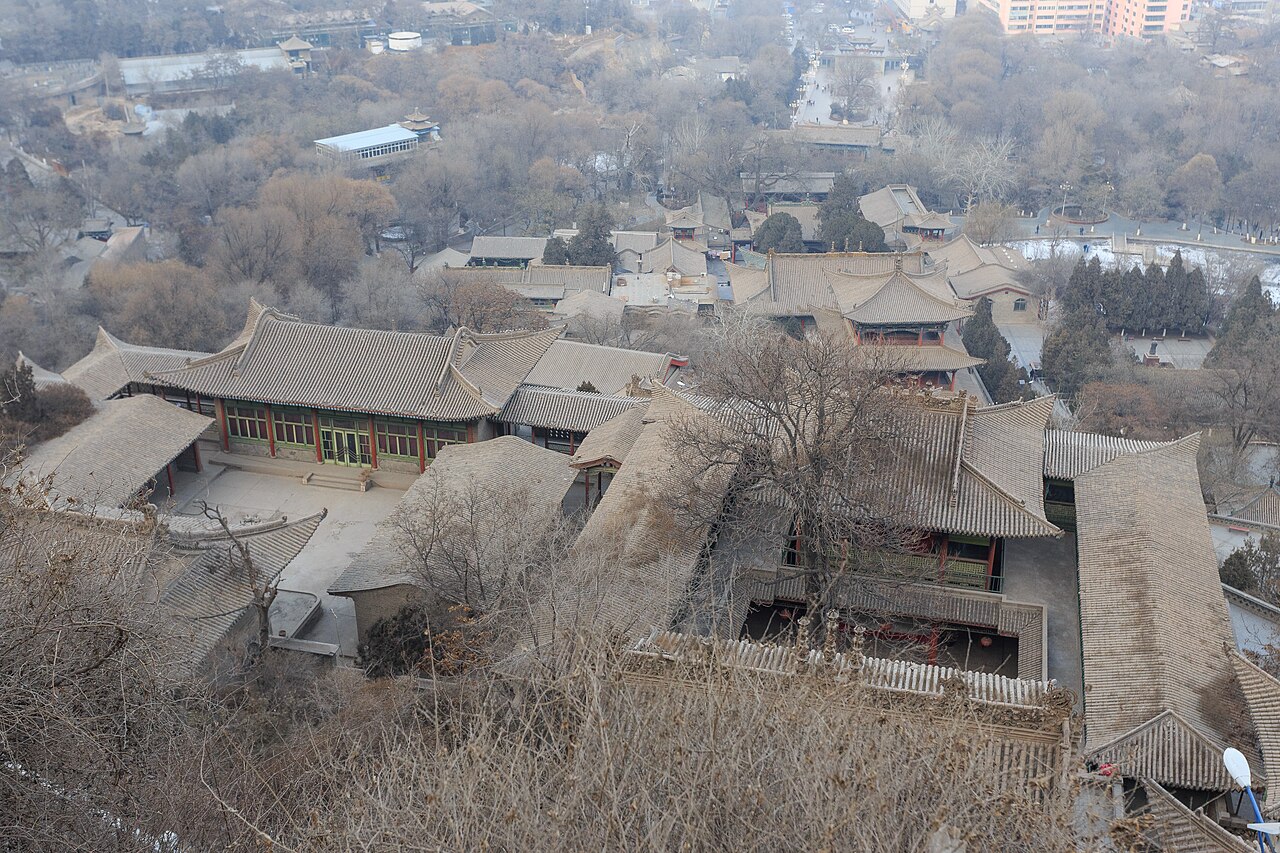
White Pagoda Park on the north bank, looking down over the city and the river

The nightlife in Lanzhou is genuinely loud — at two or three in the morning the food stalls are still heaving, almost all of them run by Hui cooks, and the customers keep coming, laughing and talking as if nobody had noticed it was past midnight.

cutefork1, 'Gannan Skies: A Summer Trip'

We sat on the riverbank, sometimes watching the Yellow River drift past, sometimes watching whoever walked by, talking about everything and nothing. We just wandered along the water with no particular purpose, and it turned out to be the best hours of the trip.

Forsandy01, 'It Doesn't Take Much to Fall for Lanzhou'

Lanzhou is the only provincial capital in China that the Yellow River runs straight through — it splits the city into north and south banks and gives the whole place its shape and its temperament. The river is not a backdrop here; it is the reason the city exists at all, a Silk Road crossing point since the Han dynasty and a trading town where caravans once forded the water on inflated sheepskin rafts.

The city is narrow and long, squeezed between mountains on both sides, so it never sprawls the way other Chinese cities do. You can climb White Pagoda Hill in the morning and look down on the iron bridge and the barges, then be eating lamb skewers in a night market alley by evening without ever feeling rushed.

What surprises most visitors is how relaxed it feels for a place with such a heavy history. Hui Muslim restaurants sit beside Sichuan hotpot joints, the tea houses along the river fill up with old men playing chess, and the smell of simmering beef broth drifts out of noodle shops before the sun is even up. It is a working city, not a tourist stage set — which is exactly why it is worth stopping.

Lanzhou

Don't leave without

Seven things that are worth rearranging a day for.

  1. Eat an early breakfast bowl of beef noodles at a local shop, and ask for 'er xi' or 'xi' when you order
  2. Walk the 1907 Zhongshan Iron Bridge at night, when the whole span is lit up and the river glows gold
  3. Climb White Pagoda Park for the view over the city, the bridge and the Yellow River — it is free and opens at 06:00
  4. See the Flying Horse of Gansu bronze at the Gansu Provincial Museum, free and closed Mondays
  5. Ride a sheepskin raft on the Yellow River in summer, an old crossing method turned into a white-knuckle ten-minute float
  6. Eat your way down Zhengning Road night market — lamb skewers, niang pi cold noodles, milk-egg fermented rice

Highlights

Five reasons Lanzhou is more than a transit stop

The beef noodle city where the bow

Lanzhou is the source of the noodle cult that conquered China. The local version is a breakfast dish: clear beef broth, white radish, red chili oil, green herbs and yellow alkaline noodles, pulled to order in eight thicknesses. A bowl at Mazilu or Jinding costs around CNY 11, and most shops shut by mid-afternoon because locals eat it before work.
A yellow river running straight th

Lanzhou is the only provincial capital the Yellow River cuts clean through, and the whole city is strung along a 40-kilometer riverside promenade. You can walk from the Zhongshan Bridge to the Waterwheel Park to the Yellow River Mother sculpture in half a day, all of it free, all of it flat.

The 1907 iron bridge that opens th

Zhongshan Bridge, finished in 1907, was the first permanent bridge across the Yellow River and is still called the First Bridge Under Heaven. It is free to walk, lit up at night, and the single best place to photograph the river with White Pagoda Mountain rising behind it.

A sheepskin raft ride on the mothe

Before bridges, people crossed on inflated sheepskin rafts, and you still can, from the dock beside the Waterwheel Park. It is a short, bouncy, thoroughly un-modern float on the Yellow River, and it only runs in summer when the water is high enough.

A Bronze Age horse that outran eve

The Gansu Provincial Museum holds roughly 350,000 objects, and its star is the Bronze Galloping Horse Treading on a Flying Swallow, the Han-dynasty bronze that became the symbol of Chinese tourism. Entry is free, and it is closed Mondays.

Itinerary

Two three-day routes through the Yellow River city

Classic city-and-river loop

3 days days

The essential Lanzhou: riverside monuments, the noodle pilgrimage, the museum and the night markets, all on foot and by cheap bus. Best for a first visit or a stopover you want to make count.

  1. Day 1

    White Pagoda Mountain to Zhongshan

    Start early on the north bank and work your way down to the river, then end the day in the old commercial heart where the food is.

    Stops: White Pagoda Mountain Park (free, 06:00-18:00)Zhongshan Bridge (free)Yellow River Mother Sculpture (free)Waterwheel Park (free, 08:00-18:00, to 20:00 in summer)Zhangye Road Pedestrian StreetZhengning Road night market

  2. Day 2

    Museum morning, five springs after

    Give the Gansu Provincial Museum a solid two hours for the Galloping Horse, then spend the afternoon in the green hills south of the city.

    Stops: Gansu Provincial Museum (free, 09:00-17:00, last entry 16:00, closed Mondays)Wuquan Mountain Park (free, 08:00-18:00)Chenghuang Temple antique marketTongwei Road potato-slice stalls

  3. Day 3

    The noodle trail and the mosque qu

    Eat your way through the morning, then head west to the biggest mosque in the city and the streets around it.

    Stops: Mazilu Beef Noodles, Dazhong Lane 86Du Ji sweet snacks, Zhangye RoadXiguan MosqueYongchang Road night market

Lanzhou plus the Yellow River gorg

3 days days

Two urban days plus a day trip out to the Liujiaxia Dam and the Bingling Temple grottoes, for travellers who want the river's older, stranger face.

  1. Day 1

    City core on foot

    Same as the classic loop's first day: ridge, bridge, river, night market.

    Stops: White Pagoda Mountain ParkZhongshan BridgeWaterwheel ParkZhengning Road night market

  2. Day 2

    Museum and Five Springs

    Museum in the morning, Wuquan Mountain in the afternoon, sweet snacks on Zhangye Road in the evening.

    Stops: Gansu Provincial MuseumWuquan Mountain ParkChenghuang Temple antique marketZhangye Road Pedestrian Street

  3. Day 3

    Liujiaxia Dam and Bingling Temple

    Catch an early bus from the West Bus Station to the dam, then take a boat upstream through the gorge to the cliff-carved grottoes. Allow a full day and check the last bus back.

    Stops: Liujiaxia Dam (CNY 30, 09:00-17:00)Bingling Temple Grottoes by boatWest Bus Station return (last bus 17:30)

Sights

The stops worth your hours

Best view in the city

White Pagoda Mountain Park

A hill on the north bank crowned by a Yuan-dynasty white pagoda, with pavilions all the way up and tea houses where locals sit and play chess on the way down. Climb it in the morning and the whole city, the river and the iron bridge lay out below you. There is a cable car from beside the Waterwheel Park if you would rather not walk.

Entry
Free
Hours
06:00-18:00
Cable car
CNY 45 round trip, CNY 35 up, CNY 25 down; children CNY 20 / 15 / 10
Getting there
Bus 20, 35, 53 or 131 to White Pagoda Mountain Park, or bus 9, 11, 15, 26, 34 or 136 to Yellow River Iron Bridge

Tip Go before 9am. The light on the river is best early and the pavilions are empty, and the tea houses lower down are a genuine local scene rather than a tourist one.

1907 iron bridge

Zhongshan Bridge

Built in 1907 as the Lanzhou Yellow River Iron Bridge, this is the oldest bridge in the city and the first permanent crossing of the Yellow River anywhere. It is modest by modern standards, which is exactly why people love it: a hundred years of city history pressed into a few hundred meters of riveted steel. It is free, walkable at any hour, and best after dark when the whole span is lit.

Entry
Free
Built
1907
Getting there
Bus 4, 6, 9, 15, 34, 59, 105, 109, 112, 120, 136, 137, 139, 142 or 25 to Zhongshan Bridge

Tip Walk across at dusk, loop up White Pagoda Mountain for the night view, then come back down for noodles. It is the single most photogenic hour in Lanzhou.

Home of the Galloping Horse

Gansu Provincial Museum

Roughly 350,000 objects spanning Cretaceous fossils, Neolithic painted pottery, Shang and Zhou bronzes, and ceramics, wood carvings and silk from the Song to the Qing. The headline piece is the Bronze Galloping Horse Treading on a Flying Swallow, the Han bronze that became the logo of Chinese tourism. It is free and takes two solid hours.

Entry
Free
Hours
09:00-17:00, last entry 16:00, closed Mondays
Address
No. 3 Xijin West Road, Qilihe District
Getting there
Bus 1, 31, 32, 41, 50, 51, 53 or 58 to Qilihe Bridge

Tip Closed Mondays without exception, and last entry is a full hour before closing. Bring your passport, as free state museums in China require ID for the ticket.

River craft, rebuilt

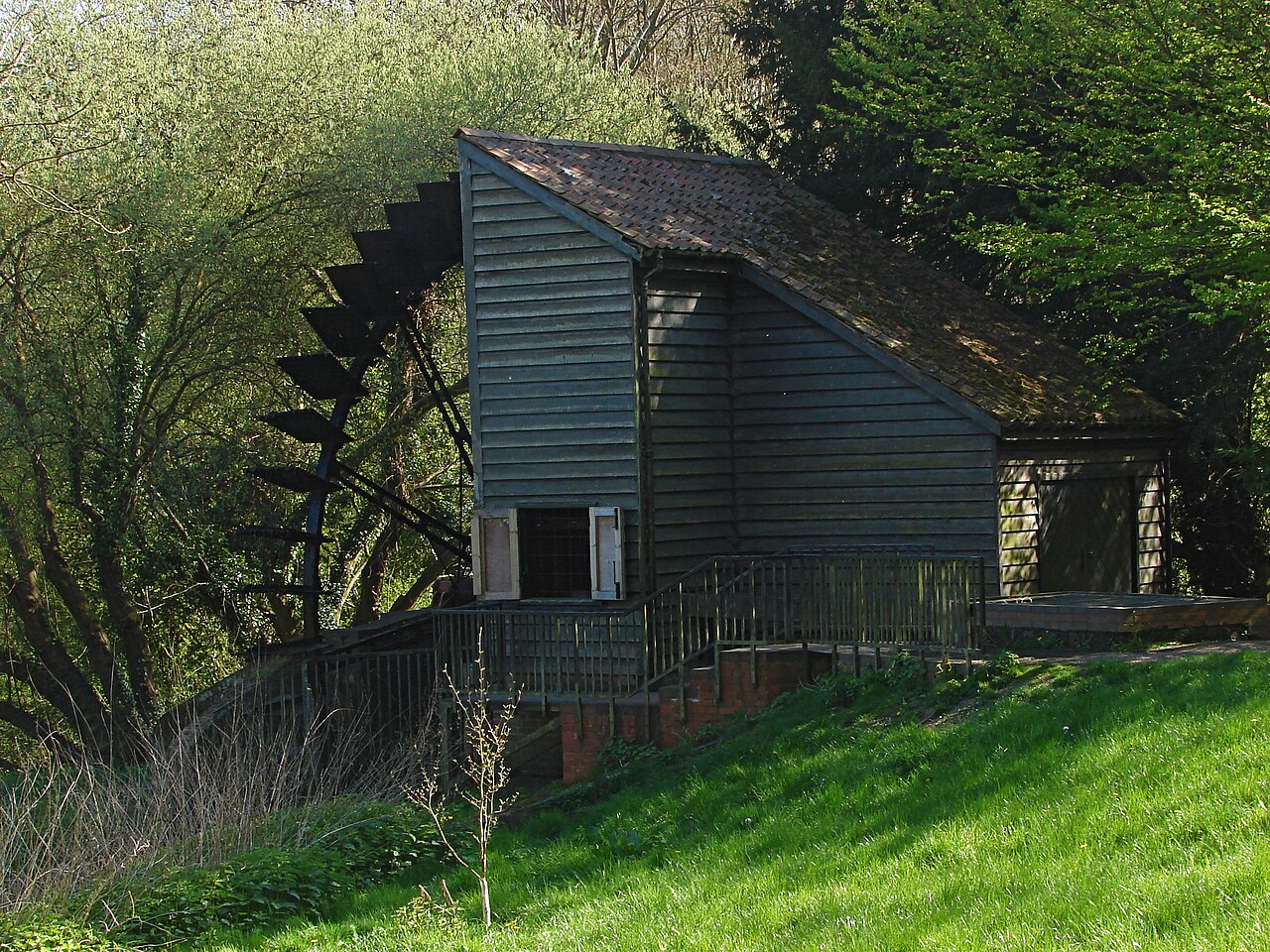
Waterwheel Park

Opened in 2005 to recreate the lines of wooden waterwheels that once stood along both banks, the park splits into a wheel garden, a wheel plaza and a cultural plaza on the south bank. It is where the sheepskin raft dock is, so you can combine the two. Note that in winter the river level drops and the wheels may not turn.

Entry
Free
Hours
08:00-18:00, to 20:00 in summer
Address
No. 524 South Binhe East Road
Phone
0931-8587111
Getting there
Bus 20, 25, 34, 135 or 140 to the park, or walk along South Binhe East Road from Zhongshan Bridge

Tip Pair it with the raft ride, which launches from the dock here. Summer only, and worth haggling lightly over the price before you step on.

Two thousand years of springs

Wuquan Mountain Park

On the northern slope of Gaolan Mountain south of the city center, this is a long-established Longshang beauty spot built around five named springs and a scatter of Buddhist halls. The oldest surviving structure is the Vajra Hall inside Chongqing Temple, built in the fifth year of the Hongwu reign of the Ming. Three separate routes, west, middle and east, each have their own pavilions, bridges and waterfalls.

Entry
Free
Hours
08:00-18:00
Phone
0931-8243247
Getting there
Bus 8, 18, 117, 124, 149, 12, 2, 114, 120, 15, 17, 146 or 76 to the gate; trolleybus 31, 33 or 34 and bus 106, 108, 140 or 141 to Wuquan Mountain stop, then a few hundred meters south

Tip It is about four kilometers from Zhangye Road with a direct bus, so it slots neatly into an afternoon after the noodle shops close.

Food

What to eat in Lanzhou — beef noodles and the snacks that follow

Lanzhou beef noodles (兰州牛肉面)

The city's whole identity in one bowl: clear broth, white radish, red chili oil, green cilantro and scallion, yellow noodles — 'one clear, two white, three red, four green, five yellow.' A bowl costs about CNY 11 at Ma Zilu and locals eat it for breakfast, so most noodle shops shut by early afternoon. Order your noodle gauge by name: fine (细的) is the crowd favourite, erxi (二细) is chewier, jiuye (韭叶) is flat like a leek leaf, and da kuan (大宽) is one belt-wide noodle per bowl.

Niang pi (酿皮)

Cold, chewy, translucent-orange wheat or starch noodles in vinegar, garlic water and chili oil — a Hui Muslim specialty that works as both snack and light meal. Around CNY 7 a plate and everywhere in summer.

Hui dou zi (灰豆子)

A sweet porridge of grey peas slow-cooked with red dates until the dates collapse into the broth, then sweetened with sugar. Served hot in winter, iced in summer — order it at Du Ji Sweet Shop on Dazhong Lane for about CNY 7.

Niu nai ji dan lao zao (牛奶鸡蛋醪糟)

Milk, egg and fermented glutinous rice simmered together — sweet, faintly alcoholic, easy on the stomach, and the single most popular late-night order on Zhengning Road. Roughly CNY 10 a bowl.

Shou zhua yang rou (手抓羊肉)

Hand-grabbed mutton, boiled rather than roasted, eaten with your fingers and dipped in salt or chili. Good versions are tender with no gamey smell at all; Ma Laoliu on Tongwei Road does a refined take at around CNY 68 per person.

Where to eat

Four Lanzhou tables, from a CNY 6 snack to a proper sit-down

Beef noodles · the famous one

Ma Zilu Beef Noodles (马子禄牛肉面)

The name every out-of-towner has heard, and still the easiest first bowl in the city. The ground floor is priced for locals and the second floor sells tourist set meals at a markup — sit downstairs. Go before 10am; like almost every noodle shop in Lanzhou it closes around midday because beef noodles are a breakfast dish here.

Address
86 Dazhong Lane, Chengguan District
Phone
0931-8450505
Typical spend
About CNY 11 per person
Hours
Morning to early afternoon only

Beef noodles · local favourite

Jinding Beef Noodles (金鼎牛肉面)

Where Lanzhou people actually eat: the man who pulled noodles for the 'A Bite of China' documentary was Jinding's fourth-generation noodle master. If Ma Zilu feels like a pilgrimage site, this is the better bowl. Two branches, both central.

Address
368 Pingliang Road, Chengguan District (also 211 Zhongshan Road)
Phone
0931-8417434
Typical spend
About CNY 11 per person
Why go
The local vote over the tourist name

Snacks · old brand

Du Ji Sweet Shop (杜记甜食)

An old-school shop at the head of Dazhong Lane, permanently busy, selling Lanzhou snacks with a sweet bias — hui dou zi, hot winter pear (热冬果), niang pi. Cheapest way to eat five different Lanzhou things in one sitting.

Address
Dazhong Lane, Zhangye Road, Chengguan District
Transport
Bus 6, 59 or 4 to Shengzhengfu stop, then 300m north
Typical spend
About CNY 7 per person
Best for
A snack crawl before dinner

Night market · the big one

Zhengning Road Night Market (正宁路夜市

Lanzhou's most famous night food street, right in the busy downtown, lit and loud until late. Skewers, malatang, noodles, fruit, dried nuts, cold drinks — hundreds of stalls and no reason to plan. Only operates in the evening. Cash and phone payment both work.
Address
Zhengning Road, Chengguan District
Hours
Evenings only
Typical spend
CNY 30–50 for a full graze
Don't miss
Milk-egg-laozao stalls, the queues tell you which

Where to stay

Three bases in Lanzhou, from a CNY 30 dorm bed to a Yellow River view

Hostel · best value

Xiyi International Youth Hostel (西

A proper backpacker hostel with a Tibetan-style lounge, small library, roof garden and DIY barbecue, plus a consulting desk that will actually help you plan onward Gansu travel. Dorms are wooden bunk beds with shared bathrooms on each floor; doubles have private bathroom, air conditioning and TV. Book ahead in summer.

Address
East of the north end of Tianshui Road, Chengguan District
Phone
0931-8688381
Dorm bed
CNY 30 (8-bed) / 35 (6-bed) / 40 (4-bed)
Private room
CNY 110 standard / 130 double with bathroom
Free
Wi-Fi, 24h hot water, luggage storage, travel advice

Mid-range · unbeatable location

Ibis Lanzhou Zhangye Road (宜必思酒店张掖

Sits inside the Dazhong Lane commercial core off Zhangye Road, steps from the Central Square, New World Department Store and the Yaxin and Zijin malls — you can walk to Ma Zilu for breakfast and to the Zhengning Road night market after dark. Clean, predictable, free high-speed Wi-Fi.
Address
246 Zhangye Road, Chengguan District
Phone
0931-8185000
From
CNY 259 per night
Best for
First-timers who want everything on foot

Luxury · river view

Crowne Plaza Lanzhou (兰州皇冠假日酒店)

A five-star tower standing right on the bank of the Yellow River, with every room looking out over the water. Free Wi-Fi and wired internet throughout, minibar, ironing facilities, flat-screen TV with CD/DVD, bathrobes and full amenities in the bathroom. The splurge option if you want to wake up to the river.

Address
1 North Binhe East Road, Chengguan District
Phone
0931-8711111
From
CNY 1,000 per night
Why book it
Uninterrupted Yellow River views

Getting around

How you land in Lanzhou, and how you move once you're here

Flying in

Lanzhou Zhongchuan Airport sits at 1,947 m in Yongdeng County, about 70 km from the city centre — roughly an hour by road. It's a plateau airport, so if you're sensitive to altitude, take the first day easy. Flights connect Beijing, Shanghai, Guangzhou, Guilin, Chengdu, Xi'an and Urumqi, plus Hong Kong, Taipei, Bangkok, Jeju and Seoul.

Airport bus
CNY 30 per person, board opposite the Jinjiang Sunshine Hotel downtown
Taxi (metered)
Over CNY 200 — do not use the meter for this run
Taxi (negotiated)
CNY 180–200, agree the price before you get in
Shared taxi
CNY 40–100 per person depending on how many seats fill and where you sit — the front passenger seat usually costs a little more
Airport info
0931-8168464

Arriving by rail

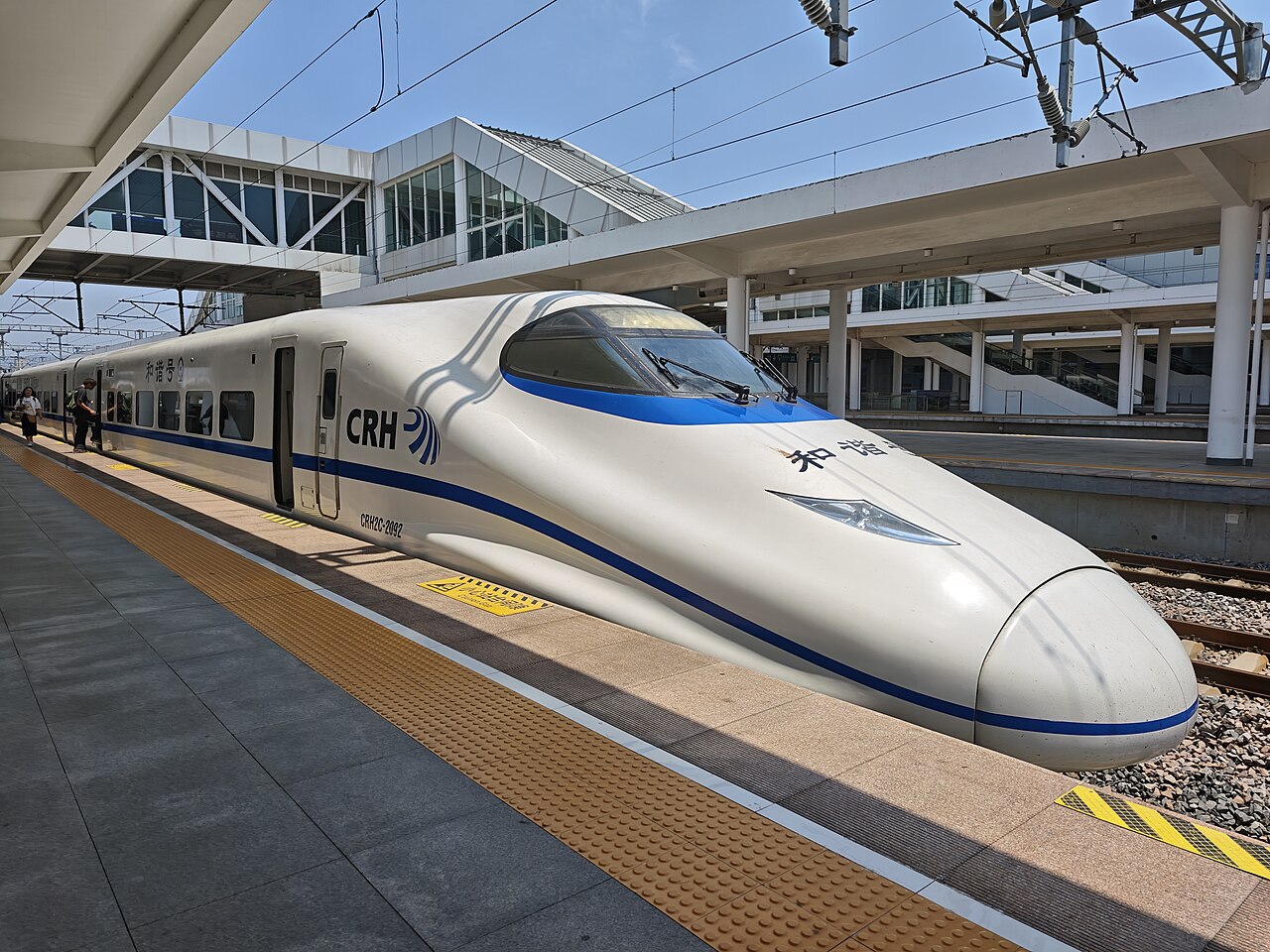
Lanzhou Station is the big hub for the whole northwest, with more than 100 routes. This is how you reach Jiayuguan and Dunhuang inside Gansu, and Xining, Taiyuan, Yinchuan, Hohhot, Beijing, Urumqi, Xi'an, Qingdao, Jinan, Zhengzhou, Chengdu, Chongqing, Lhasa, Shanghai, Hangzhou and Shenzhen beyond it.

Station address
Chengguan District, Huochezhan East Road
Station phone
0931-8400000
Why it matters
If you're linking Lanzhou into a Silk Road itinerary, the train is the least fuss — book Lanzhou–Dunhuang seats as early as you can

Long-distance buses

Buses are often faster than trains between Gansu towns and you never wait for a departure slot, though they are less safe than rail. Three stations cover different directions — check which one your destination leaves from before you head out.

South Bus Station
Xiahe, Langmusi, Lianlu — Langongping, 0931-2914066
Passenger Transport Centre
Xi'an, Xining, Tianshui — opposite Lanzhou Station, 0931-8807114
East Bus Station
Nanjing, Liancheng, Luoyang, Jiayuguan, Dunhuang — Pingliang Road 193, 0931-2663285

Getting around town

For a city this small the bus network is huge — over 100 routes, and they reach everywhere short of the genuinely remote outskirts. Taxis are cheap and everywhere. The yellow River is the spine of the city, so most of what you want sits along the north and south banks and the bridges between them.

Bus fare
CNY 1 base, rising to 1.5 on longer routes, never over 2.5. No air-conditioned buses, but the trolleybuses have heating
Taxi flagfall
CNY 7, then CNY 1.4/km (CNY 1.6/km at night). Waiting over 5 minutes is charged as distance; over 10 km adds 50%
Car hire
Yitong Car Rental, opposite Lanxin Garden, Xigu District, 13909487497; Baolai Car Rental, Linxia Road, Chengguan District, 0931-8450288

Shopping

What to carry home from Lanzhou

Dried lilies and Gansu apricots

Lanzhou is the national capital of dried lilies, and the sweet apricots from the surrounding valleys are cheap and pack well. Buy them loose by weight in the markets rather than in gift-boxed tourist shops, where the same thing costs three times as much.

A hand-carry bag of Lanzhou beef n

You cannot take a bowl of noodles home, but you can take the chilli oil and the spice mix. Supermarkets around Zhangye Road sell both, and it is the one souvenir your friends will actually use.

Antiques and curios at the Chenghu

The old temple, over 900 years old, now houses an antiques market where Lanzhou families have been rummaging for generations. You may well stumble on something worth having — just assume the first price is a starting point, not a number.

Everything at once at the Eastern

Northwest China's largest wholesale market, with ten halls, six specialised 'cities' (shoes, clothing, appliances) and four public squares. It is the Yiwu of the northwest: concentrated, cheap, and worth an hour even if you buy nothing.

Practical

The things that actually trip people up

Lanzhou is a genuinely compact city and easy to walk in pieces. The one thing that catches visitors out is the food clock: beef noodles are a morning dish, and the famous shops shut their doors around lunchtime.

Best time to goEarly autumn. It is cool, the melons and fruit are at their sweetest, and the annual Lanzhou Silk Road Festival is on. Spring brings sandstorms — pack a mask and don't plan long walks for March and April.
MoneyCosts sit in the lower-middle band nationally — expect hotel doubles around CNY 200–500, a bowl of beef noodles for CNY 11, and street snacks from CNY 6. Department-store prices, however, are high. Budget roughly CNY 800 per person for two days excluding flights.
ClothingBig day-night temperature swings and very dry air. Bring a jacket even in summer, plus lip balm and a face mist. Lanzhou sits at 1,520 m — altitude sickness is very unlikely, but anyone frail should take the first day slowly.
EatingLanzhou runs hot and spicy, so Sichuan and Hunan food is everywhere; noodles are the staple. Because of the large Hui population, meat means beef and mutton. As a provincial capital and tourist city, every major cuisine is available, so nobody starves.
Beef noodle timingLocals eat beef noodles for breakfast and most shops close by early afternoon. If you want the real thing, go before 10am. At Ma Zilu, the ground floor is for locals and cheaper; the first floor is aimed at visitors, with set menus and higher prices.
Hospital and complaintsGansu Provincial People's Hospital, Donggang West Road 160, 0931-8281114. Lanzhou University First Hospital, Donggang West Road 1, 0931-8625200. Tourist complaints 0931-8826860; price bureau 0931-8722462.
Book ahead for the westIf Lanzhou is a stop on a Silk Road run, reserve Lanzhou–Dunhuang and Lanzhou–Jiayuguan train seats as early as you can — this is the busiest corridor in the northwest and the good departures sell out.

Background

Why Lanzhou exists, and why it feels like this

A garrison town that grew rich on

Lanzhou was founded in 86 BC, and its first name was Jincheng — 'Gold City'. One story says builders dug up gold on the site; another says it borrows from 'a city wall of metal and a moat of boiling water', the classical phrase for an impregnable fortress. Either way the geography did the work: the Yellow River narrows here, mountains pinch in from north and south, and for centuries the only practical crossing on this stretch of the river was right where you are standing.

From the Han through the Tang and Song dynasties, once the Silk Road was open, Lanzhou became the junction where silk went west and Ferghana horses came east. Writer Chen Yunhe summed up the traffic jam of history this way: Han generals marching west, foreign merchants heading east, even the monk Xuanzang on his way to fetch Buddhist scriptures — all of them floated across the river here on inflated ox-hide rafts.

Band of a city on a river in a gor

Modern Lanzhou is a strip: about 25 km long east to west, squeezed between the Beishan hills to the north and Gaolan Mountain to the south, with the Yellow River running straight through the middle. It is the only provincial capital in China that the Yellow River actually crosses. Downtown sits at 1,520 m, which is high enough to feel dry and cool but far too low to give you altitude sickness — unless you are unusually frail, don't worry about it.

Four seasons are distinct, winters are not brutal and summers are not sweltering, and the yearly average is 11.2°C. Spring is the one season to watch: sandstorms blow in from the north, so pack a mask and eye drops if you come in March or April. The dry air is the other thing nobody warns you about — bring lip balm and a small spray bottle even in July.

Hui Muslims, hand-pulled noodles a

Lanzhou's largest minority group is the Hui, and the city also has smaller populations of Yugur, Bonan and Dongxiang people. Several neighbourhoods are Hui-majority, especially around the Xiguan Mosque and the night markets, so dress modestly when you visit a mosque and don't point your camera at people praying without asking.

The other half of local culture is louder. If 1990 counts as year zero for Lanzhou rock, more than 250 bands have formed here since. A dozen or so are active now — Standing Socks, Polyphonic Carnival, Six Kings — and the city has produced one of China's most famous magazines too: Reader, founded here in 1981, whose headquarters on the south bank of the Yellow River is a minor pilgrimage for Chinese readers. Lanzhou people are blunt and funny about their own city; let them be your guide.

Further reading

Watch, read and listen before you go

Book

Northwest by Northwest: A Man with

Zhang Hailong

The essential book about this corner of China — essays on Lanzhou and the northwest told in an almost icy voice, covering dialect, food, folk songs, history, geography and the people who drift through all of it. Zhang deconstructs and exaggerates, mocks and pastiches classical texts, and somehow makes you want to eat a bowl of noodles and read a poem at the same time. Read it on the train in and you'll see the city differently.

Music

Lanzhou (兰州)

Low Wormwood (低苦艾乐队)

A Lanzhou band's love letter to their own city, folk-leaning and understated but with strong experimental and ethnic textures underneath. Whether you're about to arrive or already miss the place, this song does the job — play it on the walk back from Zhongshan Bridge at night and the whole strip of river lights suddenly makes sense.

Film

Lanzhou 1949 (兰州1949)

Director Xia Yong, 2009

The first feature film ever to carry Lanzhou in its title, made for the 60th anniversary of the city's liberation. It follows underground Party members and ordinary residents trying to smuggle wounded comrades and stolen city-defence intelligence past Kuomintang security in the days before the PLA arrived. Melodramatic, but a useful primer on the 1949 battle that reshaped the city.

The questions visitors ask us most about Lanzhou, answered plainly.

Frequently asked questions

Prices and practical details are reviewed every month by our Beijing team and updated the day a rule changes.

Is Lanzhou worth visiting, or is it just a stopover on the way to Dunhuang?

It is worth at least 1–2 days in its own right. The riverfront — White Pagoda Park, Zhongshan Iron Bridge, the Waterwheel Park and the Yellow River Mother sculpture — is free and walkable in half a day, the Gansu Provincial Museum holds the Flying Horse of Gansu bronze, and the food alone (beef noodles, lamb skewers, niang pi) justifies the stop. If you are only changing trains, you can still see the main sights in a single day because the city is small and the sights cluster together.

When is the best time to visit Lanzhou?

Early autumn is the sweet spot — cool, dry weather, melons and fruit at their peak, and the annual Silk Road Festival in September. Spring is warmer but prone to dust storms, summer is hot and dry with big day-night temperature swings, and winter is cold but clear. Whatever the season, pack a jacket and lip balm: Lanzhou is dry and the temperature drops sharply after dark.
What exactly is a Lanzhou beef noodle and how do I order one?

It is a hand-pulled noodle soup with clear beef broth, white radish slices, red chili oil and green herbs — the locals describe it as 'one clear, two white, three red, four green, five yellow.' You order by noodle width, and the standard is 'er xi' (二细) or 'xi' (细) for a chewy, medium-thin round noodle. A bowl costs CNY 8–11, and most shops shut by mid-afternoon because Lanzhou eats this for breakfast, not dinner.
How do I get from Lanzhou Zhongchuan Airport to the city?

The airport sits 70 km north of the city, about an hour by road. The airport shuttle is the cheapest option at CNY 30 per person and picks up near the Jinjiang Sunshine Hotel. A metered taxi would run over CNY 200, so negotiate a flat fare of CNY 180–200 instead, or take a shared ride for CNY 40–100 per person depending on how many passengers and where you sit.

Do I need to worry about altitude sickness in Lanzhou?

No, not really. The city sits at 1,520 metres, which is low enough that altitude sickness is not a concern for healthy travellers. Only those with pre-existing heart or lung conditions should take it slowly on the first day. Side trips climb higher — Xinglong Mountain and the road toward Qinghai go above 2,000 metres — so pace yourself if you head out of town.

Where should I stay in Lanzhou?

Base yourself around Zhangye Road and the Xiguan area in Chengguan district — it puts you within walking distance of the Zhongshan Bridge, the night markets and the noodle shops. Budget hostels with dorm beds run CNY 30–45 per bed, standard mid-range hotel rooms CNY 200–500, and riverside five-star properties like the Crowne Plaza start around CNY 1,000. A hostel near the universities is also handy if you want cheap food streets nearby.

Related reading

Related reading

Visas Do I Need a Visa for China? Requirements, Costs and How to Apply China's entry rules changed more in the last three years than in the previous twenty. Here is exactly who needs a visa, what it costs, how long it takes and which passports now walk straight through. 9 min read Visas China's 240-Hour Visa-Free Transit: Who Qualifies and How It Works Ten days in China with no visa application, no fee and no fingerprints — if you hold the right passport and leave for a third country. Here is the rulebook, port by port. 8 min read Money Paying in China: Alipay, WeChat Pay, Cards and Cash Roughly nine in ten urban payments in China now run through a phone. Set up two apps before you fly, carry a modest cash float, and you will never be stuck at a till. 8 min read Transport China's High-Speed Rail: How to Book, What It Costs, How Fast It Goes The fastest way to cross China is also the most pleasant. Here is how to book a ticket with a foreign passport, what the three classes actually give you, and how to survive a Chinese station at rush hour. 9 min read Planning Best Time to Visit China: Month by Month, Region by Region China is the size of Europe, so 'the best month' depends on where you stand. Here is the month-by-month answer for the north, the Yangtze valley, the south and the plateau. 8 min read Planning What to Pack for China: The Complete 2026 Checklist Twenty thousand steps a day, three climate zones and a phone that has to do everything. This is the list we give our own travellers, minus the things they never used. 7 min read Food Chinese Food Culture: Eight Cuisines, One Table There is no such thing as Chinese food. There is Cantonese, Sichuan, Hunan, Jiangsu, Zhejiang, Fujian, Anhui and Shandong — and knowing which one you are eating changes everything. 8 min read Traditions Chinese Tea Culture: Six Classes, One Pot, Two Fingers Tea in China is not a beverage category, it is a social technology: it fills silences, seals deals and sets the pace of a meal. Here is how to sit down in one and not look lost. 7 min read Traditions Chinese Festivals: The Calendar, the Dates and the Crowds Lunar dates mean the calendar moves every year — and two of the festivals move several hundred million people at once. Plan around them or plan into them, but never by accident. 8 min read Etiquette Chinese Etiquette: What Matters, What Does Not, and Why Most etiquette advice for China is either obvious or wrong. These are the dozen behaviours that actually change how you are treated, and the reasoning behind each. 7 min read

Tell us your dates.
We'll do the rest.

Free itinerary design, a revised plan within one working day, and nothing charged until you approve the final version.

  • Lanzhou beef noodles have eight noodle widths — the standard order is 'er xi' (细); a bowl runs CNY 8–11, and most noodle shops close by mid-afternoon because locals eat them for breakfast.
  • The Gansu Provincial Museum is free, open 09:00–17:00 with last entry at 16:00, and closed Mondays — its star exhibit is the Flying Horse of Gansu, a Han-dynasty bronze galloping on a swallow.
  • White Pagoda Park, Zhongshan Iron Bridge, the Yellow River Mother sculpture and the Waterwheel Park are all free and linked on one riverside promenade you can walk in half a day.

No spam. No sales calls. Just a real itinerary from a real person.