City guide · Sichuan

Shunan Bamboo Sea travel guide: the Jade Corridor, the cable car and the whole-bamboo banquet

Seventy thousand mu of bamboo over twenty-eight hills, a red sandstone corridor under a closed green roof, and a banquet made entirely of bamboo.

  • Known forJade Corridor, rafts, bamboo banquet
  • Typical spend¥600–900 / person / 2–4 days
  • Ideal length2–3 days
  • PaceEasy — green, cool, slow

Reviewed by our Beijing team Updated 2026-10-10

The short version

The Shunan Bamboo Sea is worth two relaxed days: more than 70,000 mu of bamboo across 28 hills in Yibin, southern Sichuan, holding 58 bamboo species at 87% plant cover, and a ¥110 ticket (¥60 in December) that is a single through ticket — you pay for nothing else inside. Ride the 2,742 m cable car out over the green, walk the Jade Corridor at noon, drift a ¥80 raft across a lake, then eat a banquet in which every dish is bamboo. It is 4–4.5 hours by road from Chengdu.

  • More than 70,000 mu of nann bamboo over 28 hills and 500-odd knolls, 58 species, 87% plant cover — the largest original bamboo park in China.
  • Entry is ¥110 from January to November and ¥60 in December, and it is a through ticket: nothing else inside costs admission, only the cable car, carts and rafts.
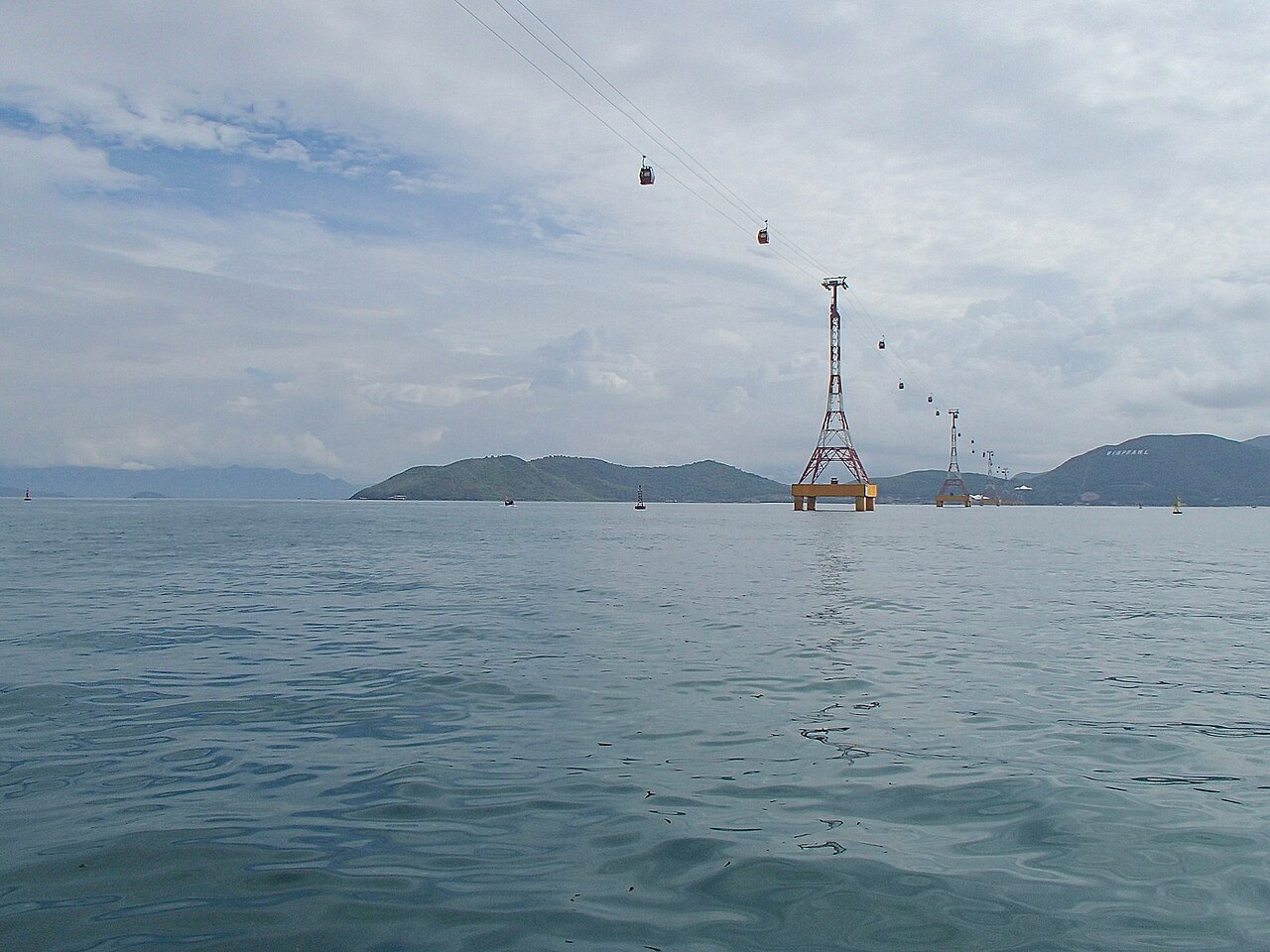
  • The cable car is 2,742 m long with a 350 m rise — among the longest in China — running from the Moxi valley floor up to the Sea-View Tower.
  • Rafts are the local transport on the water: ¥80 for a small four-person raft, ¥220 for a covered eight-person one.
  • The park averages about 15.5°C year round, rarely dropping below 0°C in winter or passing 30°C in summer, which is exactly why Sichuan comes here in July.

City guide

First impressions

Photographs from the coast, and what other travellers wrote afterwards.

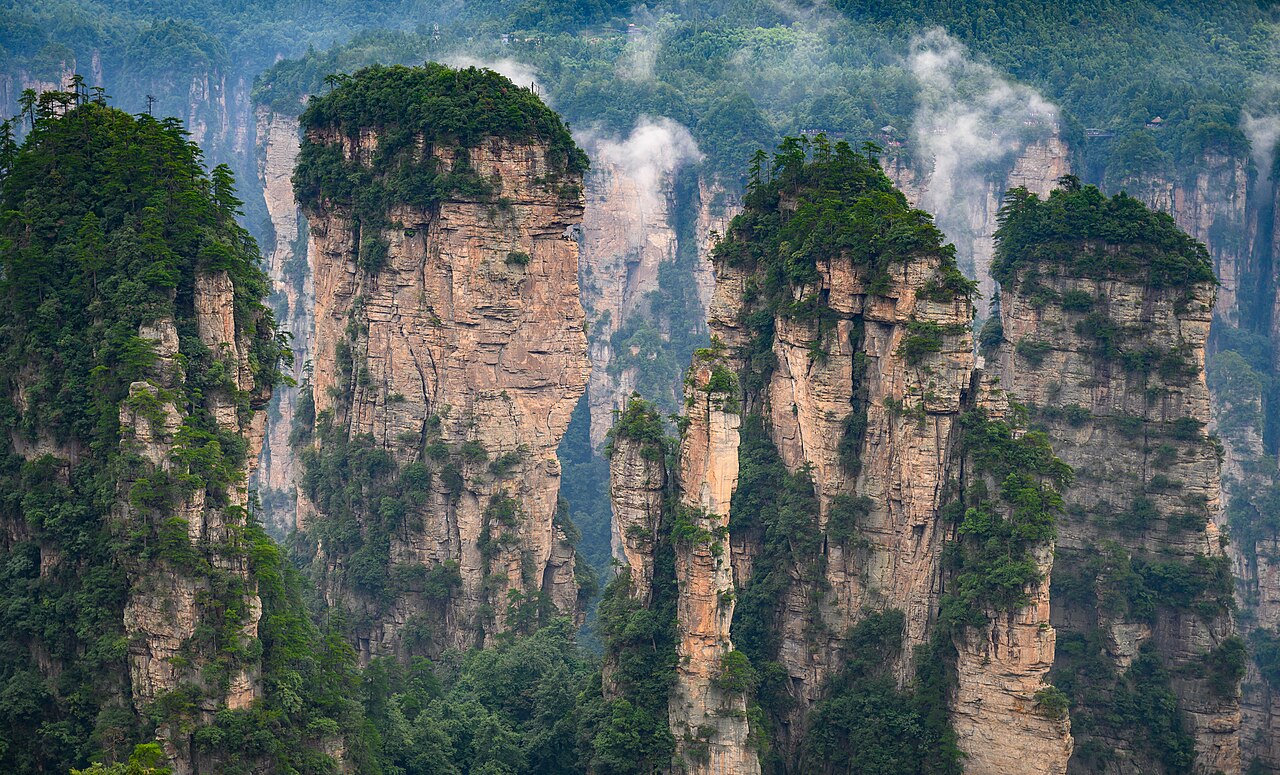
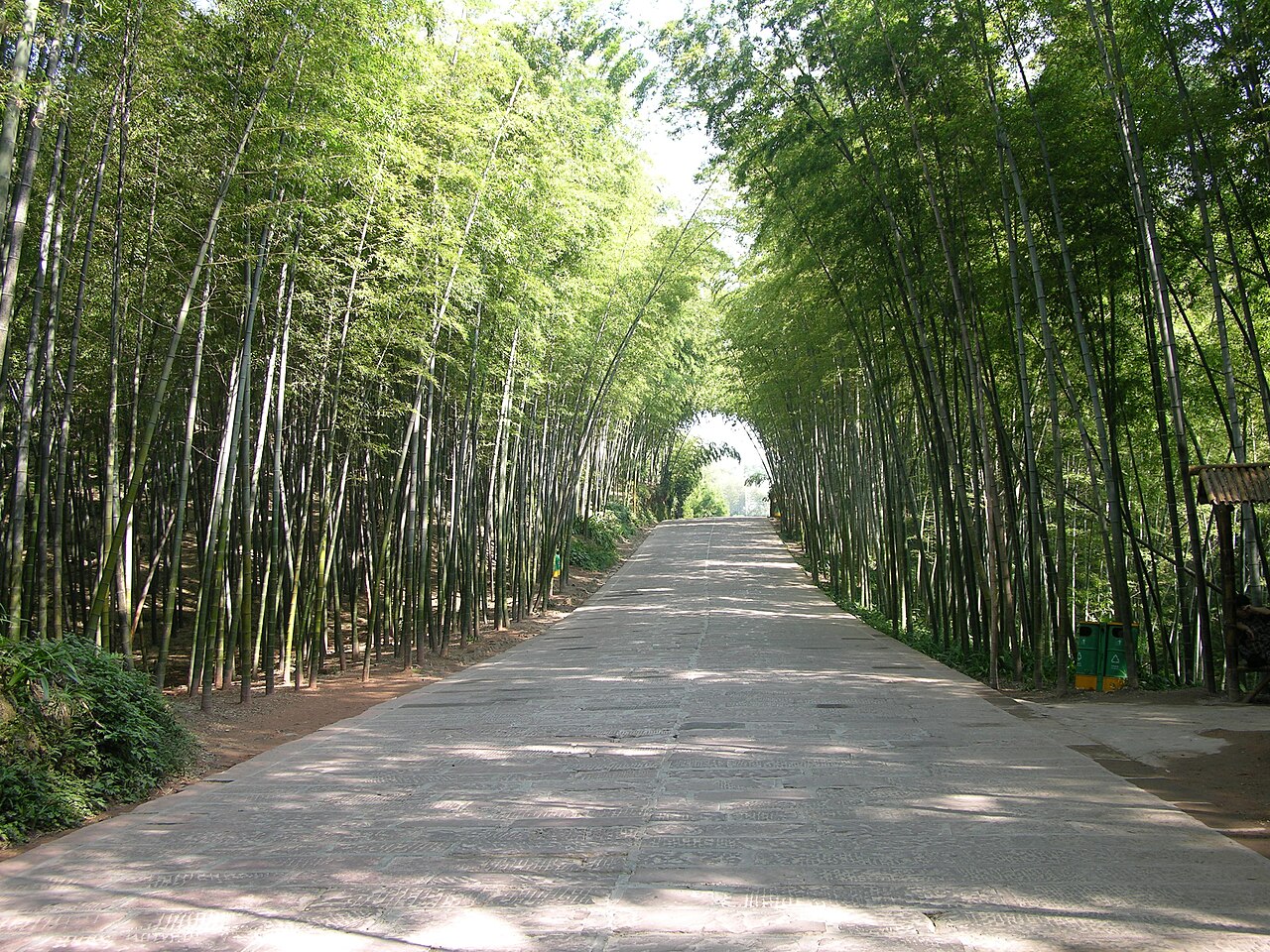
The Jade Corridor, red sandstone under a closed green roof
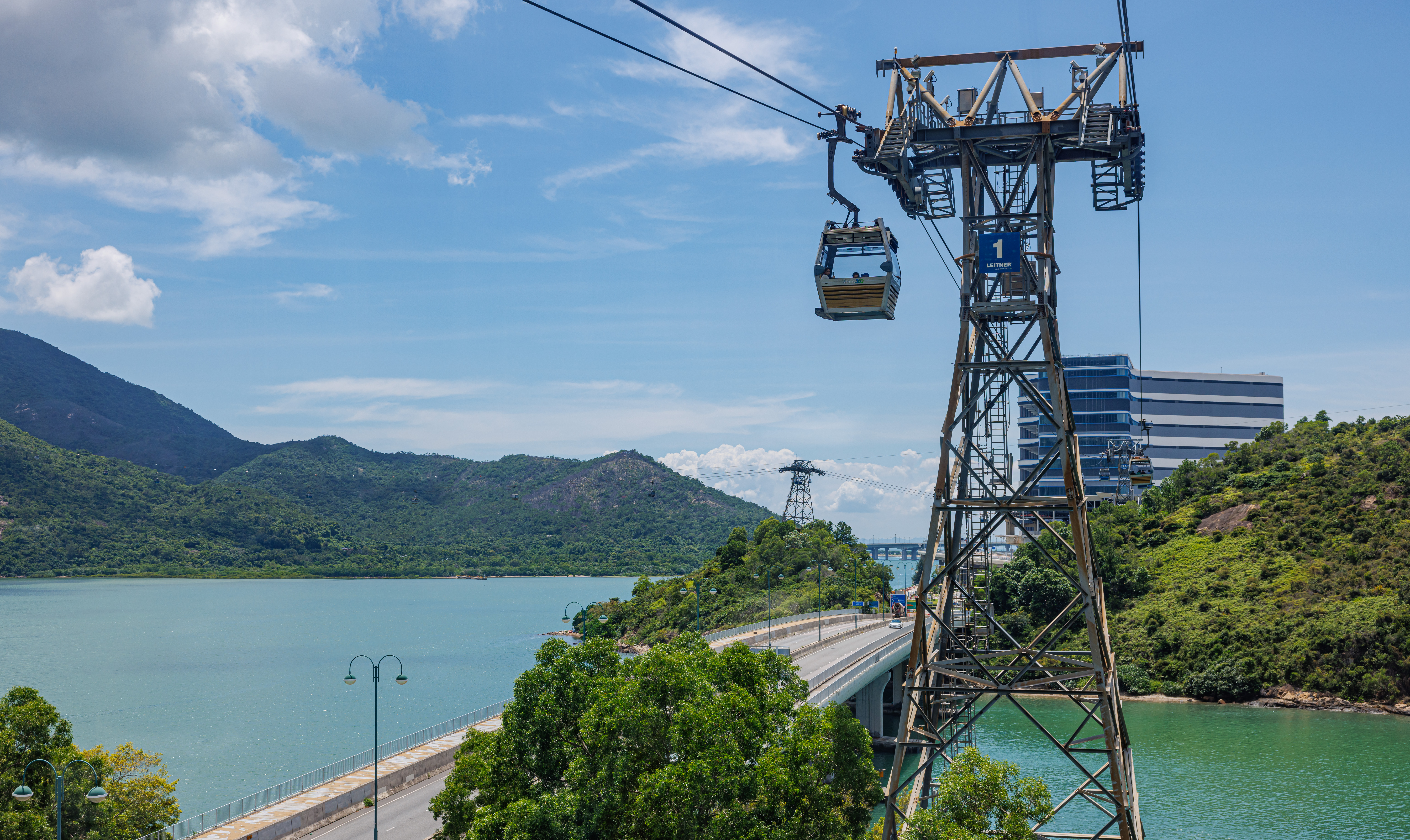
The bamboo sea from the cable car, on the way up to the Sea-View Tower
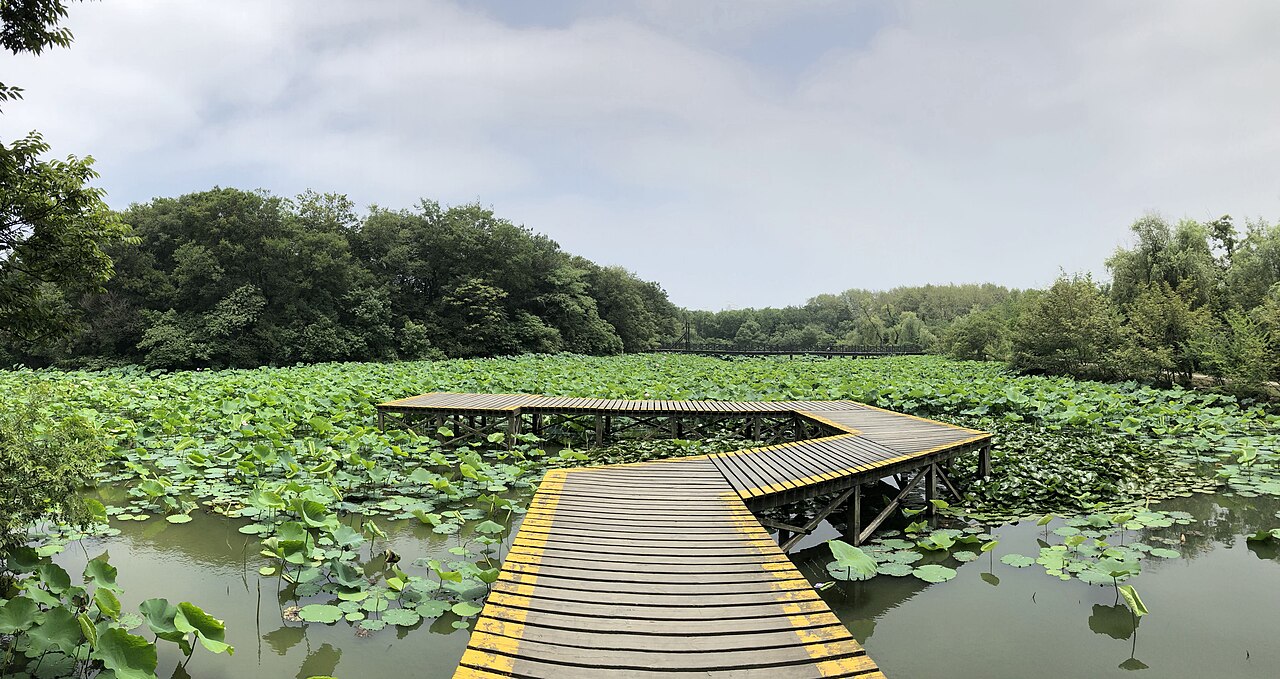
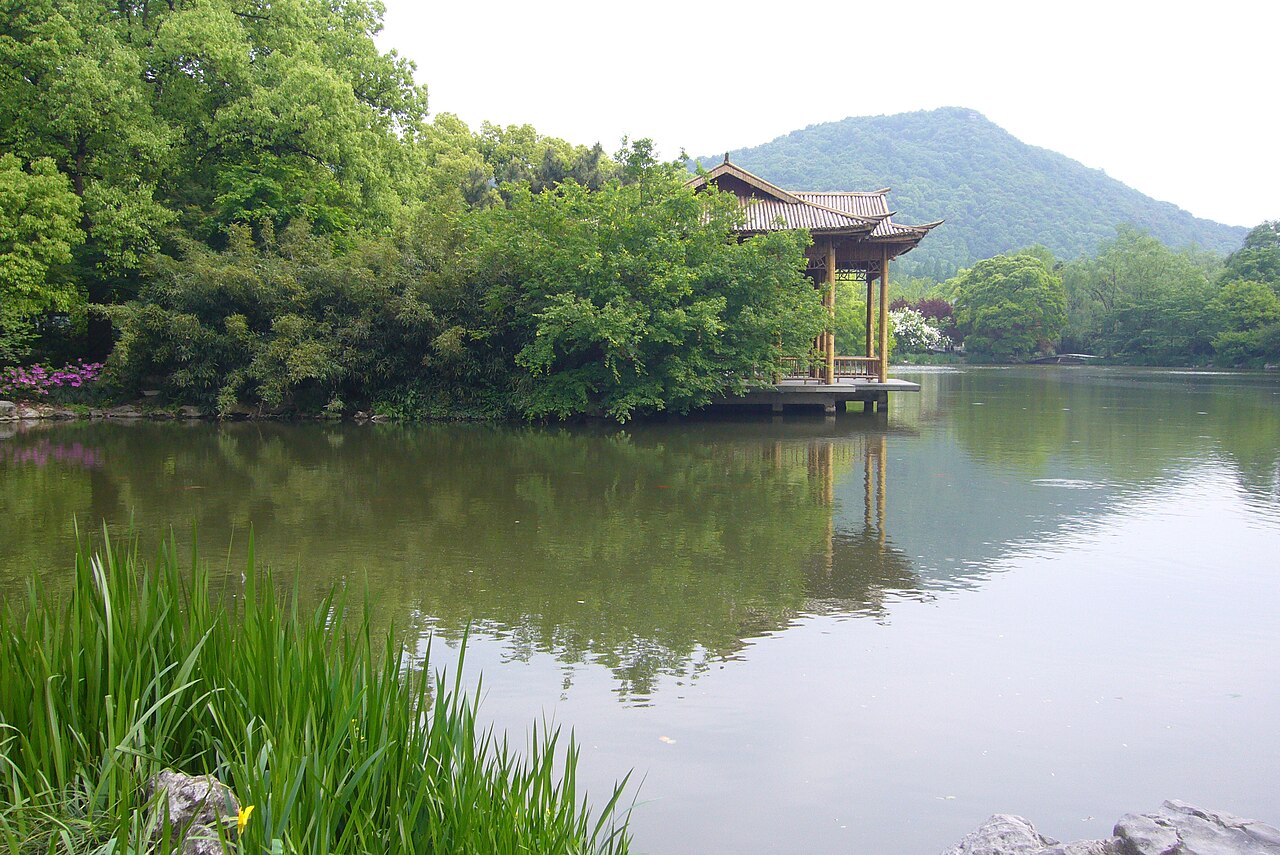
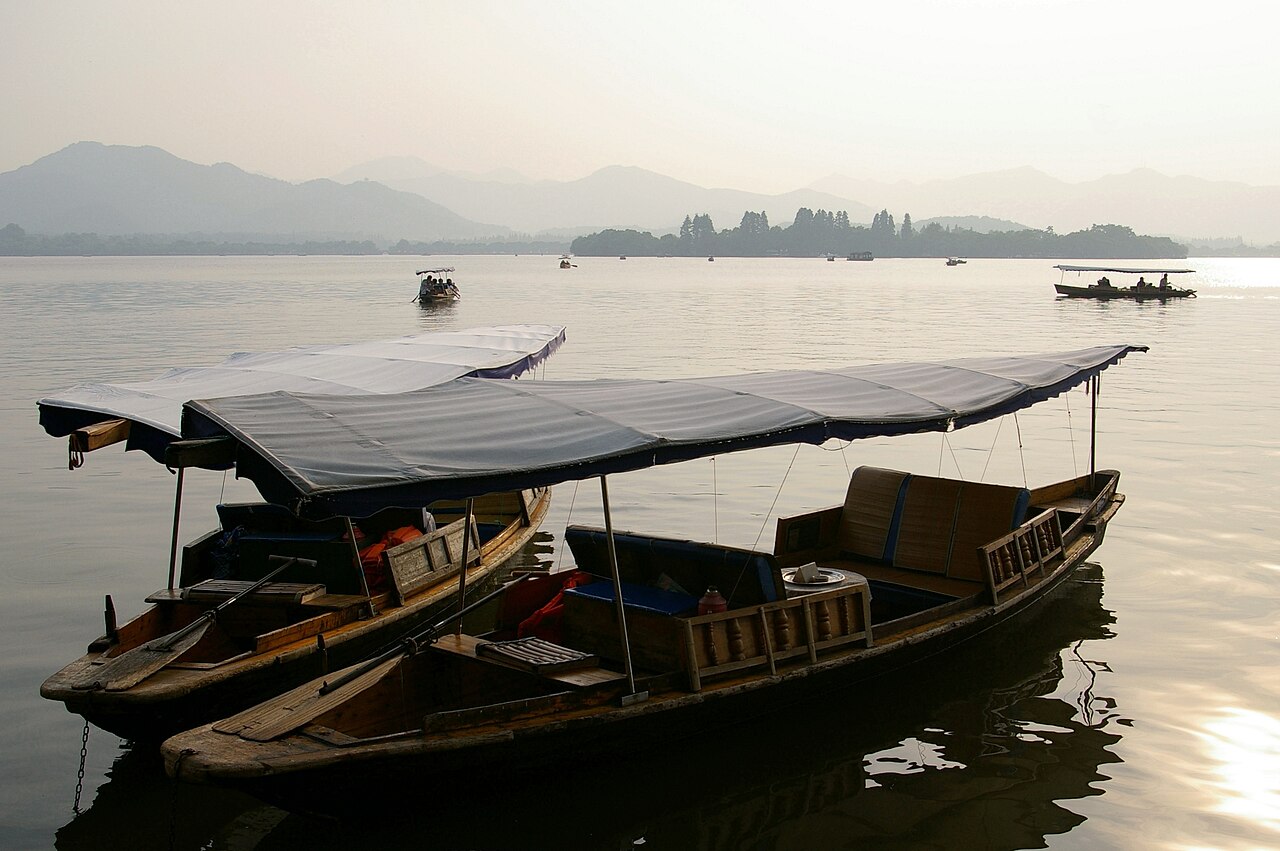
A raft on the Sea-Within-the-Sea, bamboo closing in on every side
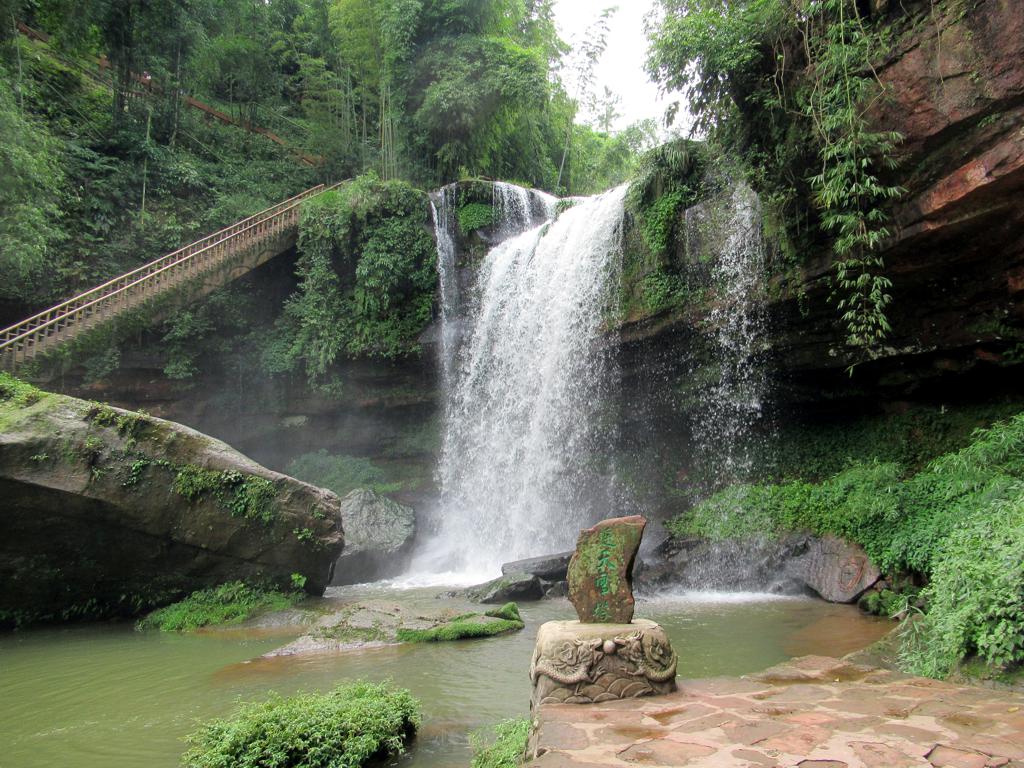
The Seven-Colour Falls dropping nearly 200 m in four tiers

Walking the Jade Corridor between the tall bamboo, red sandstone underfoot like a carpet, pine wind in the ears and the smell of bamboo leaves in the air, you feel you have stepped outside the world. Keep climbing, and look for the strange human-faced bamboo.

A traveller's note, Breathing in the Jade Corridor

When you take up the pole and let the raft drift out onto the Sea-Within-the-Sea, every bit of noise in the world goes off with the water. Even a bellyful of worry turns into something like pleasure.

A traveller's note, Poling a Raft on the Sea-Within-the-Sea

There is a place where, when the wind gets up, green waves heave against the sky and the whole hillside roars, and when it drops, everything goes still, soft and far away. On a clear day the light flashes off the leaves and the green sea glitters gold; in the rain the cloud wraps the hills, the bamboo shadows sway, and the view turns into ink. That is not a brochure line, it is a fair description of the Shunan Bamboo Sea — the bamboo sea of southern Sichuan.

It sits in Yibin, on the border of Changning and Jiang'an counties, and it is enormous: more than 70,000 mu of nann bamboo pouring over 28 hills and 500-odd knolls, 58 species in total, 87% plant cover, and the densest concentration of negative air ions anybody in China has bothered to measure. Eight main scenic areas, two preamble areas, 134 sights. Deng Xiaoping's successor as premier, Li Peng, came here and wrote four characters that the park has never stopped repeating: the Shunan Bamboo Sea is the greenest under heaven.

The park is strung together by a handful of set pieces. The Jade Corridor is the signature: a road paved in red sandstone arched over by bamboo leaning so far inward that the light comes down in slivers. The Sea-View Tower, reached by one of China's longest cable cars, gives you the whole rolling green at once. And in the cliffs behind, Xianyu Cave holds Ming-dynasty carvings inside a natural rock cavity, while the Tianbao Stockade runs 1,500 m of Qing-dynasty fortress along a cliff face.

Between those, the park asks you to do very little: pole a raft across a lake, walk the Forget-Your-Worries valley in the evening, stand in the spray at the Seven-Colour Falls, and eat. The food is half the reason to come — a whole-bamboo banquet that runs from winter shoots through bamboo fungus to something called bamboo bird's nest, and outside the park, the noodles Yibin is famous for.
Shunan Bamboo Sea

Don't leave without

Seven things that are worth rearranging a day for.
  1. Walk the Jade Corridor on the red sandstone and just breathe
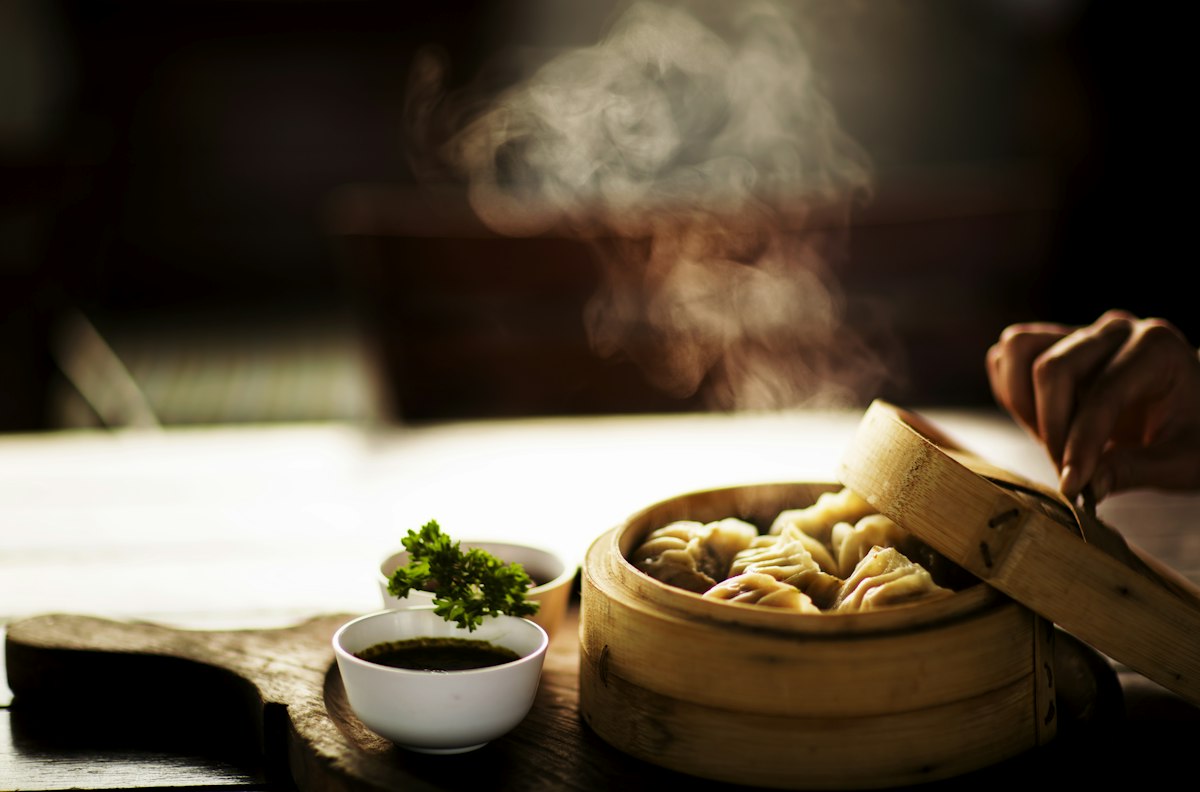
  2. Eat a whole-bamboo banquet, every dish green
  3. Walk the Forget-Your-Worries valley after dark, in the moonlight if you get it
  4. Ride the cable car for the one aerial look at the bamboo sea
  5. Pole a bamboo raft across the Sea-Within-the-Sea and then stop poling
  6. Wear something bright — solid green eats every other colour in a photograph

Highlights

What the green is actually for

The Jade Corridor

The park's signature and the single most photographed stretch in it: a road paved in local red sandstone, the colour of cinnabar, walled by old and new bamboo leaning inward until they almost meet overhead. Cool and half-lit even at noon; when it snows, the ground turns to silver brocade and the bamboo to jade flowers.

The cable car and the Sea-View Tower

One of the longest cable cars in China, 2,742 m with a 350 m rise, running from the Moxi valley floor straight up to the Sea-View Tower and the Jade Corridor area. From the air you finally get what the name means: ten thousand acres of bamboo, moving like a sea.

Xianyu Cave

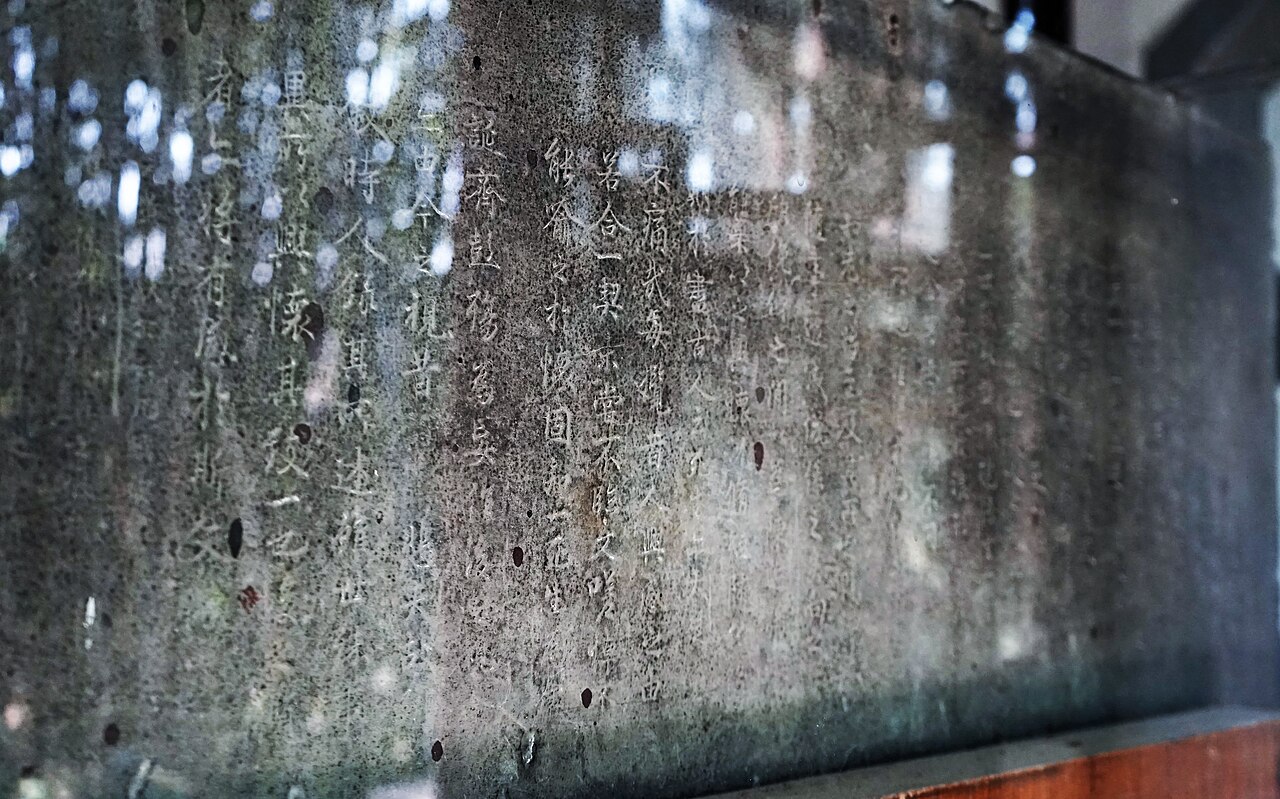
A temple complex tucked inside a natural rock cavity in a sheer cliff, with a single narrow path in and a precipitous drop below. Inside are Ming-dynasty cliff carvings from 1506–1522 and reliefs of the Journey to the West stories, a reclining Buddha cut into the red sandstone, a Guanyin hall with eighteen arhats on the walls, and the monks' hall where the ashes of past abbots are kept.

The Tianbao Stockade

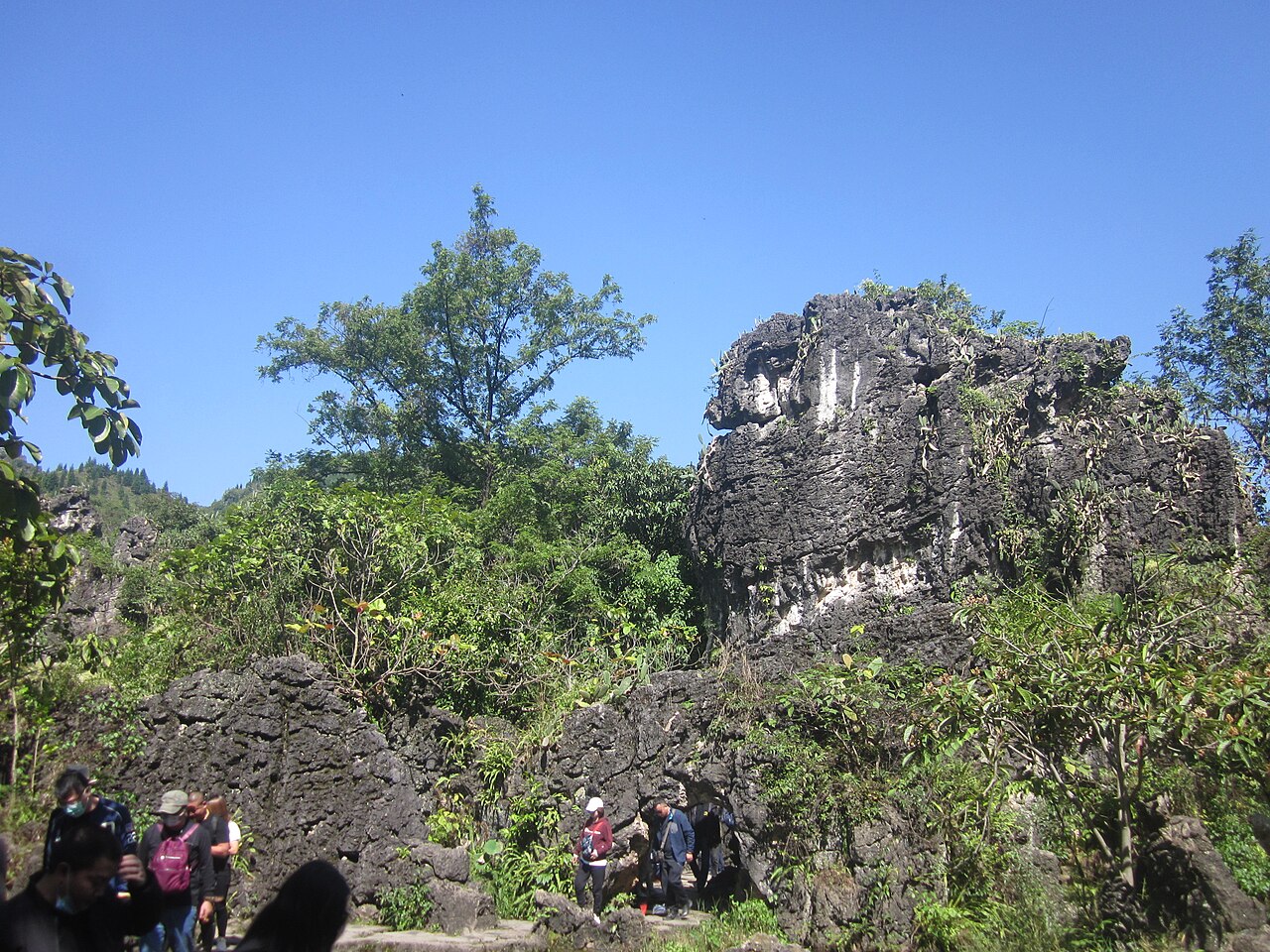
A Qing-dynasty fortress built in 1862 along a cliff to hold the place against Shi Dakai's Taiping army: about 1,500 m long, 20 m high and 10 m wide, with thirteen stone gates, mostly half-caves built against the rock. In sunshine the red sandstone glows gold; in mist the whole thing turns strange and theatrical. The giant mushroom rock beside the path is over 10 m tall and looks like it should have fallen already.

The Seven-Colour Falls

In the gourd-shaped valley between Shigu and Shiluo hills, the Shuiliao stream drops nearly 200 m in four tiers under the bridge — and throws rainbows when the sun is on it. Locals say that late at night the roar of the water carries the sound of bells and drums from the hills on either side.

Rafts on the lakes

The way to travel on water here. A small raft seats four for ¥80, a covered big raft about eight for ¥220, and the classic drift is across the Sea-Within-the-Sea, where the bamboo closes in on every side and the whole point is to stop rowing for a while and let the noise go.

Suggested routes

Two days, or one if you must

Two days, with the old town

2 days days

The standard plan: cliffs and caves on the way in, the corridor and the tower on the way out, Lizhuang for the afternoon.

  1. Day 1

    In by the west gate: cliffs, caves, dinner

    Drive or bus in from Chengdu — about 4.5 hours. Zhuhai town, with its bamboo along the river and the fields behind it, is still only the outer edge; the west gate of the park is at Wanling town, further on.

    Go straight for the far south-west corner while the light is on the cliffs: Xianyu Cave, then the 1,500 m of the Tianbao Stockade, then cool off at Qinglong Lake. After a day of that, reward yourself properly with a whole-bamboo banquet, and sleep at Wanling.

    Stops: Xianyu CaveTianbao StockadeQinglong Lake

  2. Day 2

    Corridor, tower, museum, Lizhuang

    Do the crowded sights early: the cable car queue for the Sea-View Tower is appalling on holidays, so be at it when it opens. Come down through the Jade Corridor, which is where the park looks most like itself.

    The Bamboo Sea Museum is a kilometre outside Wanling — a southern-Sichuan courtyard complex standing on the Moxi river, full of bamboo crafts worth taking home. Then drive the hour to Lizhuang old town for a slow afternoon: the wine, the white-cut pork, and then the road back to Chengdu.

    Stops: Sea-View TowerJade CorridorBamboo Sea MuseumLizhuang

One day, the classic loop

1 day days

If you only have a day, this is the loop that gets the park's whole range into eight hours.

  1. Day 1

    Buy the ticket and work the loop

    Enter on the through ticket and run the set in geographical order: Forget-Your-Worries valley, the Moxi stream, the Jade Corridor, Xianyu Cave, the Tianbao Stockade, the Seven-Colour Falls, Qinglong Lake and the Bamboo Sea Museum.

    Eat the whole-bamboo banquet in the middle of it rather than at the end, and stay the night in the park if you can — one day means most of it is spent in a car, and the park is at its best in the evening, when the day trippers have gone.

    Stops: Forget-Your-Worries valleyJade CorridorXianyu CaveSeven-Colour Falls

  2. Day 2

    If you can steal a morning

    Take the cable car up to the Sea-View Tower at opening time for the aerial view you missed, then walk the Jade Corridor back down while the light is still slanting.

    Leave by the west gate and break the drive with an hour in Lizhuang old town, or in Shuanghe for the Grape Well cold rice cake.

    Stops: Sea-View TowerJade CorridorLizhuang

Three slow days: the ten best

3 days days

The park has its own traditional top ten. Three days walks them without hurrying.

  1. Day 1

    Water: falls, lakes, rafts

    Work the wet half of the park: the Seven-Colour Falls dropping in four tiers, Qinglong Lake, and a raft out onto the Sea-Within-the-Sea. Finish at the Forget-Your-Worries valley in the evening — water, bamboo, and moonlight if the sky clears.

    Stops: Seven-Colour FallsQinglong LakeForget-Your-Worries valley

  2. Day 2

    Cliffs: cave, stockade, temples

    Xianyu Cave and the Tianbao Stockade in the morning while the sun is on the red sandstone, then the Temple of Heavenly Sovereign and the old battlefield site above the bamboo.

    Afternoon at the Bamboo Sea Museum, and an evening watching a bamboo-carver work — the park has plenty of them, and watching the process is half the pleasure.

    Stops: Xianyu CaveTianbao StockadeBamboo Sea Museum

  3. Day 3

    High ground: tower, corridor, bridges

    Cable car to the Sea-View Tower at opening, then the Jade Corridor and the Cloud-Watching Pavilion for the long view.

    Finish on the lower walks — Camellia Hill and the thirteen bridges over Flower Stream — before driving out via Lizhuang or Shuanghe.

    Stops: Sea-View TowerJade CorridorFlower Stream bridges

Sights

Where to actually go

Signature walk

The Jade Corridor

The road is laid with the local red sandstone, the colour of cinnabar and bright as rosy cloud, and the dense old and new bamboo on either side arch over it. The surface rises and falls, the culms lean inward until they very nearly meet, and the corridor becomes deeper and prettier the further you go. In high summer it is a cool world of its own; a poem written for it goes: red cloud for a carpet, jade columns for a frame, the fierce sun has no heat here, and the wild wind no violence.

Where
Central scenic area, near the Sea-View Tower
Best time
Midday, when the light comes through in slivers — and after snow
Included
Yes — the through ticket covers it

Tip This is the one place where the crowds are worth tolerating. Walk the length of it rather than shooting twenty metres from the entrance.

Cliff temple

Xianyu Cave

Deep, strange and dangerous-feeling: a temple built into a natural rock cavity in a sheer cliff, reached by one path. Ming-dynasty cliff carvings from 1506–1522 and a relief cycle of the Journey to the West. Past the chained dragon and under a flying waterfall you reach the Reclining Buddha hall, carved from red sandstone with fourteen heavenly figures behind it, then the Guanyin hall with the eighteen arhats and a stone ox lying in a water basin.

Where
South-west of the park, on the Xianyu Cave circuit
Carvings
Ming dynasty, 1506–1522 · Journey to the West reliefs
Also inside
Reclining Buddha hall, Guanyin hall, monks' hall with a stupa and 15 ash niches
Above
Fairy Lake, on the hilltop, closes the circuit

Tip It is a proper scramble, with wet rock and a lot of steps. Boots rather than sandals, and do it before the tour groups arrive.

Qing fortress

The Tianbao Stockade

Built in 1862, in the Xianfeng years, by the local authorities to keep Shi Dakai's Taiping army out of Sichuan: about 1,500 m of fortification along a cliff, 20 m high and 10 m wide, mostly half-caves built against the rock, with thirteen stone gates that were never going to be easy to take. Bamboo closes over it on every side, so you walk it feeling protected rather than exposed.

Where
On the Xianyu Cave circuit, above the bamboo
Built
1862, Qing Xianfeng reign
Size
About 1,500 m long · 20 m high · 10 m wide · 13 stone gates
Look for
The giant mushroom rock, over 10 m tall, and the Yellow Umbrella Rock

Tip Sunlight on the red sandstone is the whole show here — go on a clear morning. In mist it goes strange and theatrical instead, which is also fine.

Waterfall

The Seven-Colour Falls

The Shuiliao stream, running out of the deep forest, drops nearly 200 m in four tiers into the gourd valley between Drum Hill and Gong Hill — and throws rainbows when the sun catches it. Below it a pool of blue-green water holds the reflection of the bamboo, still against all that movement, and beside it the Falling Soul Terrace balances a huge rock over nothing much at all.

Where
The gourd valley between Shigu and Shiluo hills
Drop
Nearly 200 m, in four tiers
Above the falls
Stone Dragon Crossing the River, Meng Huo's tomb, the old parade ground

Tip The falls are at their best after rain, and the ground around them is wet and slick. Watch your feet, and bring the rain shell — you will be in the spray.

Aerial view

The cable car and the Sea-View Tower

One of the longest cable cars in China: 2,742 m end to end with a 350 m rise, running from the Moxi valley floor up to the Sea-View Tower and the Jade Corridor area. It is thrilling without being frightening, and the payoff is the one view of the park you cannot get any other way — ten thousand acres of bamboo, wave after wave of it, from above.

Length
2,742 m · 350 m rise · among the longest in China
Route
Moxi valley floor up to the Sea-View Tower and Jade Corridor
Fare
One-way or return, sold at the station

Tip Holiday queues here are the worst in the park. Do it at opening, or accept an hour of standing.

Museum

The Bamboo Sea Museum

Built out over the water of the Moxi river in southern-Sichuan domestic style, halls, terraces, pavilions and corridors all opening into each other. It collects and shows bamboo crafts: weaving, carving and the bamboo-skin technique, more than 300 pieces in four categories. The highlight is a version of the Qingming Shanghe Tu woven from a million bamboo threads, each one thin as a cicada wing, by six master weavers over a year. Bamboo-skin work from here won gold at the Panama-Pacific exposition in 1914.

Where
About 1 km outside Wanling town
Collection
Bamboo weaving, carving, bamboo-skin work — 300-plus pieces
Famous piece
A Qingming Shanghe Tu woven from 1,000,000 bamboo threads over a year

Tip It is also the shop. If you want a bamboo thing to take home that is not a keyring, this is where to buy it.

Lakes and a hilltop temple

Fairy Lake and Dragon Chant Temple

Fairy Lake sits on the hilltop above Xianyu Cave, some 12 km from the Wanling bridge, closing the cave circuit: about two hectares of clear green water, golden at sunrise and sunset, and a watercolour in the morning mist. Higher still, Dragon Chant Temple — once Dragon Tail Temple — stands at 980 m on Nine Dragons Hill, where the wind moves the bamboo until it sounds, the locals say, like a dragon chanting. Forty-one statues survive inside.

Fairy Lake
About 2 hectares · on the hilltop above Xianyu Cave · 12 km from Wanling bridge
Dragon Chant Temple
980 m on Nine Dragons Hill · 41 surviving statues
Summer
The lake's tree frogs start up in summer — the locals call it the fairy playing the zither

Tip Fairy Lake is quiet precisely because it is a detour. Take the boat out to the middle; the breeze off it is the best air conditioning in the park.

Evening walk

The Forget-Your-Worries valley

Deep, pretty and quiet, with water running beside the path the whole way. The local idea is that you come here in the evening, alone with the night sky and the moon, or with your family, and listen to the bamboo music under the moonlight. It is the park at its least crowded and most itself.

Where
Near the park entrance, on the classic one-day loop
Best time
Dusk and after dark
Included
Yes — on the through ticket

Tip Go after dinner rather than as a morning sight. You want it dark, and you want the day trippers gone.

Food

A banquet made of bamboo

Bamboo fungus and free-range chicken

The dish the park is known for: chicken raised loose in the bamboo stewed slowly with fresh bamboo fungus until the broth smells across the courtyard. It is the one thing every restaurant here does properly, and the one thing you should order without asking.

Bamboo fungus egg

The stage before the fungus opens — a small round thing like an egg, wrapped in a jelly of its own, with a genuinely crisp bite. You can only eat it in the Shunan Bamboo Sea, because it has to be picked here and cooked the same day.

Bamboo bird's nest

Not a bird's nest at all, but the nest of a bird that lives in the bamboo. It has almost no flavour of its own and is eaten for the texture and, according to local conviction, for the complexion. Light, faintly gelatinous, and a good excuse to order a second thing.

Fresh shoots, all twelve months

The park genuinely has shoots in every season: winter and spring shoots in January and February, spring shoots in March and April, bitter and hemp bamboo shoots in May, sweet dragon bamboo and reed shoots in June, hard-head yellow and lovable bamboo in July and August, chicken-claw and soft bamboo in September and October, and winter shoots again from November. Yulan slices, water-packed shoots and salted shoots are the preserved versions.

White-oil bamboo shoots

The plainest dish on the table and one of the best: shoots sliced on the bias, a few greens for colour, tossed in a wok with nothing to hide behind. It tastes of bamboo and not much else, which is what bamboo is supposed to taste like.

Yibin ranmian

Once called Youtiao noodles, renamed because the dressing is so oil-rich and water-free that the bowl would catch light: local wheat noodles tossed with Yibin yellow sprouts, sesame oil, rendered lard, star anise, sesame, peanuts, walnuts, chilli and Sichuan pepper, then finished with spring onion and pea shoots. The city's breakfast, and the best thing to eat on the way out.

Ye'erba and Grape Well cold rice cake

Ye'erba — also called ya'erba — is a steamed rice cake wrapped in a galangal leaf, translucent, pale and fat, and it is what Yibin people eat at festivals. And out at Shuanghe old town east of Changning, the cold rice cake is made with water from the Grape Well, a spring whose bubbles rise in strings like grapes; the water is the whole trick.

Where to eat

Kitchens worth planning around

Park restaurant

Seven Worthies Pavilion, at the falls

Right beside the Seven-Colour Falls, in thick bamboo with water running past: simple, old-fashioned rooms, and a kitchen whose signature is a panda banquet built out of bamboo. There are bonfire evenings and bamboo-pole dancing, and there is a car park, which in this park is not a small thing.

Where
Shuikou group, Longqing village, Zhuhai town, Changning
Rooms
From about ¥158 a night; seats 100 in the dining room
Phone
0831-4979777
Best for
Dinner after a day on the falls circuit

Resort dining

Xanadu Resort dining rooms

The big resort on 300 acres with 30 hectares of lake in front of it does the full-bamboo banquet at its most polished: floor-to-ceiling glass, lake and village in view, Chinese and Western kitchens, and the kind of service that makes a bamboo shoot taste like a restaurant dish rather than a farmhouse one.

Where
Zhuhai town, Changning county
Rooms
From about ¥605 a night
Phone
0831-4999999
Best for
The one splurge meal of the trip

Farmhouse

Qingyuan farmhouse, on the hilltop

Up at the top of the Xianyu Cave scenic area, a one-stop farmhouse operation: food, beds, cards, fishing, parking, car hire, guiding and ticket booking. Rough around the edges, cheap, and the right place to end a long cliff day without driving anywhere.

Where
Xianyu Cave scenic area, hilltop, central Shunan Bamboo Sea
Price
From about ¥74 a night
Phone
0831-4970197
Best for
The night you do not want to move again

Local cooking

The farmhouse tables of Zhuhai town

Around the museum and the Moxi stream, the small family places do one menu and do it well: bamboo fungus and chicken, bamboo fungus egg, white-oil shoots, cured pork and whatever greens came in that morning, at prices that make the resort rooms look silly. Ask what came out of the bamboo today and let them cook it.

Where
Zhuhai and Wanling towns, and along the Moxi road
Expect
¥40–80 a head depending on how much fungus you order
Best for
The banquet at farmhouse prices
Order
Bamboo fungus and chicken first — it takes time

Old town

Shuanghe old town, for dessert

East gate of the old Shuanghe town, south along the lane, and the Grape Well is there: spring water rising off the bottom in strings of bubbles like grapes. The families here soak the rice, grind it and set it with that water, which is why the cold rice cake from Shuanghe tastes different from the same thing anywhere else.

Where
East gate of Shuanghe old town, Changning
Eat
Grape Well cold rice cake
Best for
The stop on the way out of the park

Where to stay

Sleeping inside the green

Mid-range, on the road in

Orange Hunan Resort Hotel

Built to three-star standard, on the road that runs to the Forget-Your-Worries valley, the museum and the Moxi stream, with a car park of a few dozen spaces. It is a sensible base for the western half of the park, and there is a sister hotel in Changning town if you arrive late.

Where
Shunan Bamboo Sea scenic area, Changning county, Yibin
Price
From about ¥240
Phone
0831-4981111

The big one

Xanadu Resort Hotel

Three hundred acres with the bamboo sea running for tens of kilometres behind it, and the resort itself built glass-fronted over the lake: a 5,000 sq m spa and hot-spring centre, a yacht club and floating golf range on 30 hectares of water, walking loops around the hills and the lake. It is the comfortable way to do the park.

Where
Zhuhai town, Changning county
Price
From about ¥605
Phone
0831-4999999
Facilities
Spa and hot springs, water club, hiking loops, meeting rooms

Family-run, good value

Diecui Villa

A family-style villa hotel sitting between the Moxi stream and the cable car below and the museum, the drift, the visitor centre and the Forget-Your-Worries valley above. Rooms are individually decorated, and there is a Yibin travel guide written into each one. Good, cheap, and in exactly the right place.

Where
400 m from the Bamboo Sea Museum, Zhuhai town, Changning
Price
From about ¥120
Phone
0831-4980500

By the falls

Seven Worthies Pavilion

Down by the Seven-Colour Falls in thick bamboo with the stream running: simple, unpretentious decoration, complete rooms, and a handful of romantic couples' cabins along with doubles and view rooms. About sixty guests, a restaurant for a hundred, and the falls a few minutes' walk away.

Where
Shuikou group, Longqing village, Zhuhai town, Changning
Price
From about ¥158
Phone
0831-4979777
Evenings
Bonfire nights and bamboo-pole dancing

Farmhouse

Yudu Garden farmhouse

Two hundred metres from the museum, with the ten-li Moxi stream running past the door. It was risen out of a bare hillside in 2004 and is now four acres of flower and fruit, clean water and clean air — the sort of place where you walk out in the morning and wonder whether you are still in a park.
Where
200 m from the Bamboo Sea Museum, central scenic area
Price
From about ¥100
Phone
13795981747

Cheapest bed in the park

Qingyuan farmhouse, on the hilltop

At the top of the Xianyu Cave area, the cheapest roof in the park and the closest to the cliffs. It runs everything a walker needs — meals, parking, car hire, guiding, tickets — which is handy, because nothing else up here does.

Where
Xianyu Cave scenic area, hilltop
Price
From about ¥74
Phone
0831-4970197

Getting around

Getting to Yibin, and moving through the bamboo

By air

Yibin has two airports: the military-civilian Caiba Airport, expanded twice and running services to Beijing, Shanghai, Guangzhou, Shenzhen and Kunming, and the new Wuliangye Airport being built. Caiba is 7 km from the city — bus 8, a taxi or the airport shuttle — and the park is about 60 km further on by road. Chengdu Shuangliu (CTU) is the alternative gateway, with road transport all the way down.

Caiba Airport
7 km from Yibin city · bus 8, taxi or shuttle
Wuliangye Airport
Under construction
From the park
About 60 km — arrange a pick-up through your hotel

By train

The Chengdu–Kunming railway runs north to south straight through Yibin, with several passenger services a day, and Yibin station connects north to Chengdu and Chongqing and south to Kunming and Guiyang. It is the slow, comfortable way down from Chengdu if you would rather not sit in a car for four and a half hours.

Yibin station
Cui ping district, western suburbs · 0831-7812401
Buses to the station
Routes 1, 5, 6, 10, 11
Services
Chengdu and Chongqing north; Kunming and Guiyang south

By coach

From Chengdu, Xinnanmen station runs a direct service to the bamboo sea in the morning — about 4 hours, roughly ¥85–112 depending on the coach. From Yibin, the south coach station runs to Changning every 12 minutes for about ¥10 and an hour, and Changning runs on to the park every 15 minutes for another 40 minutes. Yibin's other stations: Ximen for intercity services, Nan'an for the counties.

Chengdu Xinnanmen
Morning departure, about 4 h, about ¥85–112
Yibin south station
To Changning every 12 min, about ¥10, 1 h · 0831-2333724
Changning → park
Every 15 min, about 40 min
Yibin Ximen station
Intercity services · 0831-8306007

By car

The honest best answer, because the park is 13 km by 6 km with 124 scattered sights. The route is simple: Chengdu–Chongqing expressway to Neijiang, Neijiang–Yibin expressway to the Yibin south exit, then the tourist expressway south of the city up to Changning county and on to the park — about 380 km, 4.5 hours, well signed all the way. Note that the park's west gate is at Wanling, not at Zhuhai town on the outer edge.

Route
Chengdu–Chongqing expwy → Neijiang → Neijiang–Yibin expwy → Yibin south → Changning → park
Distance
About 380 km · about 4.5 hours
Note
The west gate is at Wanling town, further in than Zhuhai town

Inside the park

Public transport inside is thin and the distances are long, so charter a car and driver for about ¥200–250 a day — the park will arrange one for you — or self-drive. The cable car, electric carts and the rafts cover the specific hops up the hills and across the water. Yibin taxis start at ¥3 with ¥1.40 per kilometre and a 50% surcharge after 5 km; city buses are ¥0.50–2; a pedicab starts at ¥2.
Charter
About ¥200–250 a day, arranged through the park or your hotel
Cable car
2,742 m, up to the Sea-View Tower
Rafts
¥80 for four · ¥220 for a covered raft for about eight
Yibin taxis
¥3 flagfall · ¥1.40/km · +50% beyond 5 km · 0831-5172111 for complaints

Shopping

What the bamboo becomes

Bamboo weaving

Bamboo split into threads fine as hair and woven into baskets, trays, wine and tea things. The museum's Qingming Shanghe Tu took six master weavers a year and a million threads, and even a modest market piece is made with the same technique. Buy it here rather than in a city souvenir shop, where the same money buys machine work.

Bamboo-skin work

The technique the park is proudest of: the outer skin of the bamboo used as a surface, which won gold at the Panama-Pacific International Exposition in 1914 and has since grown into five categories and nearly two hundred products. It is the one bamboo craft that looks like nothing else in China.

Bamboo root and bamboo tube carving

Root carving takes the waste root — the gnarled, weather-beaten knuckles of it — and cuts it into longevity gods, arhats, beauties, birds and beasts. Tube carving uses the freak stems, including the human-faced bamboo, in relief and intaglio, with dragons, figures and landscapes, and it is the one collectors actually keep.

Shoots and bamboo fungus to take home

The edible souvenirs: yulan slices made from winter and spring nann shoots, water-packed shoots, salted shoots, and dried bamboo fungus from Jiang'an, which is listed in the standard Chinese cookbooks as the good stuff. Vacuum-packed, they travel, and one bag is several dinners at home.

Jiang'an plums and summer oranges

Jiang'an plums are listed among China's six best plum varieties by the pomologist Yu Dejun, in more than ten local forms — large white, small white, incense-ash, cinnabar, ox-heart, chicken-blood — with the large white the best of them: hollow at the tip, the stone coming away clean, crisp and fragrant. Jiang'an also leads the country in summer oranges, which flower in March and April and are picked the following May, so they arrive in the empty season with flowers and fruit on the tree at once.

Practical

Tickets, phones and the weather

The park is big, the sights are scattered and internal transport is thin — drive yourself or charter a car for ¥200–250 a day. And bring a thicker layer than the season seems to need: it is on high ground, and the temperature drops at night even in August.

Entry¥110, 1 Jan – 30 Nov · ¥60, 1–31 Dec · concessions ¥55 / ¥30
ConcessionsAges 60–69, children 1.1–1.4 m, full-time students, disabled visitors · under 1.1 m free
Through ticketOne ticket covers the park; no separate admissions inside, only the paid extras
ExtrasCable car (one-way or return) · electric carts · rafts ¥80 small / ¥220 covered
ClimateAnnual mean about 15.5°C · winter rarely below 0°C · summer rarely above 30°C · 345 frost-free days
HumidityAbove 83% year round — bring a layer; the park is on high ground and the day-night swing is wide
TerrainDanxia red sandstone, 600–1,000 m; 124 sights over 13 km by 6 km — comfortable shoes, always steps
Park phonesTickets 0831-4980676 / 4980221 · marketing 0831-4980130 · Wanling station 0831-4980656 · Xianyu Cave station 0831-4970177
EmergencyPark police 0831-4980122 · first aid 120 · fire 0831-4980119 · park police post 0831-4980490 · consumer complaints 0831-4980315

Tips

Small things that change the day

Drive, or charter

The park runs 13 km by 6 km with 124 sights and almost no internal bus. Self-drive if you can; otherwise charter a car and driver at ¥200–250 a day, which the park will arrange, and you will fit the cave, the stockade, the falls and the corridor into two days.

Pack a jumper in July

The bamboo sea sits between 600 and 1,000 m, and the day-to-night swing is real even in summer. A light jacket turns a shivering evening walk in the Forget-Your-Worries valley into the best part of the day.

Wear something bright

If you are carrying a camera, put on a bright top. Solid green eats every other colour in a frame, and the photographs people come home happiest with are the ones where someone in red or yellow is standing in the Jade Corridor.
Do the cable car first

The queue for the Sea-View Tower on a public holiday is genuinely appalling. Be there at opening, come down through the Jade Corridor, and you will have done the two most popular things in the park before anybody else has parked.

Watch a carver work

There are folk carvers all over the park, and watching them is half the pleasure — the root and tube pieces take hours, and seeing one made is what stops it looking like a souvenir.
Do it in two days, not one

One day means most of the time is spent in a car getting between sights scattered over 13 km. Two days lets you do the cliffs one day and the corridor and lakes the next, and gives you the evening in the valley, when the park is at its best.
Background

How a bare hill became a sea of bamboo

The story the park tells about itself

The local legend is that the Wanling hills here were a piece of the red stone the goddess Nüwa dropped while mending the sky, and that a heavenly phoenix, the Jinyuan immortal, came down in secret to weave green over the bare hill and was hauled back to heaven for it. The jailer's daughter, the immortal Yaoqing, heard what had happened, pitied the phoenix, stole her father's pass and helped her out of the south gate — and was caught, and banished to earth herself, to weave green on Wanling hill until the green reached the ninth heaven.

Yaoqing, the story goes, was glad of the sentence. Her father pressed his seven-star fly-whisk on her as she left, the other immortals gave her jade trinkets as seed, and the weaving goddess gave her a white silk ribbon that could turn into cloud and rain. She came down among the bare hills, sowing jade by day, sweeping her whisk and waving the ribbon, until shoots broke ground and new bamboo stood up in green waves running toward the sky. The barren hill became the green jade that is the bamboo sea today, and the Moxi river running through it is the white silk ribbon she dropped.

The ground under the green

The park is shaped like the character for zigzag, wide east to west and narrow north to south, running about 13 km by 6 km, with 124 sights: 15 first-rank, 19 second-rank. The hills are classic Danxia red sandstone between 600 and 1,000 m — which is why the paths are red, why the cliffs are red, and why Xianyu Cave and the Tianbao Stockade are cut into and built against red rock. Streams cross the forest in every direction, waterfalls hang high, the lakes are flat as mirrors, and the springs are cold and sweet.

The climate does the rest. The park is mild and wet with four distinct seasons: an annual mean of about 15.5°C, winter rarely below freezing, summer rarely above 30°C, 345 frost-free days, and relative humidity above 83% all year. That combination — red sandstone, constant damp, mild air — is exactly what nann bamboo wants, and it is why the park's traditional top ten reads like a list of moods rather than of places: the Temple of Heavenly Sovereign, the Tianbao Stockade, Xianyu Cave, Qinglong Lake, the Seven-Colour Falls, the old battlefield, the Cloud-Watching Pavilion, the Jade Corridor, Camellia Hill and the thirteen bridges over Flower Stream.

Travel with them

The bamboo sea on film

Film

Crouching Tiger, Hidden Dragon

Directed by Ang Lee

The swordsman Li Mu-bai wants out of the jianghu and sends the Green Destiny sword to Beijing with Yu Shu-lien, and the sword is stolen the first night by the governor's daughter Jen. What everybody remembers is the fight that happens above this: two figures going at each other across the tops of bending bamboo, weightless and silent over a green sea — which is the shot that put the Shunan Bamboo Sea on the international map.

The questions visitors ask us most about Shunan Bamboo Sea, answered plainly.

Frequently asked questions

Prices and practical details are reviewed every month by our Beijing team and updated the day a rule changes.

Where is the Shunan Bamboo Sea?

In Yibin, in the far south of Sichuan, on the border of Changning and Jiang'an counties — about 380 km and 4–4.5 hours by road from Chengdu, and about an hour from Yibin. The park itself runs roughly 13 km east to west and 6 km north to south, with 124 sights spread across it, so distances inside are larger than the map suggests.

When is the best time to visit the Shunan Bamboo Sea?

Any time, because the park is green and cool in every season — the annual mean is about 15.5°C and humidity stays above 83%. Summer is the classic choice, when the bamboo shades the paths and the air stays cool while the Sichuan basin below bakes. Autumn puts red leaves among the green, and winter is quiet with the occasional snow on the bamboo. July and August are also the busiest, so book beds ahead.

How do I drive to the Shunan Bamboo Sea from Chengdu?

Take the Chengdu–Chongqing expressway to Neijiang, come off there onto the Neijiang–Yibin expressway, leave at the Yibin south exit and pick up the tourist expressway south of the city, then follow it through Changning county to the park. It is well signposted the whole way: about 4.5 hours and 380 km. The park's west gate is at Wanling town, not at Zhuhai town, which is only the outer edge.

How do I get there by bus?

From Chengdu, the direct service out of Xinnanmen station leaves in the morning and takes about 4 hours for roughly ¥85–112 depending on the service. From Yibin, take a bus from the south coach station to Changning — every 12 minutes, about ¥10, one hour — and then a Changning to Bamboo Sea service, every 15 minutes and about 40 minutes. Trains on the Chengdu–Kunming line also serve Yibin station, from where you change to road transport.

Is the Shunan Bamboo Sea worth visiting?

Yes, if you want green calm rather than big mountains. It is the largest original bamboo park in China, the Jade Corridor and the cable-car view are genuinely striking, and the whole-bamboo banquet is a real reason to come. It suits people who like walking, eating and doing nothing in particular; if you need spectacle every hour, two days will feel long. Pair it with Yibin's food and the old town of Lizhuang, about an hour away.

Should I take the cable car?

For the view, yes. It runs 2,742 m with a 350 m rise from the Moxi valley floor up to the Sea-View Tower, and it is one of the longest in China — the aerial look over the bamboo is the one angle you cannot get on foot. On public holidays the queue is genuinely awful, so go first thing in the morning. If you would rather keep both feet on the ground, the Jade Corridor and the lakes are still the heart of the park.

Is the park easy to get around?

Not on foot alone. The park is large and the sights are scattered, and internal public transport is thin, so the honest advice is to self-drive or charter a car and driver for about ¥200–250 a day — the park will help arrange one. That way the cable car, the museum, the caves and the lakes all fit into two days. Wear comfortable shoes: even the easy sights involve steps and slopes.

What is there to eat at the Shunan Bamboo Sea?

The whole-bamboo banquet is the point of the trip: fresh shoots in every month of the year, bamboo fungus stewed slowly with free-range chicken, the crisp bamboo fungus egg you only get here, bamboo bird's nest, and preserved and dried shoots of every shape. Outside the park, Yibin ranmian noodles — named for being so oil-rich they would catch light — and ye'erba, a leaf-wrapped steamed rice cake, are the two local things to try. The old town of Shuanghe near the park is famous for its Grape Well cold rice cake.

Related reading

Related reading

Visas Do I Need a Visa for China? Requirements, Costs and How to Apply China's entry rules changed more in the last three years than in the previous twenty. Here is exactly who needs a visa, what it costs, how long it takes and which passports now walk straight through. 9 min read Visas China's 240-Hour Visa-Free Transit: Who Qualifies and How It Works Ten days in China with no visa application, no fee and no fingerprints — if you hold the right passport and leave for a third country. Here is the rulebook, port by port. 8 min read Money Paying in China: Alipay, WeChat Pay, Cards and Cash Roughly nine in ten urban payments in China now run through a phone. Set up two apps before you fly, carry a modest cash float, and you will never be stuck at a till. 8 min read Transport China's High-Speed Rail: How to Book, What It Costs, How Fast It Goes The fastest way to cross China is also the most pleasant. Here is how to book a ticket with a foreign passport, what the three classes actually give you, and how to survive a Chinese station at rush hour. 9 min read Planning Best Time to Visit China: Month by Month, Region by Region China is the size of Europe, so 'the best month' depends on where you stand. Here is the month-by-month answer for the north, the Yangtze valley, the south and the plateau. 8 min read Planning What to Pack for China: The Complete 2026 Checklist Twenty thousand steps a day, three climate zones and a phone that has to do everything. This is the list we give our own travellers, minus the things they never used. 7 min read Food Chinese Food Culture: Eight Cuisines, One Table There is no such thing as Chinese food. There is Cantonese, Sichuan, Hunan, Jiangsu, Zhejiang, Fujian, Anhui and Shandong — and knowing which one you are eating changes everything. 8 min read Traditions Chinese Tea Culture: Six Classes, One Pot, Two Fingers Tea in China is not a beverage category, it is a social technology: it fills silences, seals deals and sets the pace of a meal. Here is how to sit down in one and not look lost. 7 min read Traditions Chinese Festivals: The Calendar, the Dates and the Crowds Lunar dates mean the calendar moves every year — and two of the festivals move several hundred million people at once. Plan around them or plan into them, but never by accident. 8 min read Etiquette Chinese Etiquette: What Matters, What Does Not, and Why Most etiquette advice for China is either obvious or wrong. These are the dozen behaviours that actually change how you are treated, and the reasoning behind each. 7 min read

Tell us your dates.
We'll do the rest.

Free itinerary design, a revised plan within one working day, and nothing charged until you approve the final version.

  • More than 70,000 mu of nann bamboo over 28 hills and 500-odd knolls, 58 species, 87% plant cover — the largest original bamboo park in China.
  • Entry is ¥110 from January to November and ¥60 in December, and it is a through ticket: nothing else inside costs admission, only the cable car, carts and rafts.
  • The cable car is 2,742 m long with a 350 m rise — among the longest in China — running from the Moxi valley floor up to the Sea-View Tower.

No spam. No sales calls. Just a real itinerary from a real person.