Wansan pork knuckle
The dish. A hind leg of the right fat-to-lean ratio, simmered or steamed in a large earthenware pot for a full day and night, served steaming with mahogany-red skin and a full shape. Then the trick: from the two long bones running through the joint, draw out one slender bone, and the shape of the knuckle does not move; use the bone as a knife and the joint is cut cleanly open.
The Wansan banquet
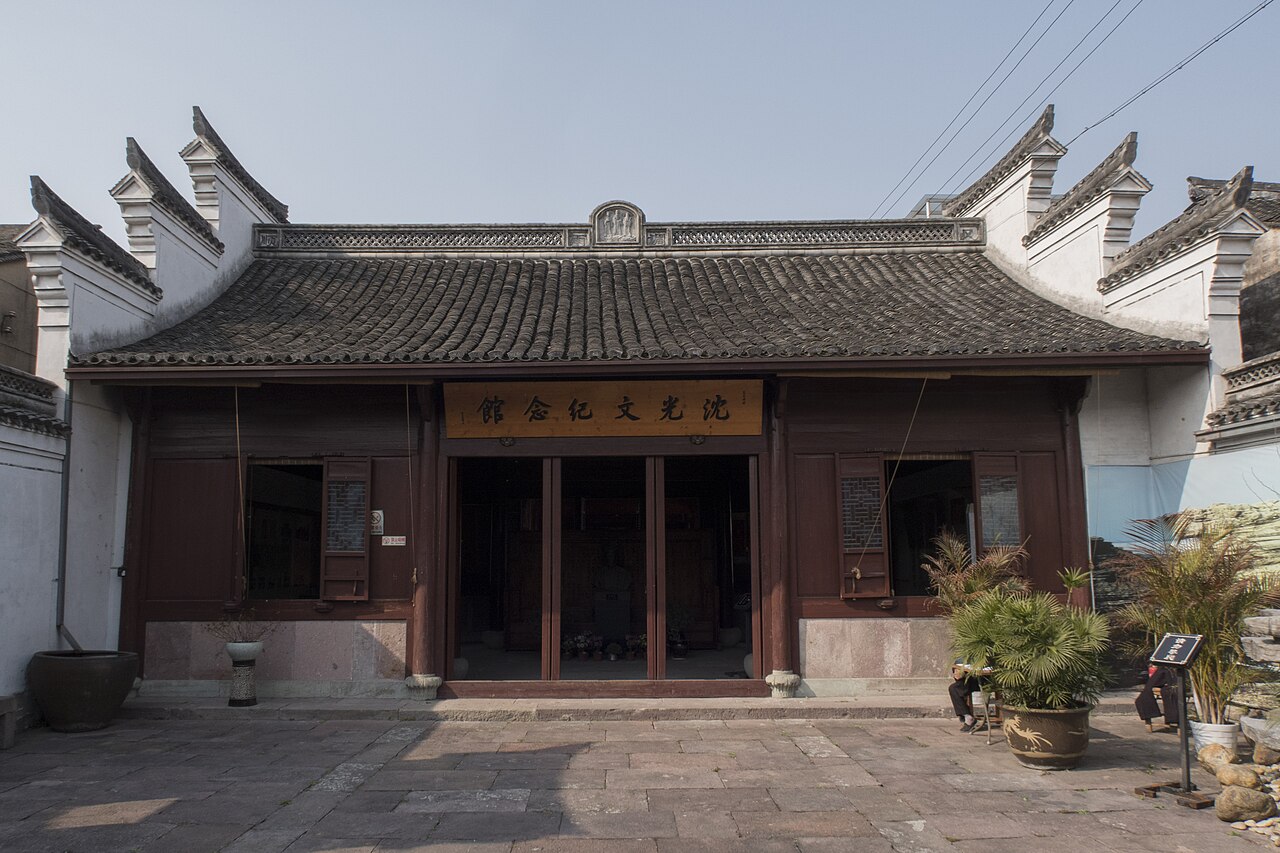
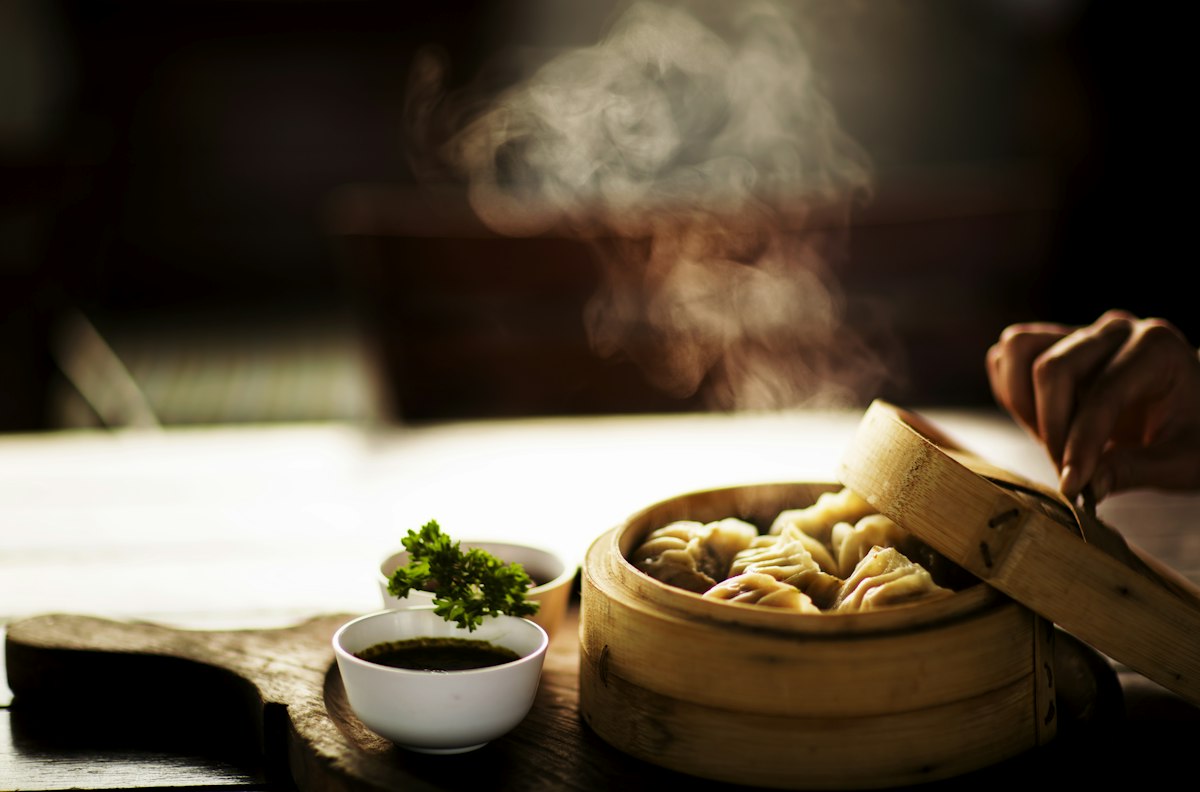
Shen Wansan hired noted cooks and put their work under one name. The banquet insists on seasonality and precise sourcing, and on colour, aroma, taste and form all being right. Beyond the knuckle: three-flavour dumplings, steamed mandarin fish, steamed eel sections, water-shield and perch soup, ginger pond snails, stuffed oil-packets, bean-curd parcels, stewed dried tofu and slow-cooked lotus root.
Three-flavour dumplings
Known locally as soup noodles-gluten: a wrapper of wheat gluten around a filling of chicken breast, fresh shrimp and pork leg, chopped fine with spring onion, ginger and yellow wine, boiled in chicken stock. Thin skin, tender filling, translucent — a snack, a dish and a soup in one bowl.
Grandmother's greens
A farmhouse pickle of mantou cabbage, well known across the southern water country. The name works two ways: the grandmothers of Zhouzhuang are the ones who make it best, and it is also one of the finest things served with grandmother's tea.
Green rice balls
Green dumplings made with the juice of spring greens — usually one of three wild plants, snow-thistle, mugwort or cudweed — boiled with lime, rinsed, and kneaded into glutinous rice flour. Bright green, soft, and sold in season.
Shrimp paste
Made after the start of winter from a shrimp so fine it is called the 'needle shrimp' — under an inch long, bent like an eyebrow when alive, shaped like the needle country women used for their hair. Steamed glutinous rice is folded through it with yellow wine, ginger, Sichuan pepper and salt, and after a week or so it turns orange-red flecked with white rice grains and smells extraordinary.
Wansan cakes
Made from top-grade long-grain glutinous rice, roasted and milled, mixed to an inherited recipe, then steamed and baked with careful control of the heat and cut by hand — eight stages from raw material to packet. Particularly good for children and older people, and the standard thing to carry home.
Water shield
A cosseted aquatic plant that likes warmth, clean water and still backwaters; there are red-stemmed and green-stemmed kinds. Planted around Qingming or around White Dew, picked from two months after planting, the leaves floating on the surface, oval, slippery-tender, with a clear jelly on the underside. A soup of the young leaves and stems is fresh, good and nourishing.
Bafish
Named for being the size of a human palm, and eaten the legendary two ways: the gills go into soup, the flesh is braised in soy. The flesh is particularly good because the fish is raised on meat. It is sold by the fish rather than by weight, it is expensive, and it is found in Zhouzhuang.
The Baixian catch
The river and the lake are the larder: the three whites and the three treasures — perch, white clam and silver fish — plus eel, of which the local saying runs 'when the rice ripens the eel rivals ginseng'. Turtle and river shrimp too. Crystal shrimp in summer and autumn: glossy, full, springy, naturally sweet.
Grandmother's tea
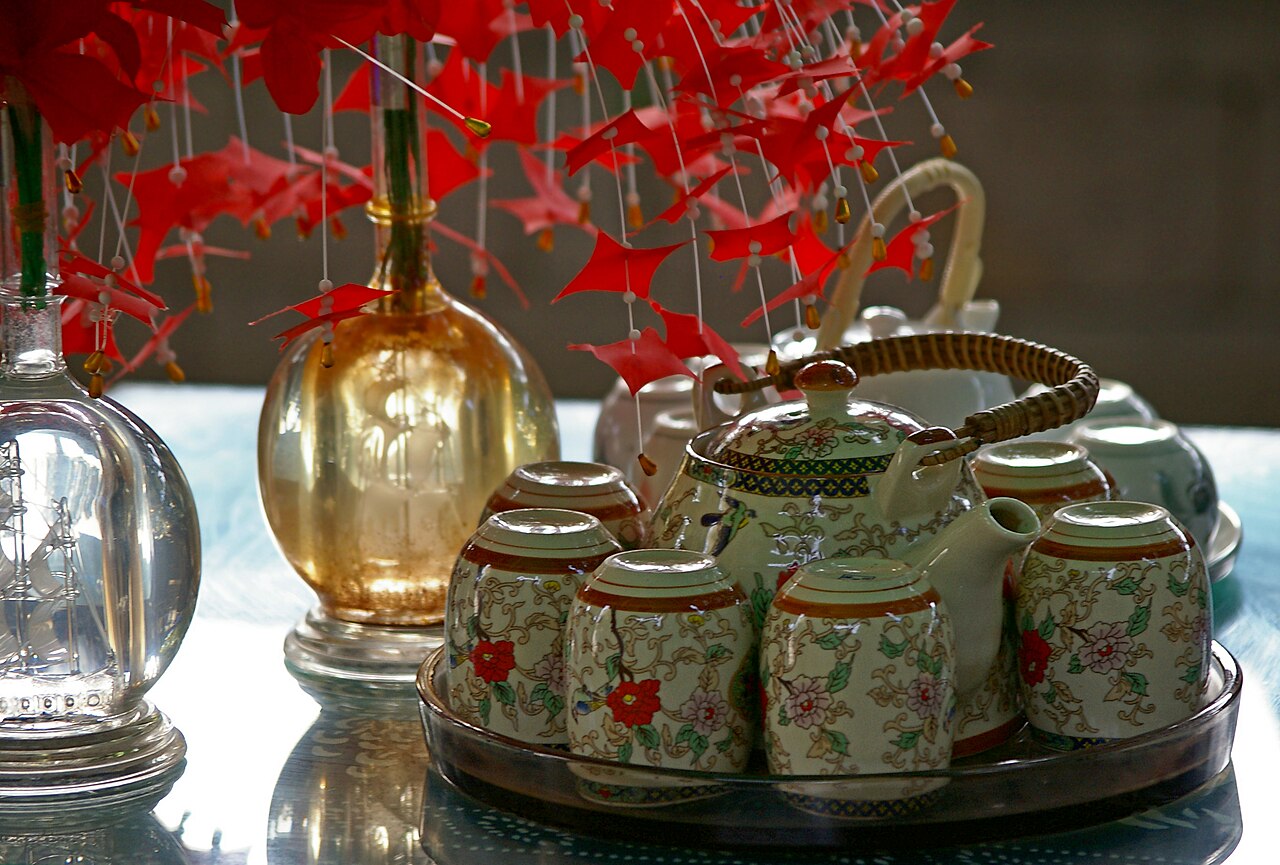
The custom of the place. In town and country alike you see people of every age around one table, cup after cup of clear tea and dish after dish of tidbits, talking and laughing. It is how the women of Zhouzhuang keep in touch and pass the time. The old way of making it is called stewed tea: rainwater kept in a big jar, ladled into an earthenware pot, set on a brazier and boiled over twigs; brewed in a lidded bowl or a purple-clay pot, first wetted with a little boiling water to wake the leaves, then covered, then flooded.
Wansan wine
Zhouzhuang grows rice and distils well, and the white spirit is the best of it. New glutinous rice is steamed, dosed with the starter, left in a jar until it becomes mash, strained, mixed with river water and stood against a wall for a month or more — the result is 'leaning-on-the-wall clear', pale and clean-tasting. The wine the Shen household made in the tenth lunar month was the most prized, which is why it is also called Wansan wine.