City guide · Sichuan

Chengdu travel guide: pandas, hotpot, teahouses and the slowest pace in Sichuan

A 3,000-year-old city where the schedule is tea, mahjong and hotpot — and the pandas are just the opening act.

  • Known forGiant pandas, Sichuan hotpot, teahouses, mahjong, laid-back pace
  • Typical spendAbout CNY 2,000 for 3 days
  • Ideal length3 days in the city, 5 with side trips
  • PaceSlow — this is a city for lingering, not sprinting

Reviewed by our Beijing team Updated 2026-10-10

The short version

Chengdu is worth 3 full days: the Panda Base (CNY 55) is a half-day on its own, Wuhou Shrine and Jinli fill an afternoon, Kuanzhai Alley and a teahouse swallow another, and the city is also the gateway to Jiuzhaigou, Leshan and Mt. Qingcheng. Budget around CNY 2,000 for three days including food, tickets and taxis. Come in spring (March–May) or autumn (September–November); summer is muggy and grey, winter is damp but mild, averaging above 5°C.

  • The Chengdu Research Base of Giant Panda Breeding holds 20-plus giant pandas plus red pandas and cranes; tickets are CNY 55 and you must arrive by 07:30 to see them active.
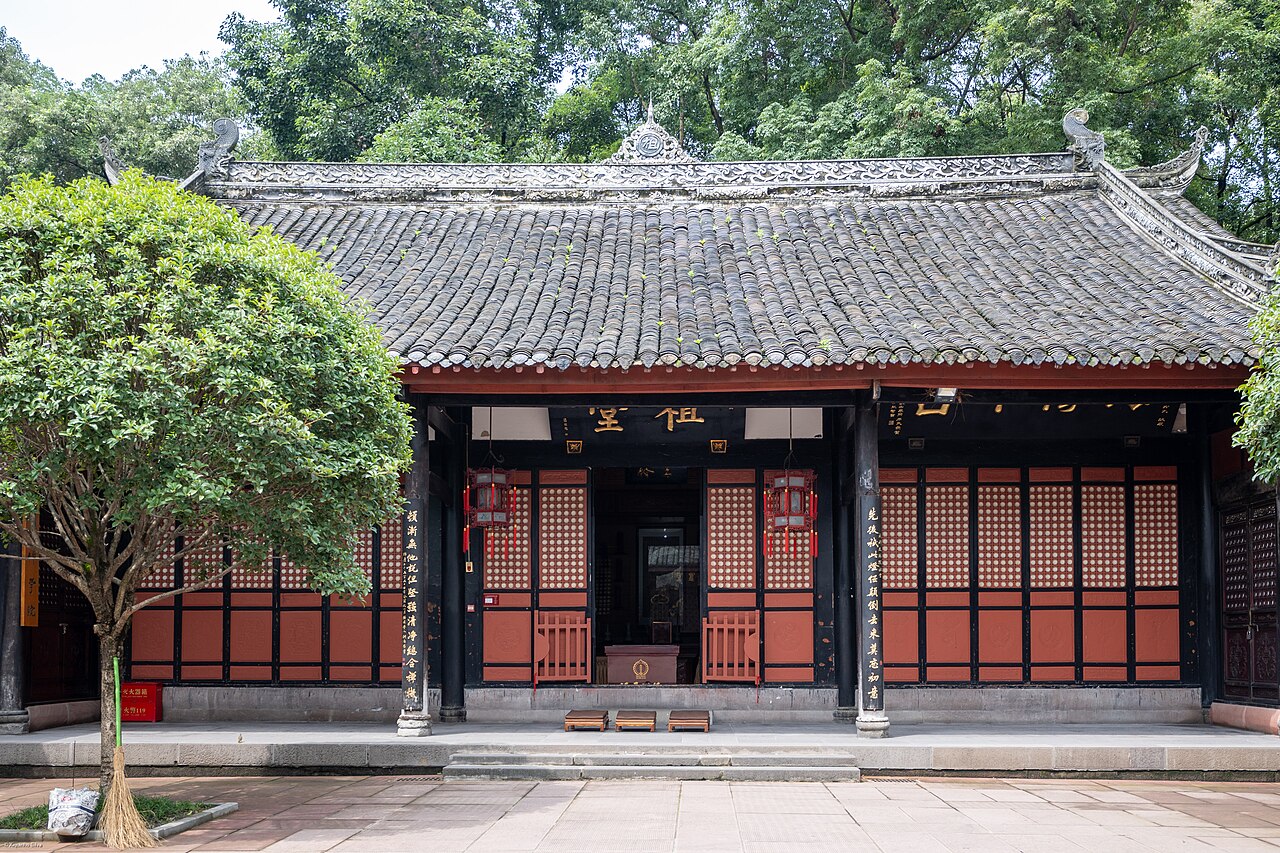
  • Wuhou Shrine costs CNY 60 (half price for students) and Jinli next door is free and open all day — go at dusk when the lanterns come on.
  • A teahouse gaiwan of jasmine tea runs about CNY 20, an ear-cleaning session about CNY 10, and a hotpot dinner about CNY 80 per person.
  • Chengdu taxi flagfall is CNY 8 for the first 2 km (CNY 9 at night); the metro starts at CNY 2 and a Tiantong card gets you 20% off.

City guide

First impressions

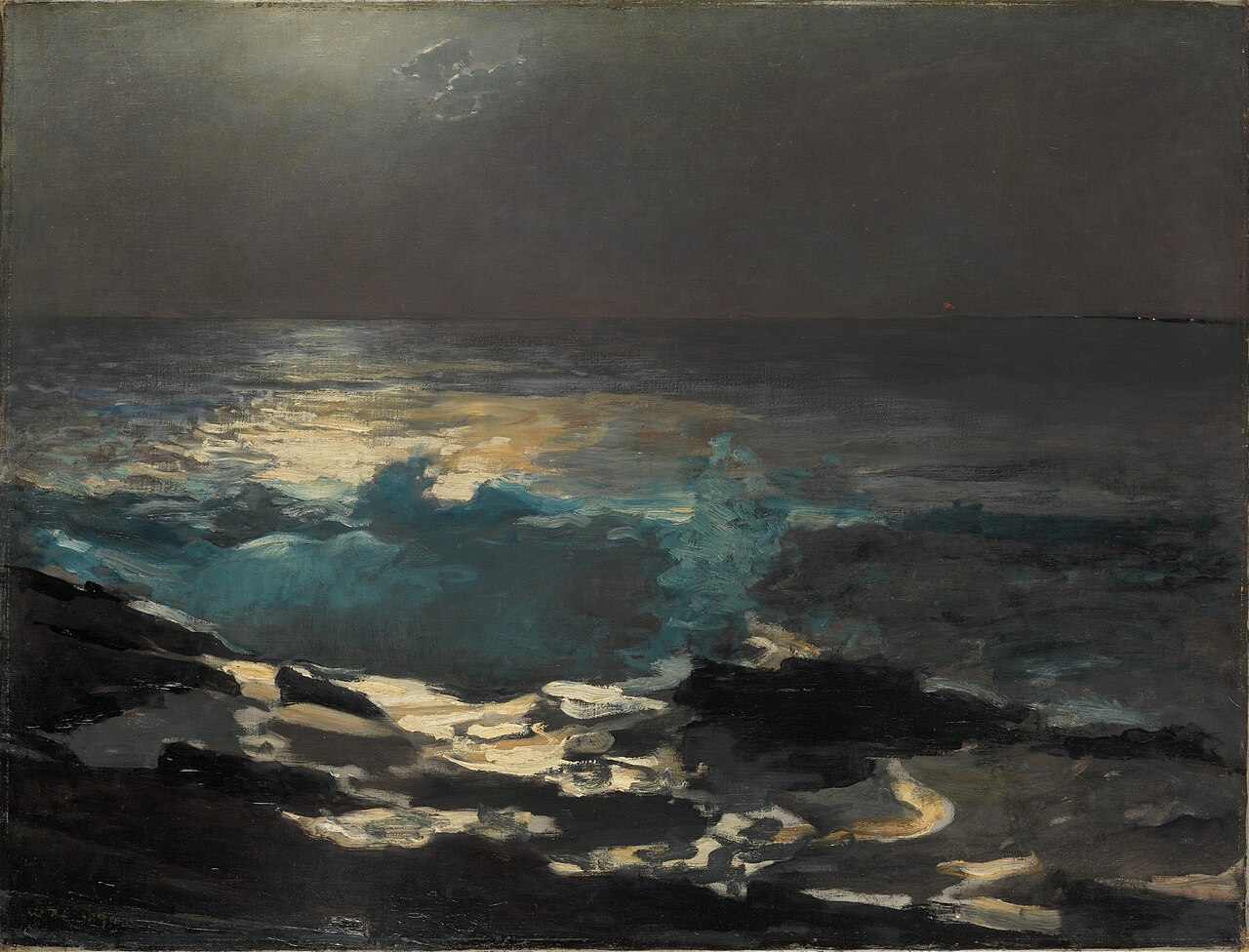
Photographs from the coast, and what other travellers wrote afterwards.

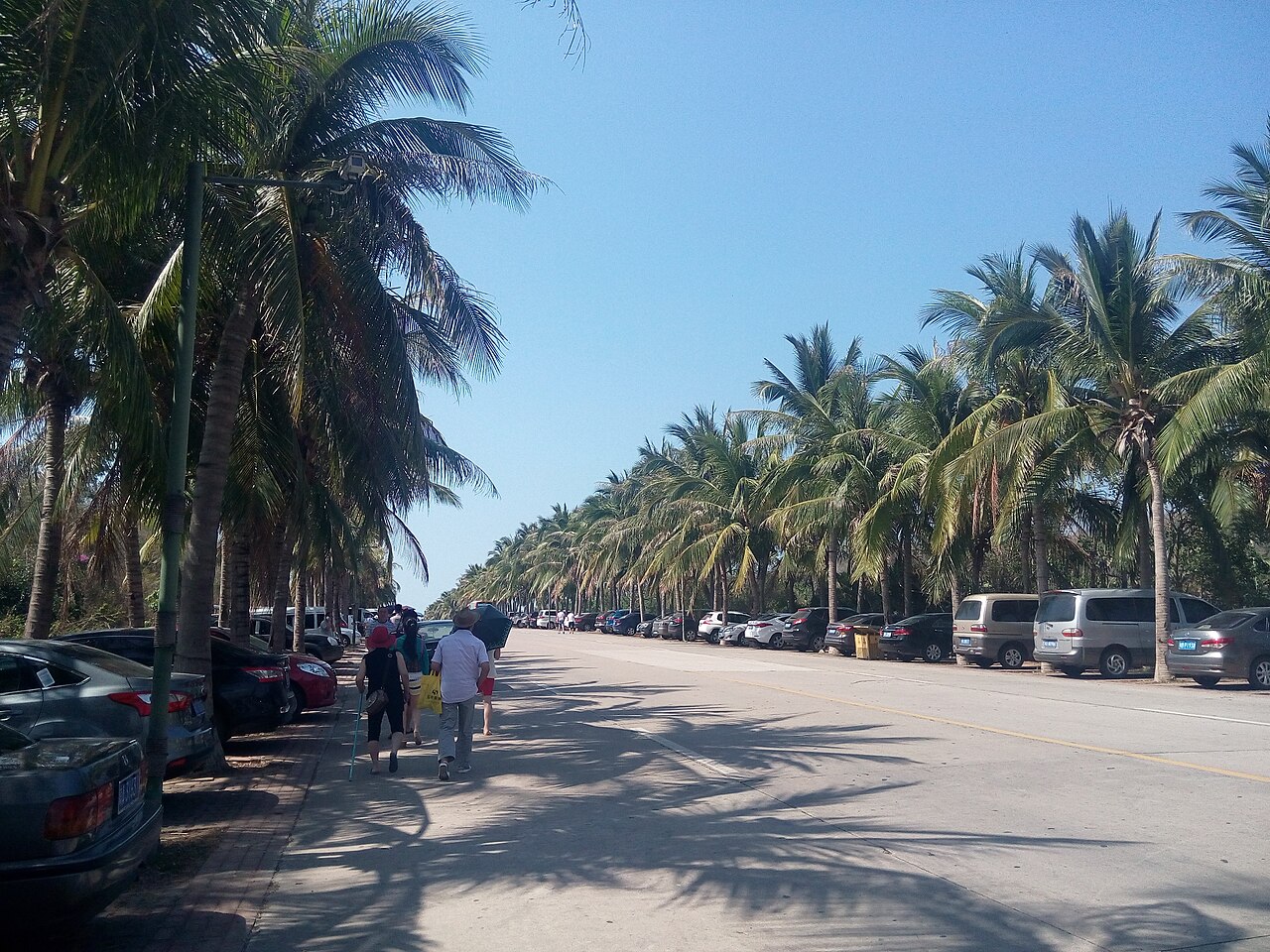
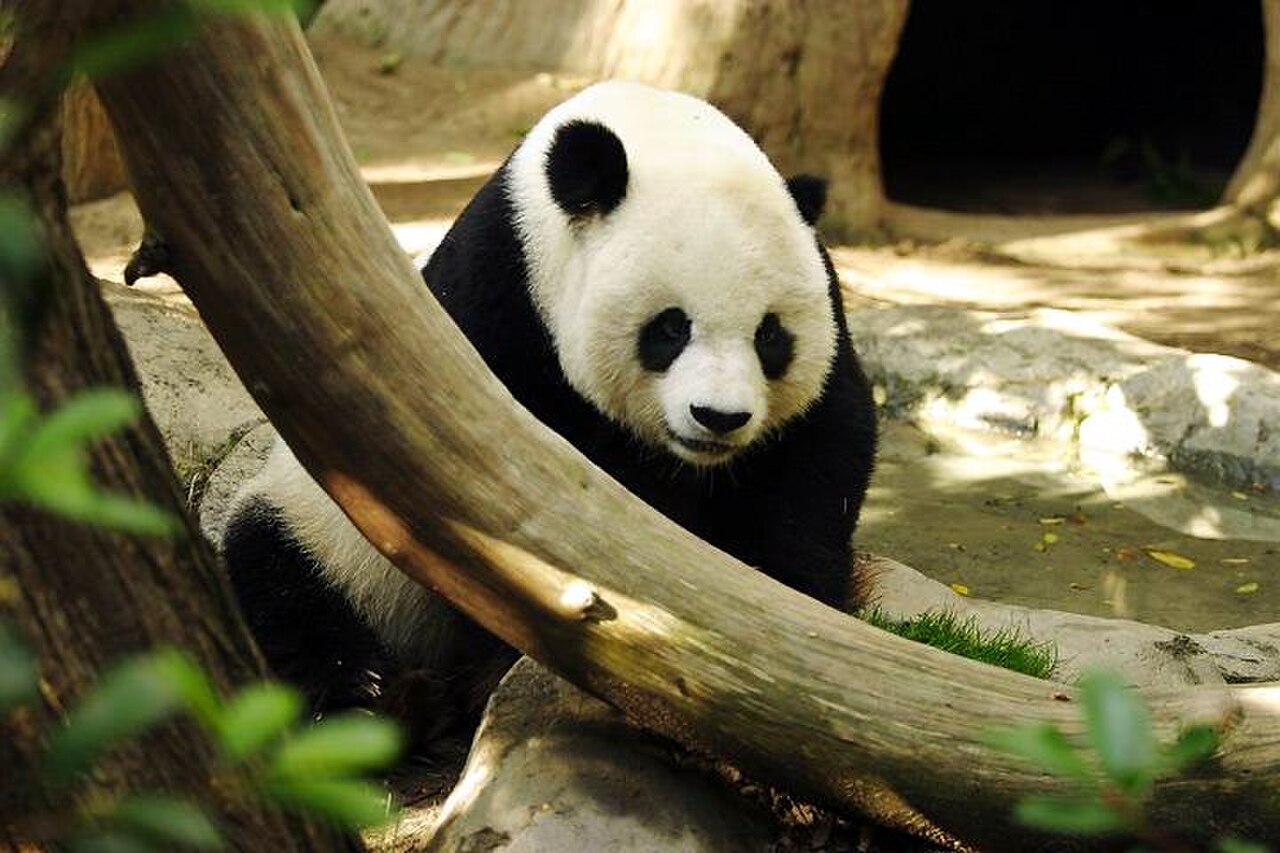
A giant panda working through a bamboo breakfast at the Chengdu Research Base
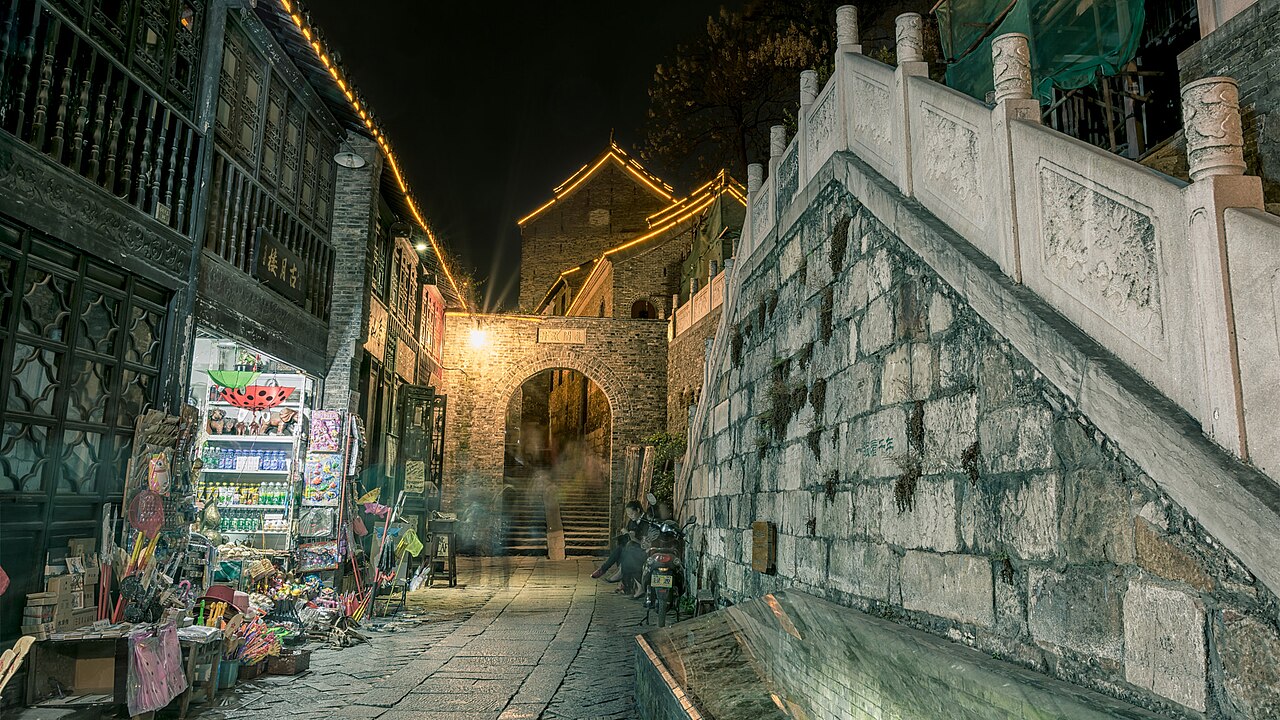
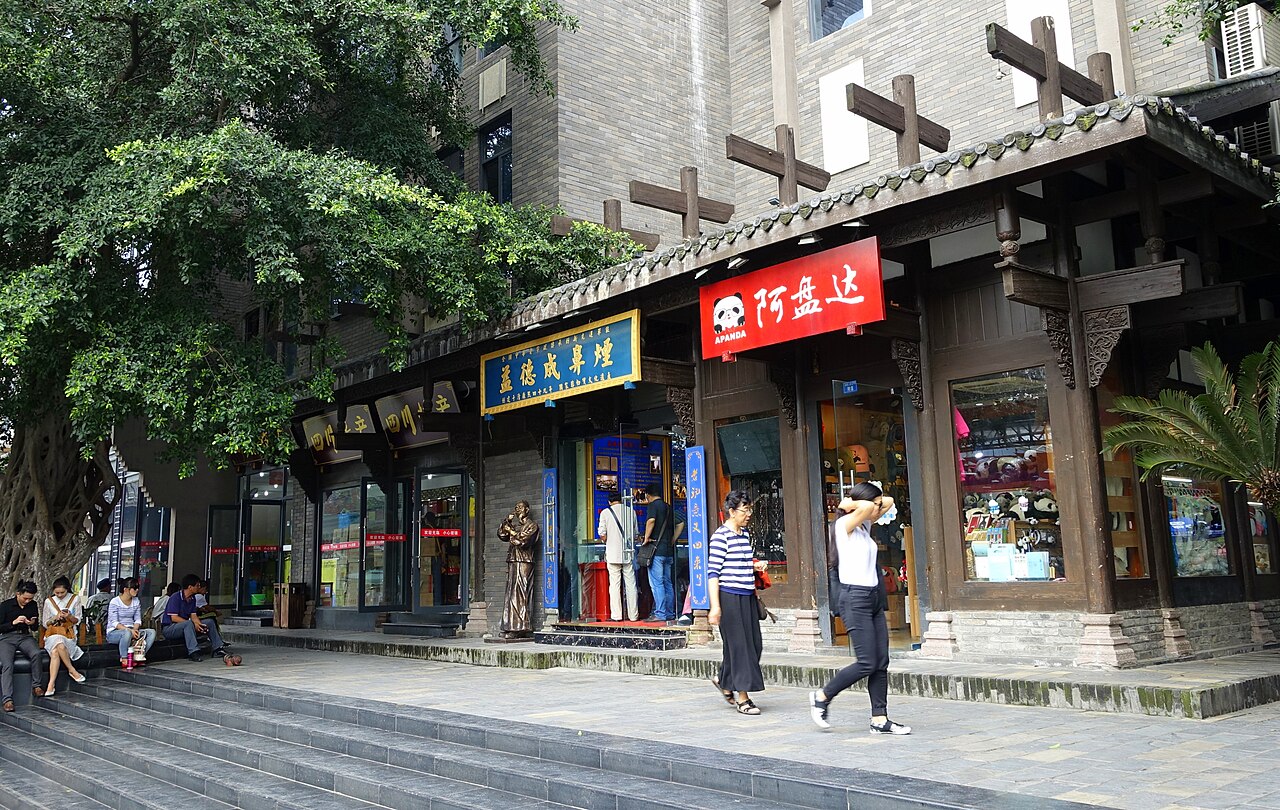
Kuanzhai Alley at dusk — old grey-brick lanes, teahouses and carved wooden doors
A bubbling nine-grid hotpot, the table's real centrepiece
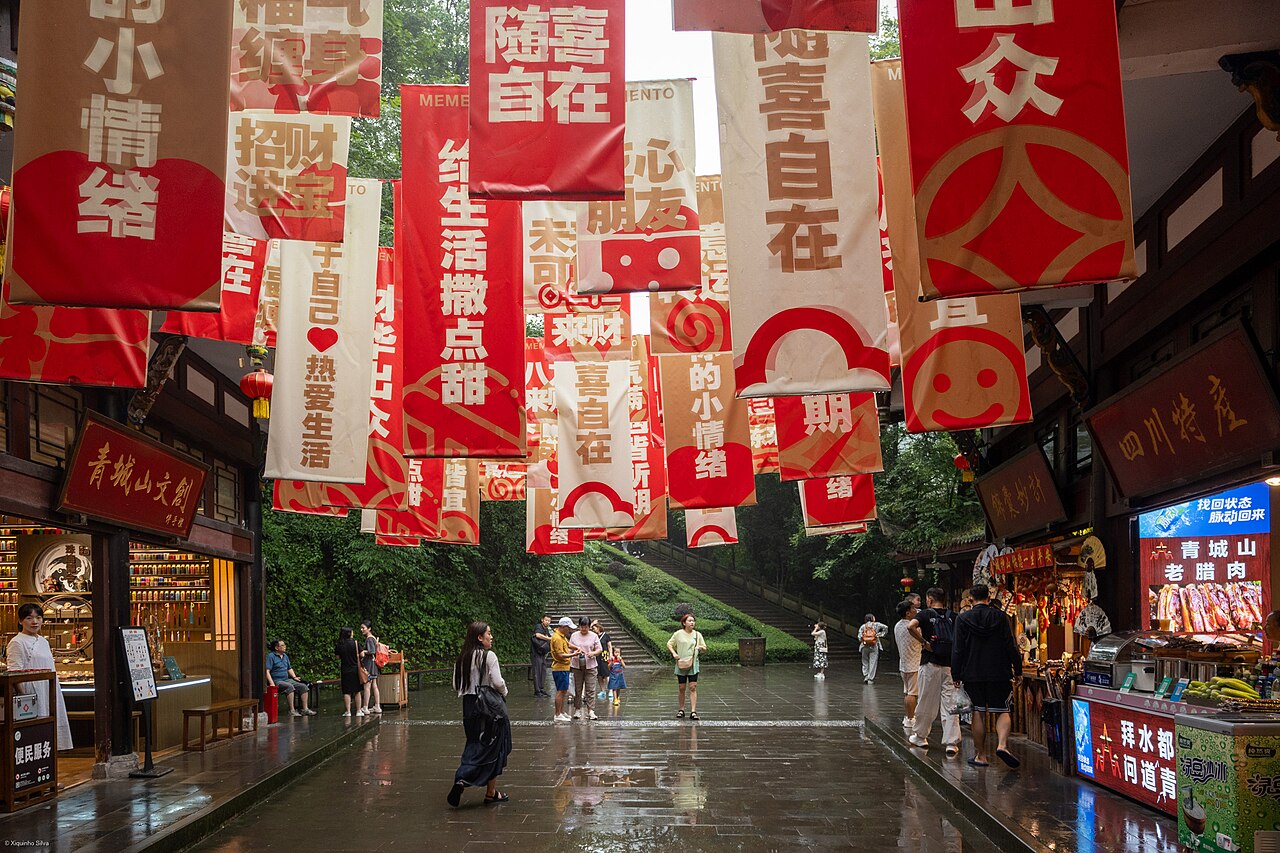
Jinli at night, lanterns strung above the 400-metre snack street

I became a proper Chengdu loafer. I used to be impatient, but Rongcheng ground that right out of me — I developed a serious case of procrastination and I am not sorry about it.

From 'Chengdu, Mt. Qingcheng, Dujiangyan and the Panda Base, 5 Days'

The air here is damp in a way that feels gentler than the wet of Jiangnan — my skin got better, my mood got better. I knelt on a bamboo chair, looked up at the bright sky, watched the clouds drift past and took a deep breath. That is the smell of Chengdu. I did not want to leave.

From 'That Year in Tibet, Sichuan and You and Me'

Chengdu is the only major Chinese city whose site and name have not changed in 3,000 years, and it wears that history lightly. Locals call the feeling ba shi — comfortable, just right — and the whole city seems organised around protecting it. You will find more teahouses than convenience stores, more mahjong tables than parking spaces, and nobody in a hurry to be anywhere.

The pandas are what pull most visitors in, and they deserve the hype: the breeding base north of town is home to more than 20 giant pandas, plus red pandas and black-necked cranes, all wandering bamboo groves designed to mimic their wild habitat. Go at opening time, when the keepers put out bamboo and the pandas actually move. By 11am they are asleep and so, effectively, is your visit.

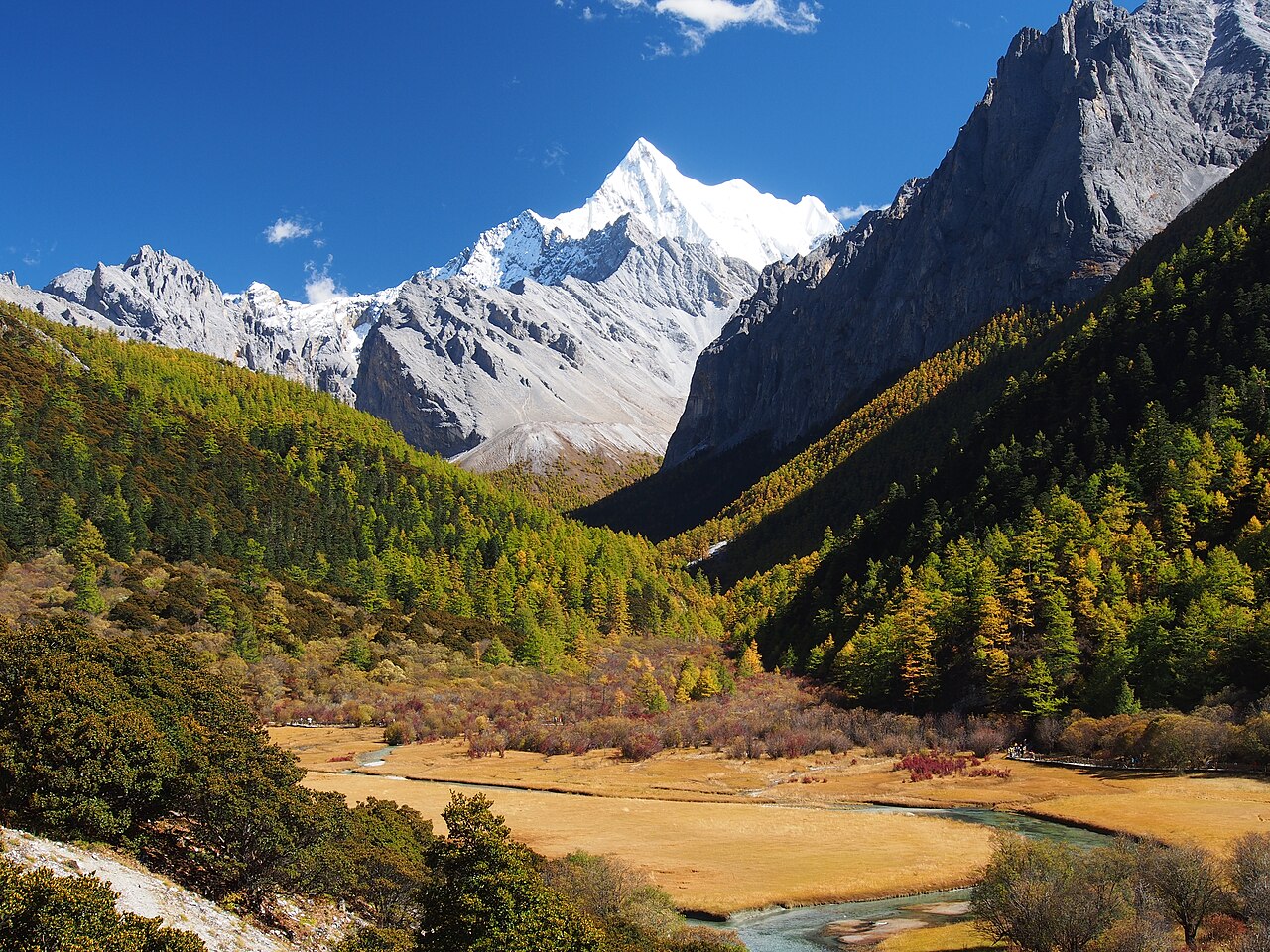
But Chengdu is not just a panda stop. It is the capital of Sichuan, the political and cultural heart of the southwest for two millennia, and the launching point for the grasslands of western Sichuan, the Tibetan quarter of Wuhou, and the misty peaks of Mt. Qingcheng. Come for the pandas, stay for the hotpot, and leave understanding why Zhang Yimou called this a city you don't want to leave.

Chengdu

Don't leave without

Seven things that are worth rearranging a day for.

  1. Watch giant pandas demolish bamboo at the Chengdu Research Base — be at the gate by 07:00 for the 07:30 opening
  2. Sit in a bamboo chair at a Kuanzhai Alley teahouse with a gaiwan of jasmine tea and refuse to move for two hours
  3. Order a nine-grid hotpot at Shu Jiu Xiang and learn the correct dipping sauce: sesame oil and garlic, never peanut sauce
  4. Walk the red-walled lanes of Wuhou Shrine and cross into Jinli at dusk when the lanterns flicker on
  5. Get your ears cleaned the traditional Sichuan way — long metal picks, tuning forks, and a very satisfied grin
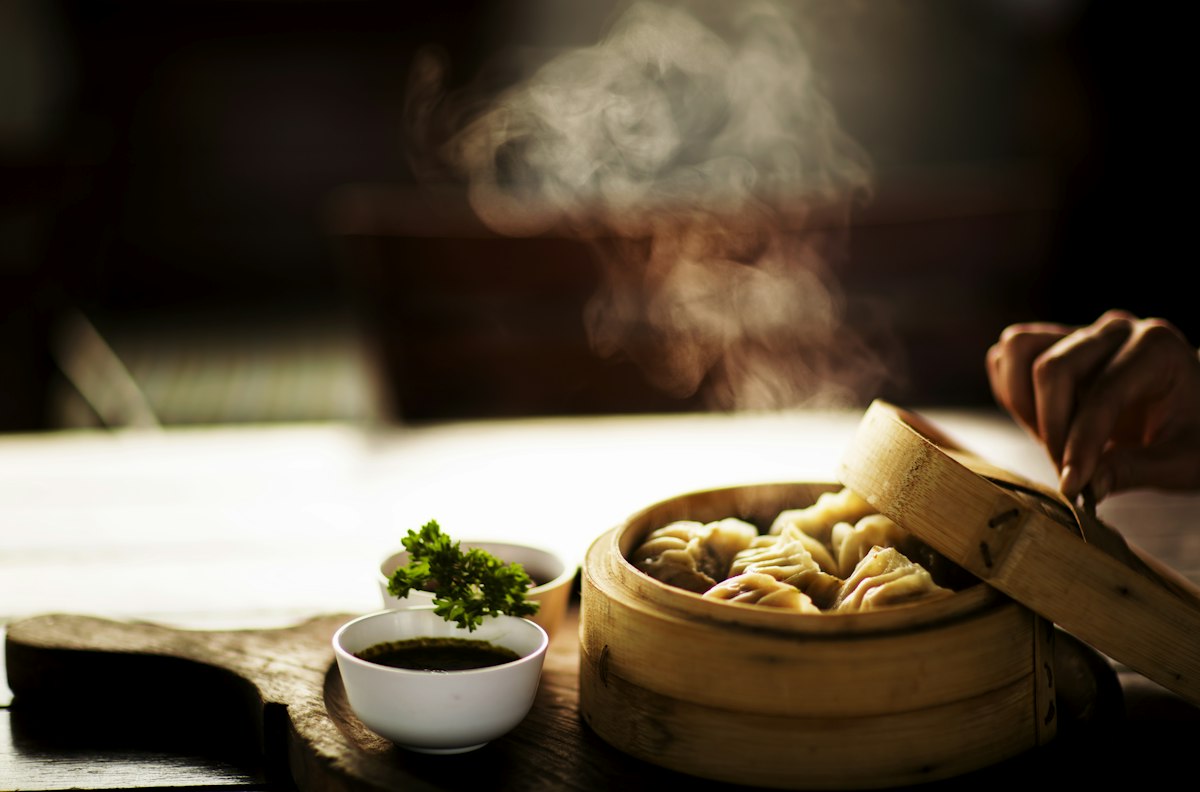
  6. Wander into the Tibetan quarter near Wuhou Shrine for momo dumplings and sweet tea that tastes like Lhasa

Highlights

Five reasons Chengdu slows you down

Tea houses and mahjong, the real C

Chengdu runs on tea houses and mahjong tables, not skyscrapers. A covered-bowl jasmine tea costs about CNY 20, and nobody hurries you out. Park yourself in a bamboo chair at People's Park or in Kuanzhai Alley, order a bowl of tea, and watch the city do absolutely nothing at high speed.
Giant pandas, this close

The Chengdu Research Base of Giant Panda Breeding keeps over 20 giant pandas plus red pandas, black-necked cranes and white cranes in a park designed to mimic their wild bamboo habitat. Go at opening — pandas are most active before 10am, then they sleep and so does the show.

Sichuan food that will ruin you fo

This is a UNESCO City of Gastronomy for good reason. Mapo tofu, Shuangliu rabbit head, fuqi feipian (ox offal in chilli oil), dan dan noodles, Long Chao Shou wontons, Zhong dumplings, chuanchuan skewers, bobo chicken — you could eat five times a day and still miss half of it.

Kuanzhai Alley, the old city's las

Kuan Alley, Zhai Alley and Jing Alley sit side by side in Qingyang District, free and open around the clock. Wide Alley keeps the leisurely teahouses, Narrow Alley the slow courtyards, Jing Alley the newer bars and weekend creative markets. Morning is for photos, afternoon is for a bowl of tea and an ear cleaning.

Tibetan Street and the edge of the

Around Wuhou Shrine's east street, Tibetan-run shops and restaurants sell prayer beads, Tibetan jewellery and South Asian goods. Sit in a Tibetan restaurant with no Han customers, order momo and sweet tea, and you are already halfway to Lhasa — a reminder that Chengdu is the gateway to the snow mountains.

Itinerary

Two ways to spend three days

The slow Chengdu loop

3 days days

A no-rush route for first-timers: old poets, old alleys, pandas and hotpot, with the evenings left free for tea and wandering. Nothing here needs a pre-booked tour except the panda base.

  1. Day 1

    Poets, alleys and the old town

    Start at Du Fu Thatched Cottage on the Huanhua Stream, the poet's home in exile, then walk Wuhou Shrine with its 223 AD tombs and cypress courtyard. Lunch on snacks in Jinli next door, tea at Wangjianglou Park, and finish in Kuanzhai Alley at dusk before heading to Chunxi Road for hotpot.

    Stops: Du Fu Thatched CottageWuhou ShrineJinliWangjianglou ParkKuanzhai AlleyChunxi Road

  2. Day 2

    Pandas, temples and Taoism

    Get to the Panda Base at opening — the pandas eat and wrestle until about 10am and then it is nap time. Lunch at Wenshu Monastery's snack street, then Qingyang Palace, the largest Taoist temple in western Sichuan, and an evening of shopping and people-watching on Chunxi Road.

    Stops: Chengdu Panda BaseWenshu MonasteryQingyang PalaceChunxi Road

  3. Day 3

    Tea, opera and a night out

    Spend the morning over a CNY 20 bowl of tea and an ear cleaning in a park tea house, then hit the Sichuan Museum (free, closed Mondays) next to Du Fu Cottage. Book a Shufeng Yayun Sichuan opera show on Qintai Road for face-changing and fire-spitting from CNY 130, then drinks around Jiuyanqiao.

    Stops: People's ParkSichuan MuseumShufeng YayunJiuyanqiao

Chengdu plus the mountains

3 days days

Use Chengdu as a base and bolt on one of the big day trips — Dujiangyan and Qingcheng Mountain by high-speed train, or Leshan and Emei by bus. Pick one; trying both in three days is a march, not a holiday.

  1. Day 1

    Chengdu essentials

    Land, drop bags, and do the compact old-town half: Wuhou Shrine and Jinli in the afternoon, Kuanzhai Alley at dusk, hotpot for dinner. Keep it light because tomorrow starts early.

    Stops: Wuhou ShrineJinliKuanzhai Alley

  2. Day 2

    Dujiangyan and Qingcheng Mountain

    Take the high-speed train from Chengdu North to Qingcheng Mountain (first train 07:01, last 20:17, CNY 15) or Dujiangyan (first 06:32, CNY 15). Dujiangyan's 2,200-year-old irrigation works still function today; Qingcheng is the birthplace of Taoism. A combined ticket is CNY 180, or CNY 90 each.

    Stops: Dujiangyan Irrigation SystemQingcheng MountainJianfu PalaceShangqing Palace

  3. Day 3

    Leshan Giant Buddha or Emei

    Buses from Xinnanmen or Beimen stations reach Leshan in about 2 hours; the Giant Buddha is carved into the cliff where three rivers meet, and Emei Shan is 31 km further on a bus that leaves every 10 minutes. If you only have one day, do the Buddha and skip the mountain summit.

    Stops: Leshan Giant BuddhaEmei ShanBaoguo Temple

Sights

Five places worth your hours

Wildlife

Chengdu Research Base of Giant Pan

A park built to copy the pandas' wild bamboo habitat, home to more than 20 giant pandas plus red pandas, black-necked cranes and white cranes. The enclosures and lawns let the animals sit, drink, play or doze as they please, and the bamboo groves make it feel like a forest rather than a zoo.

Best time
Arrive at opening; pandas are active before 10am
Duration
2–3 hours
Getting there
Taxi or the Panda Base tourist bus from Wuhou Shrine
Tip
Buy tickets online the night before in peak season

Tip The nursery and the sub-adult enclosures are where the action is — go there first, then loop back. Weekday mornings are far calmer than weekends.

History

Wuhou Shrine and Jinli Street

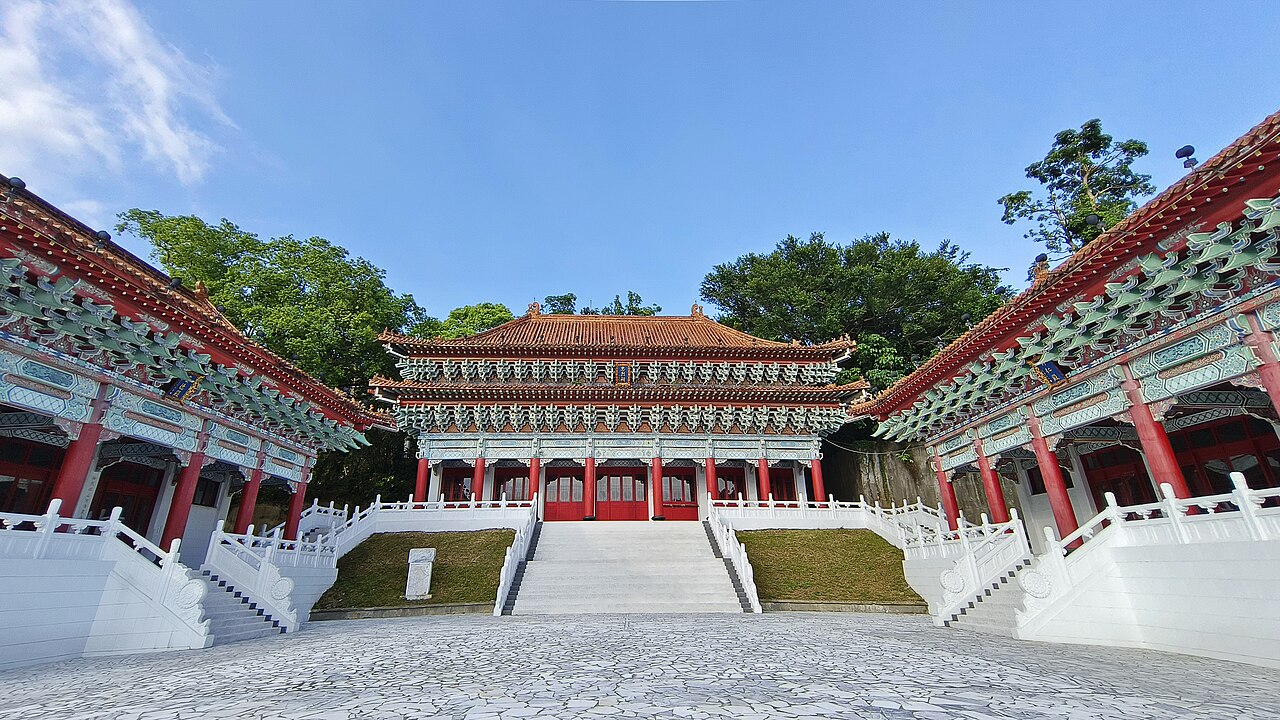
The only temple in China where a ruler and his minister are worshipped together — Liu Bei of Shu Han and his strategist Zhuge Liang. Founded in 223 AD, the complex holds the Hui Mausoleum, the Han Zhaolie Temple and the shrine itself, all under ancient cypresses. Jinli, the 400-metre commercial street next door, is the busiest snack and souvenir lane in the city.

Ticket
CNY 60, students half price
Hours
Summer 07:30–21:00, winter 08:00–18:30
Address
231 Wuhou Shrine Street, Wuhou District
Getting there
Bus 57, 901, 334, 1 or 55 to Wuhou Shrine stop

Tip Jinli is at its best after dark when the lanterns come on. Eat lunch there, but expect tourist prices — the snacks are good, the mark-up is real.

Old town

Kuanzhai Alley

Three parallel lanes — Kuan (wide), Zhai (narrow) and Jing (well) — that preserve the most Chengdu-flavoured slice of the old city. Wide Alley is the leisurely teahouse strip, Narrow Alley the slower courtyard side, Jing Alley the newer bars and weekend creative markets. Free and open all day.

Ticket
Free, open 24 hours
Address
East of Tongren Road, west of Changshun Street, Qingyang District
Getting there
Bus 62, 70, 93, 163 or 340 to Changshun Shangjie, or Metro Line 2 to People's Park
Best hours
Early morning for photos; sunny afternoons for tea and ear cleaning

Tip Teahouses and restaurants here charge a premium — you are paying for the courtyard, not the food. For a cheaper, more local bowl of tea, walk to People's Park instead.

History

Du Fu Thatched Cottage

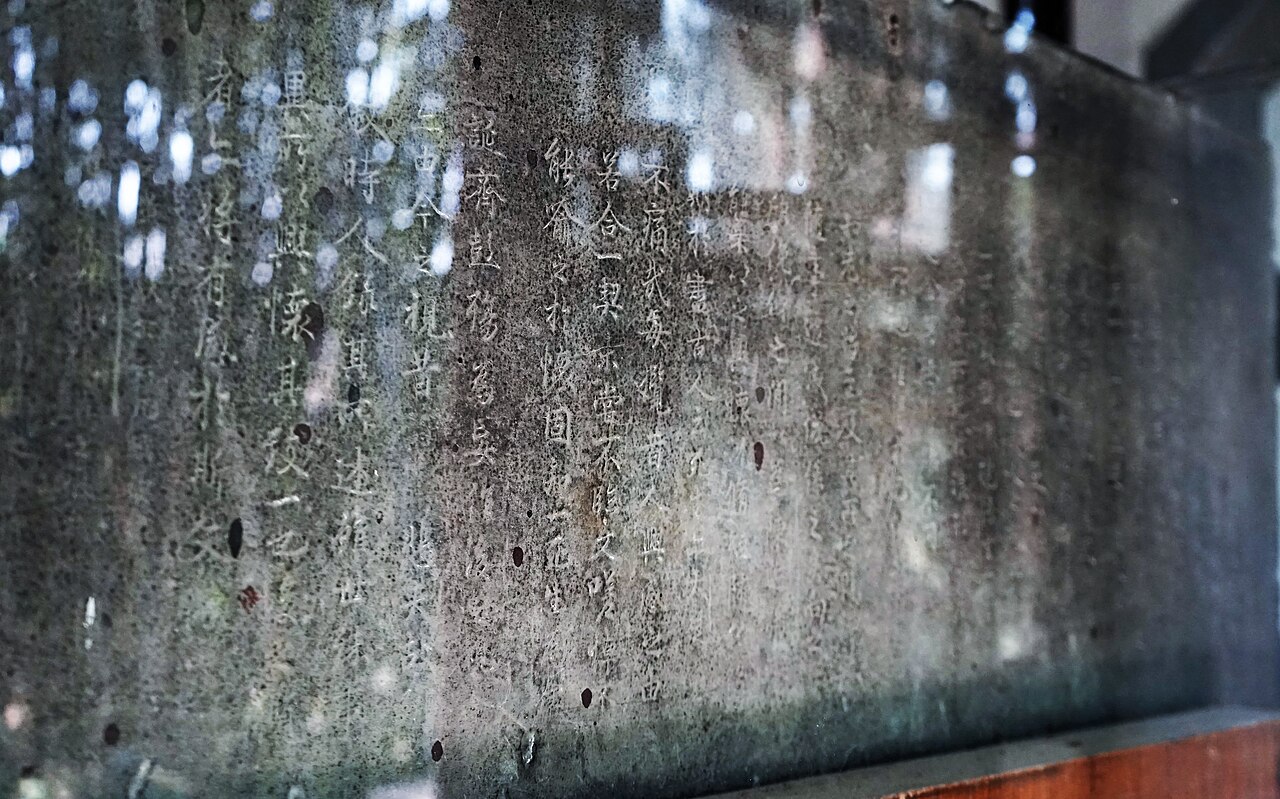
The riverside home of Du Fu, the great Tang realist poet, on the Huanhua Stream outside the west gate. The original cottage vanished after he left; the poet Wei Zhuang found the site in the Former Shu period and rebuilt it, and it has been preserved and expanded ever since. Quiet, green and far less crowded than the central sights.

Ticket
CNY 60, students half price
Hours
Summer 07:30–19:00, winter 08:00–18:00
Address
37 Qinghua Road, Qingyang District
Getting there
Bus 35 from Chengdu East Bus Station, or bus 19 to Du Fu Cottage stop

Tip Pair it with the Sichuan Museum next door — free, open 09:00–17:00, closed Mondays. Two stops, one afternoon, no taxi needed.
Temple

Wenshu Monastery

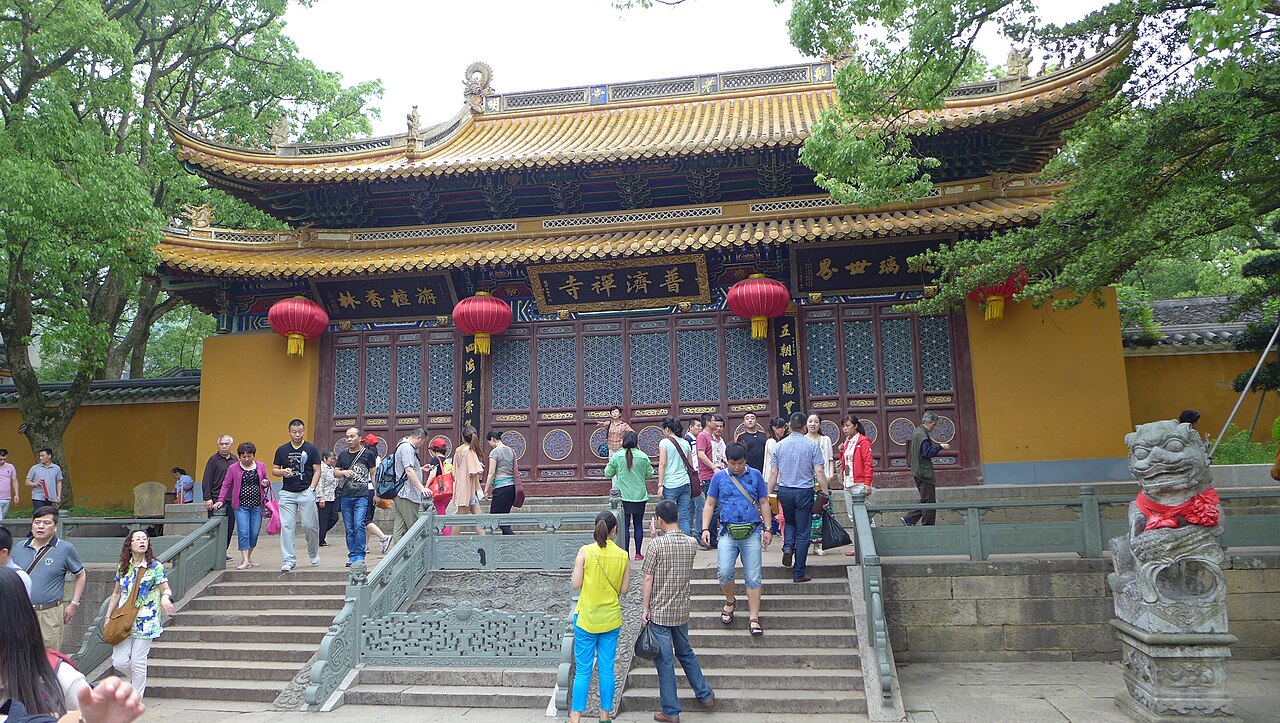
One of the four great Buddhist monasteries of western Sichuan, first built as a Tang pagoda garden, destroyed in war and rebuilt in 1691 under the Qing. It holds over 500 pieces of painting and calligraphy from the Tang and Song onward, more than 120,000 sutra volumes, and Han-dynasty carvings and embroidery.

Ticket
CNY 5
Hours
09:00–17:00
Address
58 Jiangyuan Gongsuo Street, Qingyang District
Getting there
Metro Line 2 to Wenshu Monastery station

Tip The vegetarian snack street beside the monastery is the real draw — go hungry and graze. It is one of the best-value meals in central Chengdu.

Food

Five things you have to eat in Chengdu

Sichuan hotpot (鸳鸯火锅)

The city's defining meal. A copper pot is split into a taiji-shaped divider — clear broth on one side, red chili-and-numbing-pepper broth on the other — and you cook your own meat, tripe and vegetables at the table. Order the yuan-yang pot if you can't take full heat; regulars dip everything in a dish of sesame oil and minced garlic, never sesame paste. Budget about CNY 80 per person, and expect to smell like hotpot for the rest of the night.

Dan dan noodles (担担面)

Thin hand-pulled noodles under a spoonful of minced pork fried until crisp, with chili oil, Sichuan pepper and a little preserved vegetable. In the old days vendors carried two copper pots on a shoulder pole — one for noodles, one for stewed chicken or trotters — which is where the name comes from. It is a small bowl, salty and faintly numbing, and it costs almost nothing.

Zhong dumplings (钟水饺)

A Chengdu institution: all-pork dumplings, no vegetables in the filling, drowned in sweetened red chili oil so the sauce comes out salty-sweet rather than purely hot. The original shop dates to the 1890s and has branches near Wuhou Shrine and Wenshu Monastery. Around CNY 20 gets you a bowl plus a couple of other local snacks.

Maocai and chuanchuan xiang (冒菜 /

The solo and group versions of the same idea. Maocai is a bowl of vegetables, tofu skin and meat blanched in spicy broth and served to one person — the classic cheap lunch. Chuanchuan xiang is the social version: you pull skewers out of a fridge, cook them in a shared pot, and pay by the stick at the end. Both run under CNY 40 a head.
Rabbit head (双流老妈兔头)

Chengdu eats more rabbit than anywhere else in China, and the head is the prized cut — braised until the meat falls off, then served in a ma-la chili rub. The most famous shop is the original Shuangliu Laoma in Shuangliu county (Qingtai Road 85; 028-85825978), about CNY 35 per person. It looks daunting and tastes superb; use your hands and don't worry about dignity.

Where to eat

Four restaurants worth planning an evening around

Hotpot

Shu Jiu Xiang (蜀九香)

The most-recommended hotpot chain among locals and visitors alike — a red-broth nine-grid pot that lets you drop different ingredients into different compartments so nothing overcooks, plus a sesame-oil-and-garlic dip you assemble yourself. It is spicy but not brutal, which is exactly why first-timers like it. Branches across the city; book or go early on weekends.

Cuisine
Sichuan hotpot
Average spend
CNY 80 per person
Reservations
028-82996969
Good to know
Ask for the yuan-yang pot if you need a mild side

Local institution

Ming Ting Restaurant (明婷饭店)

A legendary chengdu fly restaurant — bare tables, plastic stools, a sign announcing it is run by disabled staff and does not issue receipts. The food is pure home-style Sichuan: the qiangxiang fish arrives buried under a mountain of chilies and Sichuan pepper that looks terrifying and turns out to be gentle. Go for lunch, expect a queue, and bring cash.

Cuisine
Home-style Sichuan
Average spend
CNY 45 per person
Address
Inside the Wai Caojia Alley market, Jinniu district
Phone
028-83315978

Fine dining

Yinxing Sichuan Restaurant (银杏川菜酒楼

The old-guard upmarket choice — a quiet, elegant dining room behind two enormous ginkgo trees, with polished versions of the classics. Portions are small but precise: the camphor-and-tea-smoked duck has crisp skin and fragrant meat, and the guoba pork slices come tender in a glossy sauce. This is where you go when you want Sichuan food without the chili assault.

Cuisine
Refined Sichuan
Average spend
CNY 200 per person
Address
12 Linjiang Middle Road, Wuhou district
Phone
028-85555588

Street snack

Wang Ma Hand-Torn Roast Rabbit (王妈

Hidden in a Yulin back alley, with a permanent queue that tells you everything. The rabbit is roasted until the skin crackles and the meat stays dry-fragrant, then torn apart by hand. They vacuum-pack it on request, which makes it the single best edible souvenir in the city.

Cuisine
Roast rabbit, Sichuan snacks
Price
CNY 50 per rabbit; rabbit head CNY 5; leg CNY 8
Address
26-27 Yulin Street, Wuhou district (near Yulin market)
Good to know
Vacuum packing available for travel

Where to stay

Three bases, from hostel bunk to quiet courtyard

Backpacker

Chengdu Dream Travel International

A large, well-run hostel directly across from Wuhou Shrine, and the easiest place in the city to meet other travellers, swap route notes and book onward tickets. Dorms are cheap and the doubles are genuinely comfortable. Being right on the Wuhou/Jinli doorstep means you can walk to dinner and skip the taxi queue.

Type
Hostel
Price
Dorm bed CNY 45; double CNY 135
Address
242 Wuhou Shrine Street (opposite Wuhou Shrine)
Phone
028-85570315 / 028-85570314

Courtyard

Chengdu Dragon Town International

The only hostel inside Kuanzhai Alley, which is why it is the default choice for foreign backpackers — you step out the door into the old lanes and can eat your way through the snack stalls. The trade-off is that it books out weeks ahead, especially in spring and autumn, so reserve early.

Type
Hostel
Price
8-bed dorm CNY 60 per person; double CNY 260
Address
26 Kuan Alley, Qingyang district
Phone
028-86648408

Mid-range

Chengdu LOHAS Times Hotel (成都乐活时代酒

A practical mid-range base on the western first ring road, beside Qingyang Palace and across from the provincial hospital. Qingyang Palace, Kuanzhai Alley and People's Park are all nearby, the metro is close, and it is noticeably cheaper than anything comparable downtown — a good pick if you plan to spend your days out at Dujiangyan and Qingcheng Mountain.

Type
Hotel
Price
Double from CNY 198
Address
13-12 West Second Section, First Ring Road, Qingyang district
Phone
028-87077711

Getting around

Flights, high-speed rail and how to move through the city

Fly into Chengdu Shuangliu (CTU)

Shuangliu is the busiest civil hub in central-western China, with direct flights from more than 70 Chinese cities and international routes to Hong Kong, Bangkok, Singapore and Tokyo. International and Sichuan Airlines flights use Terminal 1; everything else uses Terminal 2, which opened in 2012.

Airport bus to downtown
Departs 05:00-18:00 every 10-15 min, CNY 10, route: Minshan Hotel - Xiaotianzhu - Digital Plaza - US Consulate - airport
Bus 300
North Railway Station to Shuangliu, 07:00-19:00, CNY 6 flat
Taxi to Tianfu Square
About CNY 60; to Xinnanmen bus station about CNY 45
Airport toll warning
No toll airport-to-city; city-to-airport adds a CNY 14 road toll

High-speed rail and mainline train

Chengdu is the biggest rail hub in the southwest and the origin point of the Chengdu-Chongqing, Baocheng, Chengkun and Dacheng lines, with direct services to more than 20 major cities. For Chongqing, Wuhan, Changsha, Nanning, Guiyang, Hangzhou and Guangzhou, use Chengdu East Station.

Chengdu North Station
North 2nd Ring Road, the old main station
Chengdu East Station
High-speed services to Chongqing, Wuhan, Changsha, Guiyang and beyond
Chengdu South Station
Closed for relocation - ticket office only, no trains
To Dujiangyan or Qingchengshan
Fast trains CNY 15 one way, first 06:32, last 20:17

Metro and buses

Two metro lines cross at Tianfu Square: Line 1 (Shengxian Lake to Century City) and Line 2 (Chadianzi to Chengdu Administrative College). Fares are distance-based at CNY 2, 3 or 4, capped at CNY 5 for a full ride. Buses reach every city sight and most nearby attractions, mostly CNY 2 a ride.

Tianfu Tong card
CNY 20 deposit from Hongqi supermarkets, pharmacies, newsstands and metro stations
Card discount
20 percent off metro and bus fares
Free transfer
Change buses within two hours and the second ride costs nothing
Chengdu tour bus network
Buy a ticket to Qingchengshan, Dujiangyan or the Panda Base at Wuhou Shrine and a shuttle takes you there free

Taxi, car rental and three-wheeler

Taxis are cheap by big-city standards and worth it when you are splitting the fare with two or three people. For day trips to Dujiangyan, Qingchengshan or the Panda Base, a rented car gives you far more freedom than tour coaches.

Taxi day rate (06:00-23:00)
CNY 8 flag fall for 2 km (CNY 9 for the 2.0 and 1.4T Sagitar), then CNY 1.9 per km
Taxi night rate (23:00-06:00)
CNY 9 flag fall, then CNY 2.2 per km
Long-distance rate
CNY 2.85 per km by day and 3.3 by night between 10 and 60 km
Car rental
Shenzhou and eHi are the two easiest chains - bring licence, ID and credit card, and book ahead on public holidays
San lun che (three-wheeler)
CNY 5 flag fall downtown, CNY 2 in the suburbs; now mostly found beyond the 3rd Ring Road

Shopping

What to bring home from the land of plenty

Pixian broad bean paste

The soul of Sichuan cooking, made in Pixian on the Chengdu plain where Dujiangyan irrigation grows unusually good broad beans. The paste is glossy red, the beans still crunchy, and the heat is serious - use it as a condiment or eat it straight over rice. Buy it in any supermarket or the Sichuan Specialty Mall at 10 Yusha Road on Xinhua Avenue, the city's biggest and cheapest souvenir hall, ten minutes on foot from Chunxi Road.

Shu brocade and Shu embroidery

Shu embroidery is one of China's four great embroidery traditions alongside Hunan, Suzhou and Guangdong work, and Chengdu's silk production made it the finest in the empire. Shu brocade dates to the Eastern Han and Three Kingdoms, woven in dense patterns like Fangfang, Yusu and Sanhua brocades. Expect CNY 200 to 1,000 for a 7 to 12 inch piece - a serious gift, priced accordingly.

Jasmine tea

Chengdu runs on jasmine tea. It keeps the depth of the leaf while carrying the fresh scent of the flower, and the local brands worth buying are Sanhua, Bitan Piaoxue and Xufu. Prices vary by grade and brand, and any supermarket stocks it - a tin of Bitan Piaoxue makes a better souvenir than another fridge magnet.

Beef jerky and Qiang-flavoured sna

The jerky shelves are crowded but only a few names are worth the weight: Zhangfei beef, Liuyanggou and Hongguang beef, the last sold downstairs at the Tibet Hotel. Yak jerky is excellent and costs more. Note that Dengying beef refers to a production technique, not a brand - don't pay a premium for the label alone. Hongqi Mall on Zongfu Street is the biggest grocery retailer in Sichuan and the easiest place to stock up.

Practical

Numbers, cards and the small print

One more thing worth knowing: Chengdu is a genuine hub, not just a stopover. From here you can reach Jiuzhaigou and Huanglong by air or a 9 to 10 hour drive, Leshan and Emeishan in three days by expressway, Dujiangyan and Qingchengshan in two, and Hailuogou's glacier and hot springs in three. Compare options before you commit - see our Chengdu tour packages and Chengdu private tour pages for ready-made routes, or the Chengdu travel guide for the full city picture.

Money and cardsChengdu sits mid-range for a western Chinese hub - around CNY 2,000 for three days including hotel, food and transport. Attractions charge more than the city does. Cards are widely accepted in hotels and malls, but street stalls, teahouses in parks and most noodle shops are cash or WeChat Pay only.
Weather and what to packSubtropical monsoon climate, around 16°C annual average and 1,000 mm of rain, with most of it in July and August. The city is overcast most of the year and famously short on sun - locals joke that dogs bark at the sun because it appears so rarely. Summer tops out near 35°C but the humidity makes it feel worse; winter averages above 5°C, grey and damp. Spring and autumn are the golden seasons. Bring an umbrella year-round and layers rather than a heavy coat.
Altitude and day tripsChengdu itself is low and comfortable, but Jiuzhaigou, Huanglong and Hailuogou climb fast. Huanglong tops 3,500 m, so give yourself a day to acclimatise before the big climbs. Food gets expensive up there because everything is trucked in - bring snacks for the road.
Hospitals and emergenciesSichuan Provincial People's Hospital, 1st Inpatient Building, 32 West 2nd Section of 1st Ring Road, 028-87795180. West China Hospital of Sichuan University, 37 Guoxue Lane, Wainan, 028-85551331. Tourism quality complaints 028-87706026; bus hotline 028-85076868. Sichuan China Youth Travel Service, Room A-01, 3rd floor, 41 Dacisi Road, Jinjiang District, 028-86917661.
Tipping and etiquetteTipping is not expected anywhere except upscale hotel restaurants, where a service charge is already added. In teahouses you pay for the tea, not the seat, and refills are free all afternoon - that is the whole point. Sichuan Opera tickets start at CNY 130 at Shufeng Yayun on Qintai Road, with face-changing, fire-spitting, huqin solos and shadow puppetry on the bill.
Booking aheadChengdu has hotel rooms at every price and rarely sells out - except during National Day, Spring Festival and the May holiday, when you should book weeks ahead. Cheap beds: Chengdu Dream Journey International Youth Hostel opposite Wuhou Shrine (dorm CNY 45, standard room CNY 135, 028-85570315). Mid-range: Chengdu Lemei Holiday Hotel near Wuhou, standard rooms from CNY 170, 028-61516669. Longtang International Youth Hostel is the only one inside Kuanzhai Alley itself, dorm CNY 60, standard CNY 260, 028-86648408 - book early, it fills fast.
Tourist buses and ticketsChengdu has two metro lines and a dense bus network, and official shuttle buses run between major sights. At Wuhou Shrine you can board a free coach to Qingchengshan, Dujiangyan or the Panda Base once you have bought that attraction's ticket, with a guide along the way. Some temples and museums close one day a week - Sichuan Museum is free and closed Mondays, 09:00-17:00.

Background

Three thousand years on the same spot

A city that never moved and never

Chengdu is the only major city in China that has held the same site and the same name for its entire history — roughly 3,000 years and counting. The name comes from a Western Zhou account of a king who moved his capital to Qi: after one year it was a settlement, after two a town, after three a city — cheng du, "becoming a capital." The Shu Kingdom moved its seat here in the 5th century BC, and the 2001 excavation of the Jinsha site pushed the city's founding back to 611 BC.

In the Western Han the silk-weaving industry was so dominant that the court installed an official Silk Commissioner; hence the nicknames Brocade City and Brocade Official City. By the Northern Song, Chengdu's merchants had invented the world's first paper money, the jiaozi, printed under government licence. In 1644 Zhang Xianzhong sacked the city and five years of war left it all but empty; the Qing repopulated it with the great Huguang migration, and the city rebuilt itself around the teahouses and markets you walk through today.

Why the air is grey and the food i

Chengdu sits in the western floor of the Sichuan Basin at about 500 m, with the Longmen and Qionglai ranges rising to the northwest and the Sichuan plain spreading southeast. Average temperature is around 16°C, rainfall about 1,000 mm, and the signature is cloud: Chengdu gets so few clear days that an old proverb says a Sichuan dog barks at the sun. Humidity stays high year-round, which is why locals eat chillies — to sweat out the damp.

It's also why the city looks the way it does. Because the sun is weak, Chengdu people socialise outdoors in the open air rather than hiding indoors, and the teahouse became the living room of the whole city. Rain concentrates in July and August; winter is dry, rarely below freezing, and almost never snows. The result is that the city's skin is famously good — the basin's soft light and moist air are the reason Chengdu is nicknamed the city of beautiful women.

Further reading

What to watch, read and listen to before you go

Film

A Good Rain Knows (好雨时节, 2009)

Directed by Hur Jin-ho, starring Gao Yuanyuan and Jung Woo-sung

A Korean engineer returns to Chengdu and rekindles a romance with a former classmate, shot largely in the city's damp, soft light — the Wenshu Monastery area, the panda base and the wet streets. Watch it before you arrive and you'll recognise the way the air smells after rain.

Book

Chengdu, Please Forget Me Tonight

Murong Xuecun, 2002

The novel that made a generation of Chinese readers online-famous. A group of 1970s-born Chengdu friends drink, cheat and drift through the city's smoky bars and hotpot joints; it's a gritty counterweight to the teahouse postcard and worth a read if you want the city's night side rather than its daytime one.

Music

I'm a Chengdu Person (我是成都人)

Local dialect novelty song, widely shared online

A jokey Sichuan-dialect track whose lyrics run through the city's daily life — a few rounds of mahjong, a bowl of malatang, an afternoon of storytelling — and which locals treat as a genuine anthem. Listen to it once and you'll understand the tone of voice this whole guide is written in.

The questions visitors ask us most about Chengdu, answered plainly.

Frequently asked questions

Prices and practical details are reviewed every month by our Beijing team and updated the day a rule changes.

Is Chengdu worth visiting for the pandas alone?

Yes, but don't build the whole trip around them. The Panda Base is a solid half-day, and the rest of Chengdu — teahouses, hotpot, Wuhou Shrine, Jinli, Kuanzhai Alley — fills the other two and a half days easily. Most visitors find the slow city life the real highlight.

When is the best time to visit Chengdu?

March to May and September to November. Spring is warm and blossom-heavy, autumn is cool and clear. Summer is humid and overcast rather than brutally hot — rarely above 35°C — but the muggy air saps you. Winter averages above 5°C and is grey and damp, with almost no snow.

How many days do I need in Chengdu?

Three days covers the essentials: one for the pandas and Wenshu Monastery, one for Wuhou Shrine, Jinli and Kuanzhai Alley, one for tea, shopping and a Sichuan opera show. Add two more if you want Dujiangyan and Mt. Qingcheng, or four to six for Jiuzhaigou, Leshan and Mt. Emei.

Is Chengdu food too spicy for foreigners?

Sichuan food is heavy on chilli and Sichuan peppercorn, but you can dial it down — ask for wei la (mild) and most kitchens will oblige. Order a divided yuanyang hotpot with one mild and one spicy broth, and try non-spicy classics like longchaoshou wontons, dandan noodles and sweet water noodles. Western and Cantonese restaurants are easy to find too.

How do I get from Chengdu to Jiuzhaigou, Leshan or Mt. Qingcheng?

Jiuzhaigou is a one-hour flight from Chengdu to Jiuzhai Huanglong Airport, or a 9–10 hour drive; buses leave from Chadianzi and Xinnanmen stations. Leshan and Mt. Emei are 2–3 hours by bus from Xinnanmen. Dujiangyan and Mt. Qingcheng are 30–40 minutes by high-speed train from Chengdu North Station, CNY 15 each way.

Do I need to book accommodation in Chengdu in advance?

For most of the year, no — Chengdu has everything from CNY 45 hostel beds to five-star towers, and you can usually walk in. But during Chinese New Year, the May Day holiday and the first week of October, the city fills up fast and prices double. Book at least two weeks ahead for those dates.

Plan this trip

Prefer it arranged for you?

The same places, with a driver, an English-speaking guide and the tickets already bought.

10 days · Classic

Golden Triangle & Giant Panda

The three great capitals plus a morning with the pandas of Chengdu — the trip we recommend to seven out of ten first-time visitors.

★★★★★4.9 164 reviews

From US$1,690/per person

View tour

9 days · Food

Culinary China: Dumplings to Dim Sum

Nine days eating across four regional cuisines, with cooking classes, market walks and a Chengdu hotpot night that goes late.

★★★★★4.9 112 reviews

From US$1,780/per person

View tour

5 days · Wildlife

Panda Volunteer Express

Five days in Sichuan with a half-day volunteering at a panda centre — cleaning enclosures, preparing bamboo and meeting the keepers.

★★★★★5.0 64 reviews

From US$980/per person

View tour

15 days · Grand Tour

Grand China Odyssey

Five regions, one journey: imperial north, panda country, the karst rivers of Guilin and the skyline of Shanghai, with Hangzhou's West Lake.

★★★★★4.8 132 reviews

From US$2,580/per person

View tour

Chengdu

Giant Panda Base Private Day Tour

At the gates for 07:30 when the pandas are feeding, then the nurseries, then a Sichuan lunch and a teahouse afternoon.

From US$109/per person

View tour

Chengdu

Chengdu Teahouses & Old Town Day Tour

A morning in People's Park with the retired crowd, sichuan opera at lunch, and an evening of hotpot — the city's own version of a good day.

From US$95/per person

View tour

Chengdu

Leshan Giant Buddha Private Day Tour

A 71-metre Tang Buddha carved into a cliff above three rivers, and the Lingyun temple complex behind it — two hours south of Chengdu.

From US$139/per person

View tour

Related reading

Related reading

Visas Do I Need a Visa for China? Requirements, Costs and How to Apply China's entry rules changed more in the last three years than in the previous twenty. Here is exactly who needs a visa, what it costs, how long it takes and which passports now walk straight through. 9 min read Visas China's 240-Hour Visa-Free Transit: Who Qualifies and How It Works Ten days in China with no visa application, no fee and no fingerprints — if you hold the right passport and leave for a third country. Here is the rulebook, port by port. 8 min read Money Paying in China: Alipay, WeChat Pay, Cards and Cash Roughly nine in ten urban payments in China now run through a phone. Set up two apps before you fly, carry a modest cash float, and you will never be stuck at a till. 8 min read Transport China's High-Speed Rail: How to Book, What It Costs, How Fast It Goes The fastest way to cross China is also the most pleasant. Here is how to book a ticket with a foreign passport, what the three classes actually give you, and how to survive a Chinese station at rush hour. 9 min read Planning Best Time to Visit China: Month by Month, Region by Region China is the size of Europe, so 'the best month' depends on where you stand. Here is the month-by-month answer for the north, the Yangtze valley, the south and the plateau. 8 min read Planning What to Pack for China: The Complete 2026 Checklist Twenty thousand steps a day, three climate zones and a phone that has to do everything. This is the list we give our own travellers, minus the things they never used. 7 min read Food Chinese Food Culture: Eight Cuisines, One Table There is no such thing as Chinese food. There is Cantonese, Sichuan, Hunan, Jiangsu, Zhejiang, Fujian, Anhui and Shandong — and knowing which one you are eating changes everything. 8 min read Traditions Chinese Tea Culture: Six Classes, One Pot, Two Fingers Tea in China is not a beverage category, it is a social technology: it fills silences, seals deals and sets the pace of a meal. Here is how to sit down in one and not look lost. 7 min read Traditions Chinese Festivals: The Calendar, the Dates and the Crowds Lunar dates mean the calendar moves every year — and two of the festivals move several hundred million people at once. Plan around them or plan into them, but never by accident. 8 min read Etiquette Chinese Etiquette: What Matters, What Does Not, and Why Most etiquette advice for China is either obvious or wrong. These are the dozen behaviours that actually change how you are treated, and the reasoning behind each. 7 min read

Tell us your dates.
We'll do the rest.

Free itinerary design, a revised plan within one working day, and nothing charged until you approve the final version.

  • The Chengdu Research Base of Giant Panda Breeding holds 20-plus giant pandas plus red pandas and cranes; tickets are CNY 55 and you must arrive by 07:30 to see them active.
  • Wuhou Shrine costs CNY 60 (half price for students) and Jinli next door is free and open all day — go at dusk when the lanterns come on.
  • A teahouse gaiwan of jasmine tea runs about CNY 20, an ear-cleaning session about CNY 10, and a hotpot dinner about CNY 80 per person.

No spam. No sales calls. Just a real itinerary from a real person.