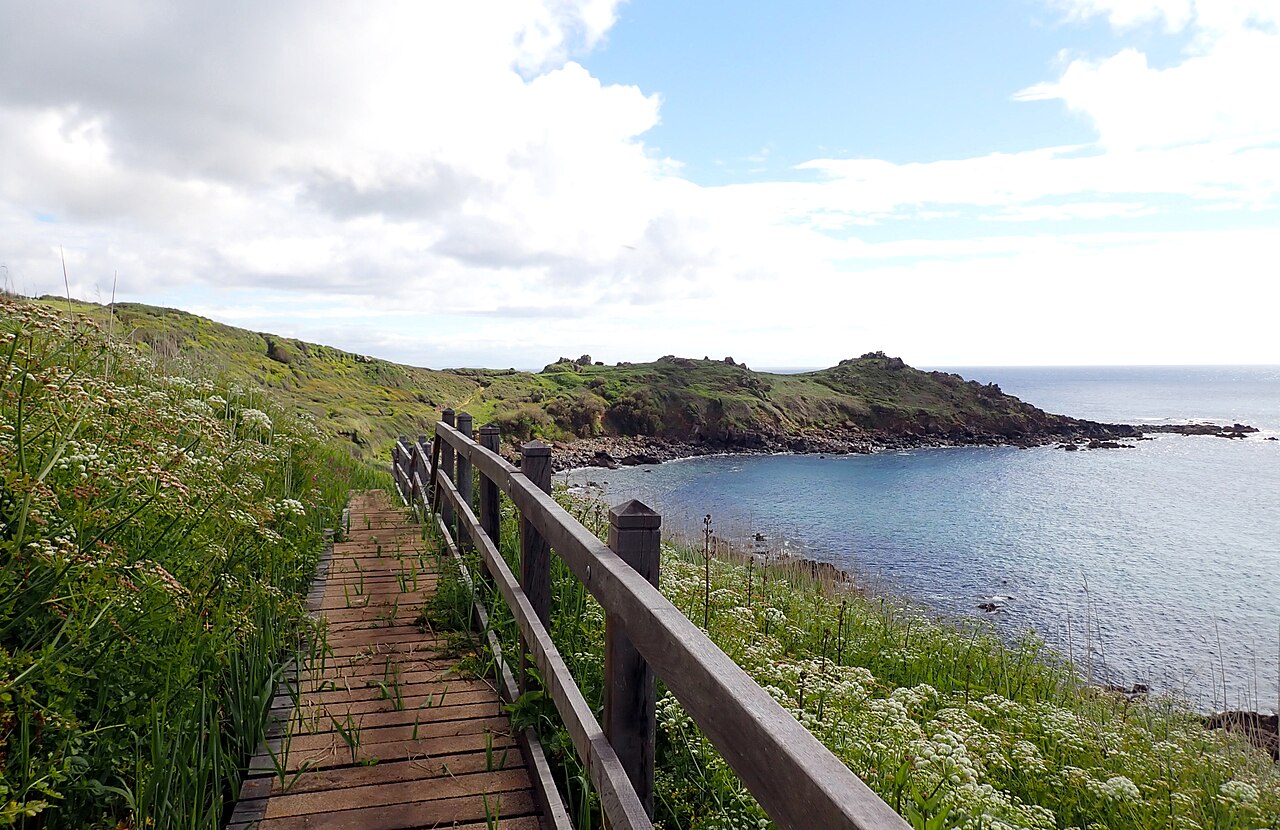
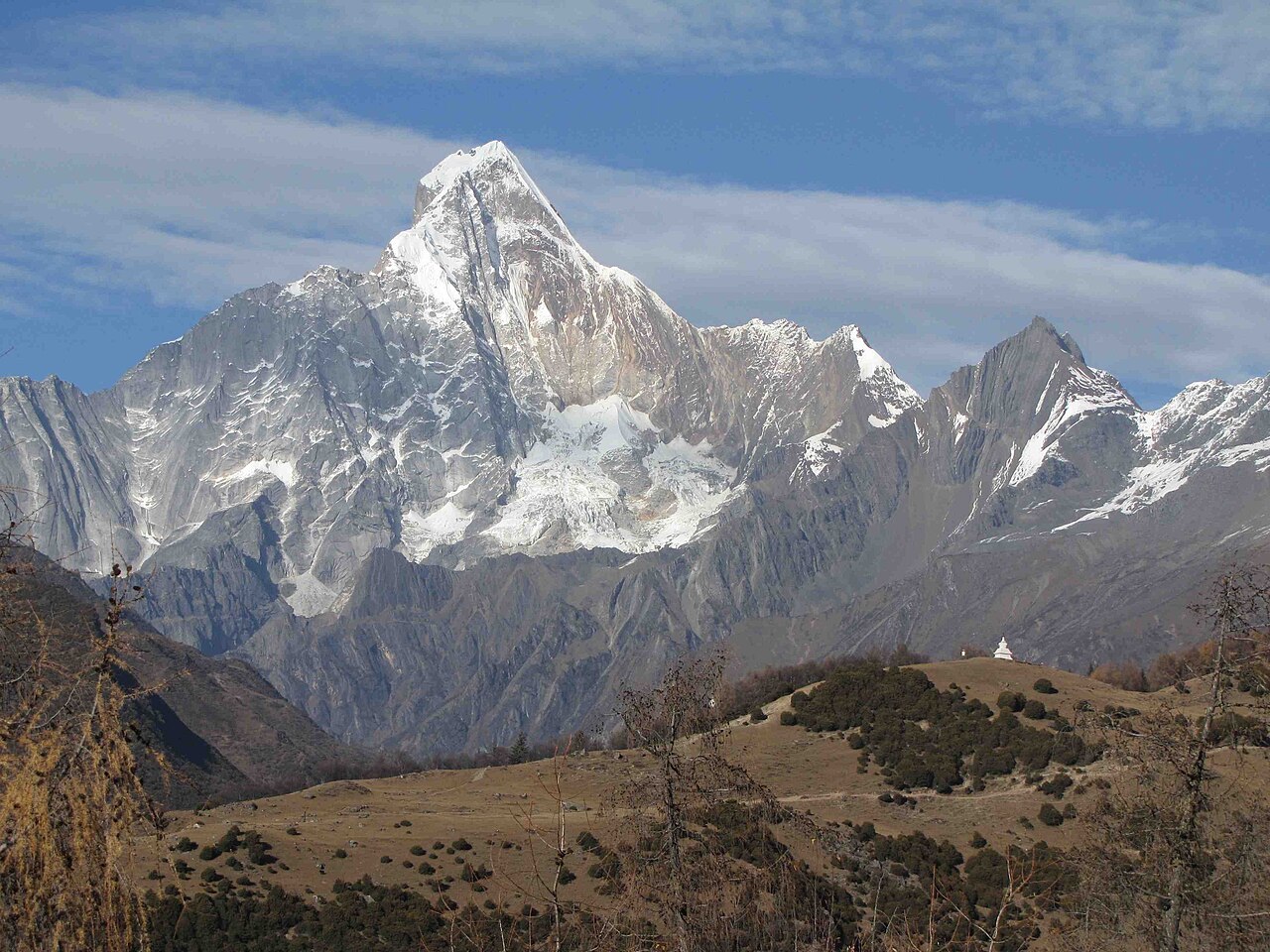
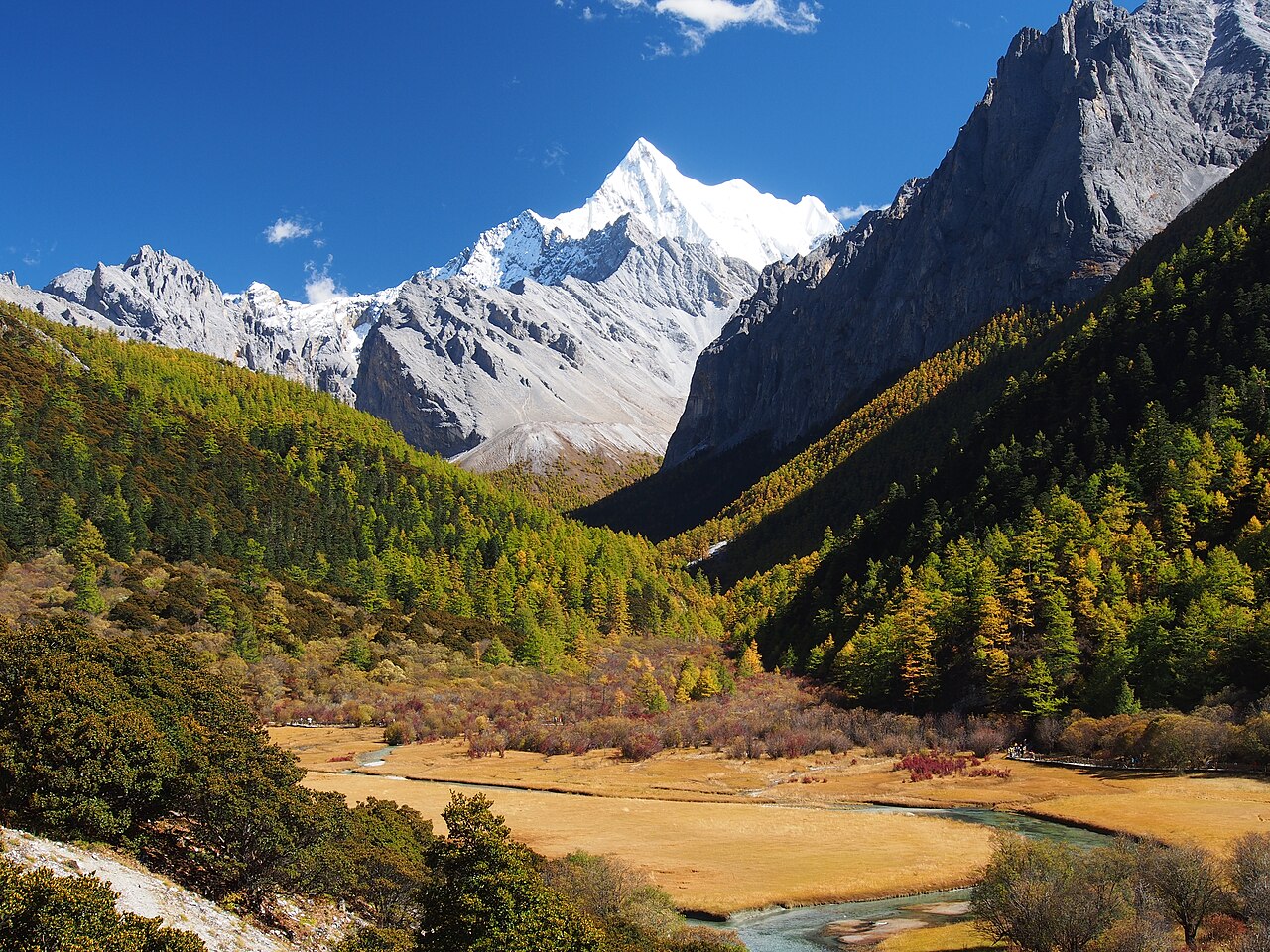
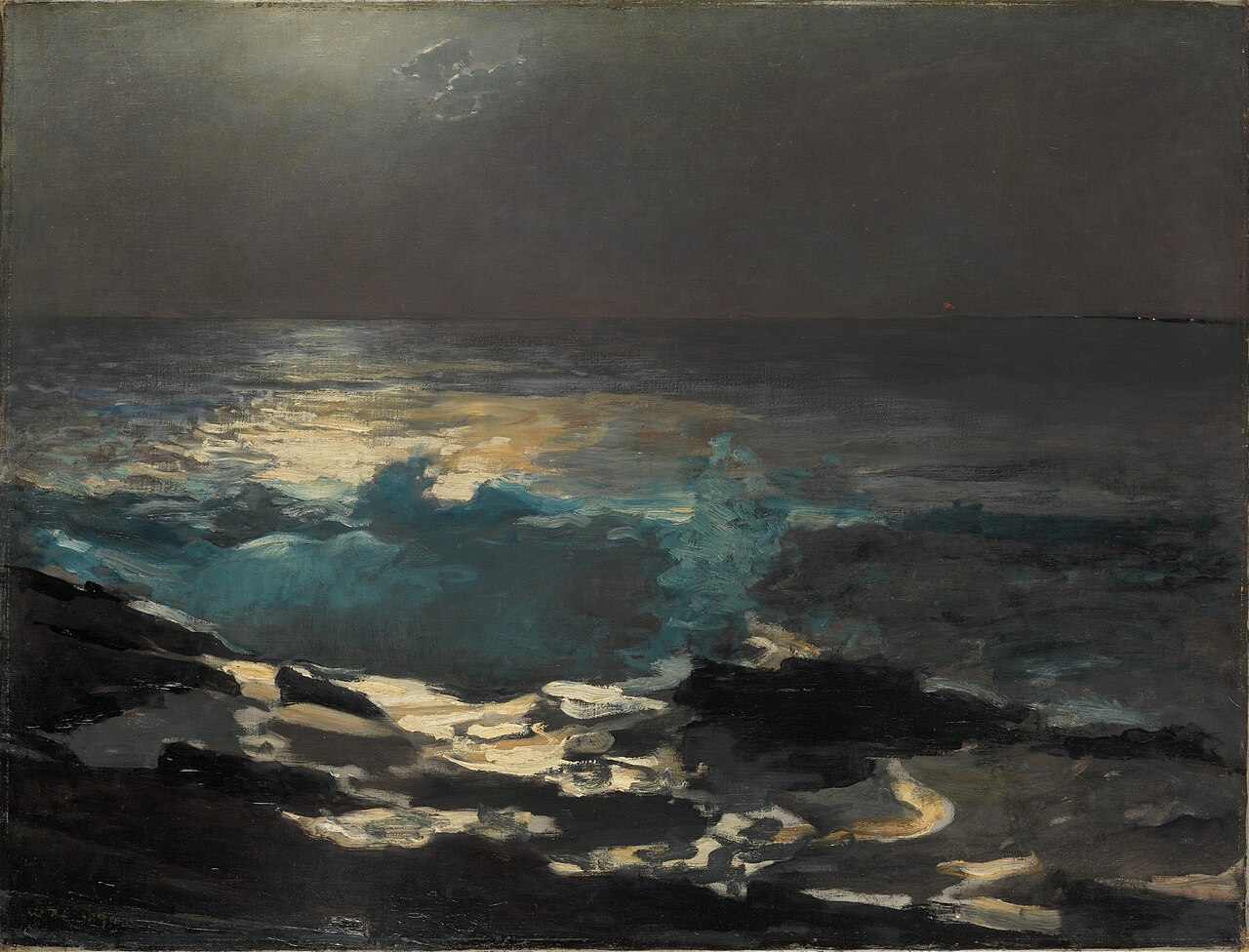
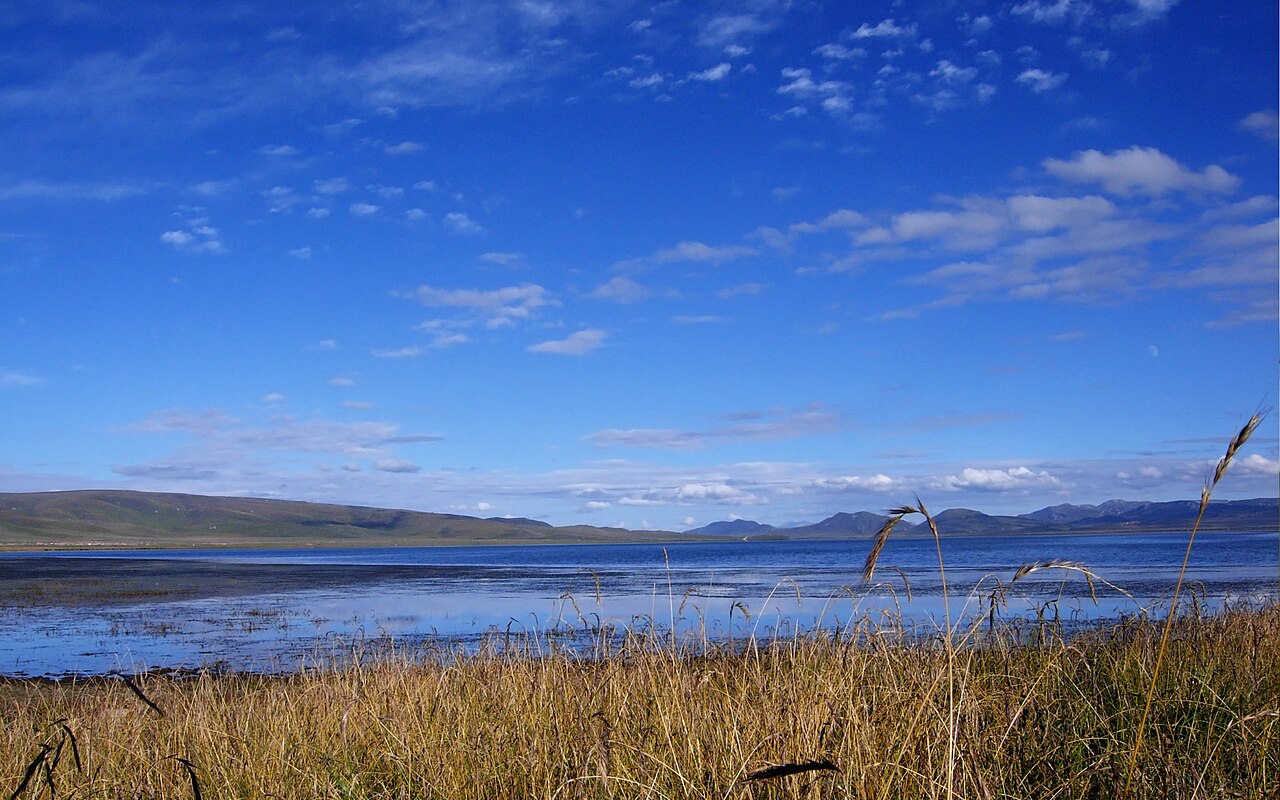
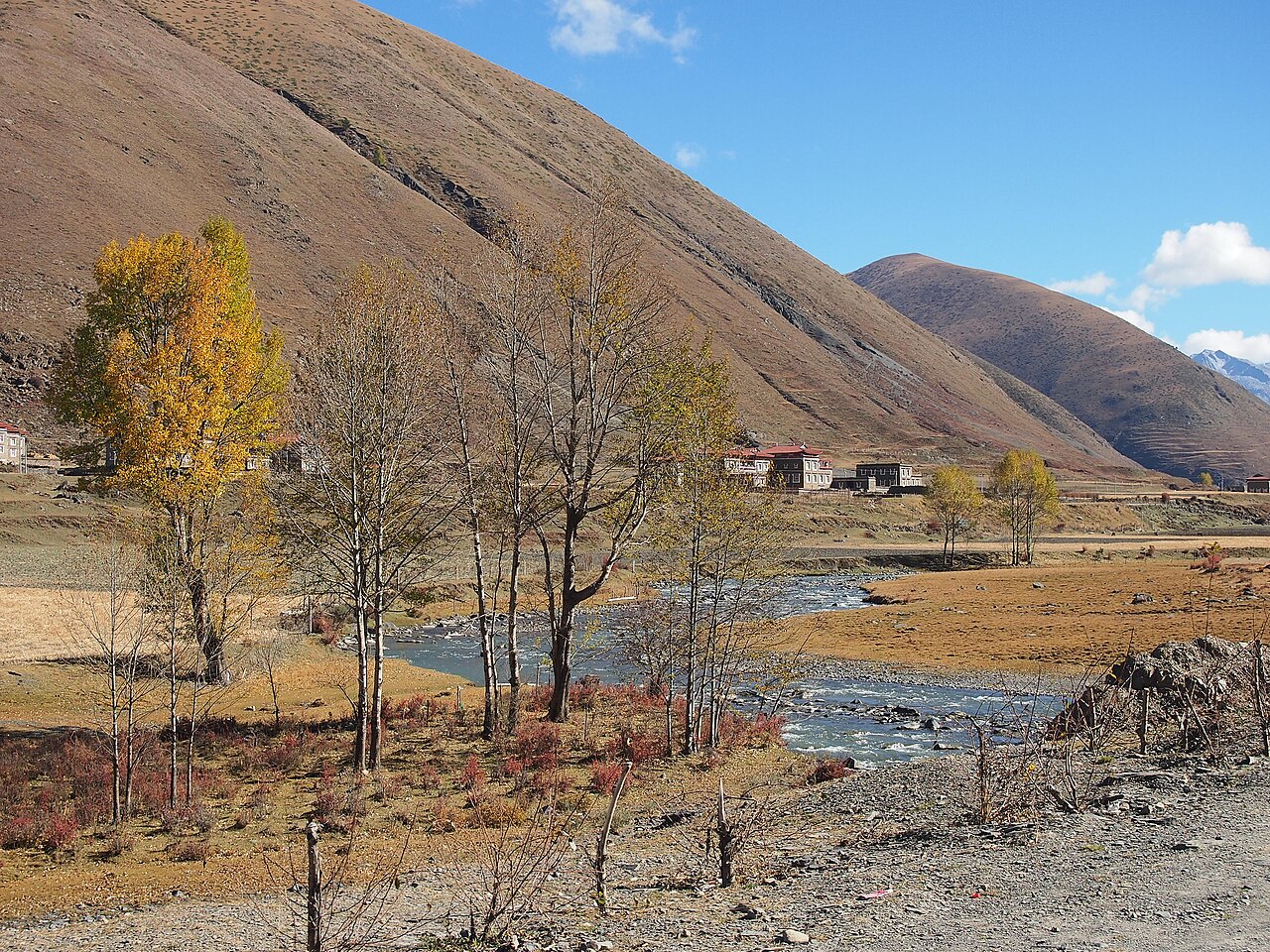
Jiuzhaigou is a beauty you have to see with your own eyes. They say October is the finest month — every hillside dyed yellow and red against blue water. As the writer Wei Wei put it: natural beauty, beautifully natural; heaven on earth, earth in heaven.
A traveller's note, 'Jiuzhaigou–Chengdu–Leshan–Emei, independent'
If you have never been at altitude, start drinking hongjingtian a few days out. Coming down from Huanglong I watched a traveller collapse on the boardwalk with altitude sickness. It looked genuinely dangerous.
A traveller's note, 'A Sichuan girl's budget spring weekend in Jiuzhaigou'
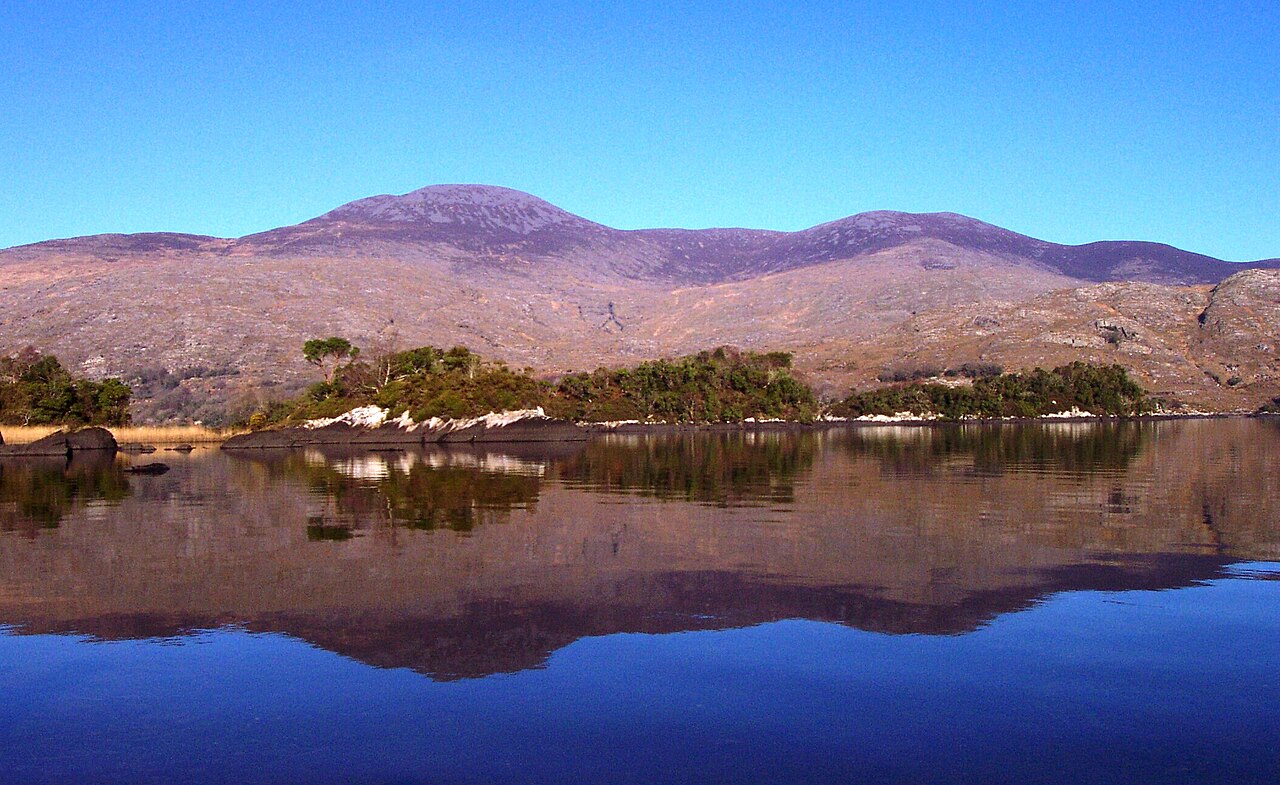
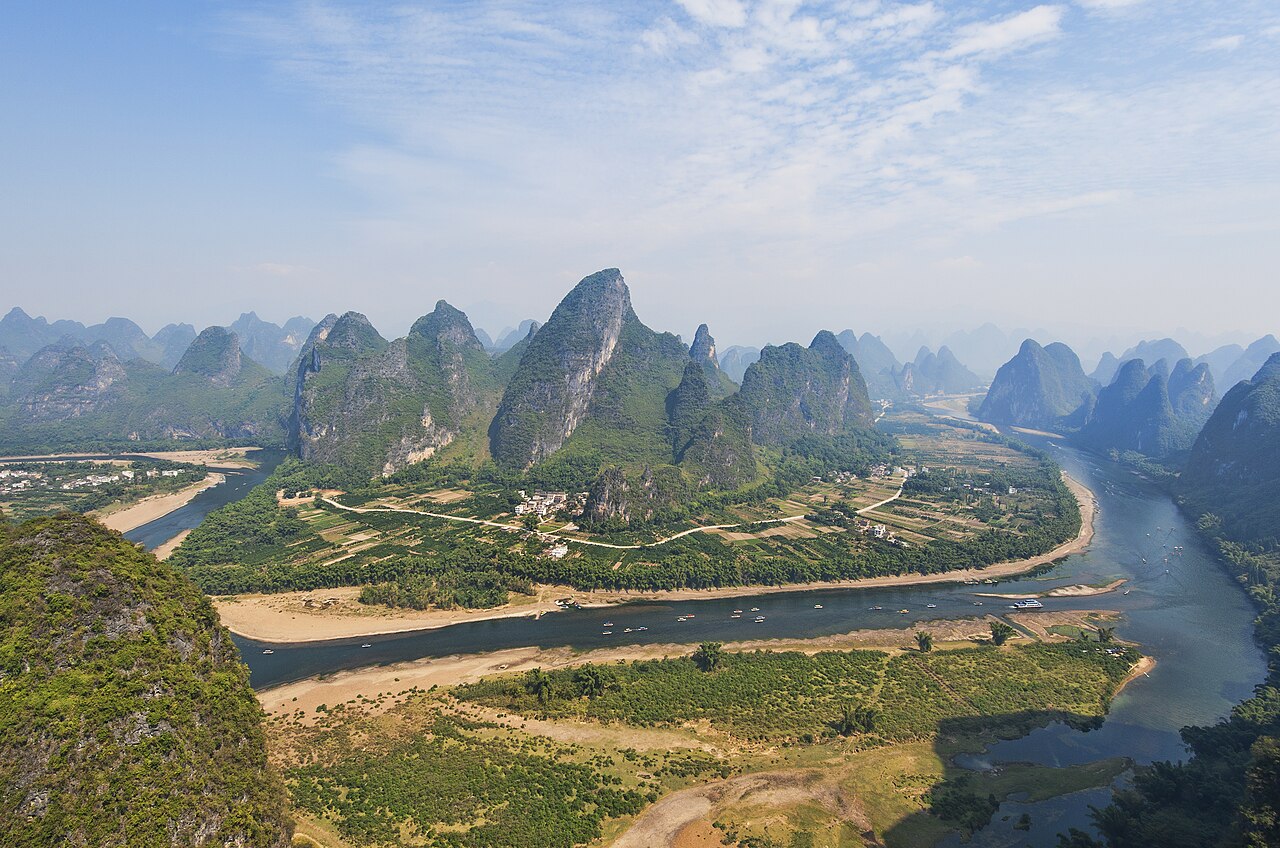
The name means nine-village valley, after the nine Tibetan hamlets strung along it, and the local boast — after Jiuzhaigou you stop looking at water — is closer to true than it has any right to be. There are 108 lakes here, called haizi, and the colour runs the whole palette within a single basin: pale yellow, dark green, rust red, deep blue, turquoise. Move three steps and it changes again.
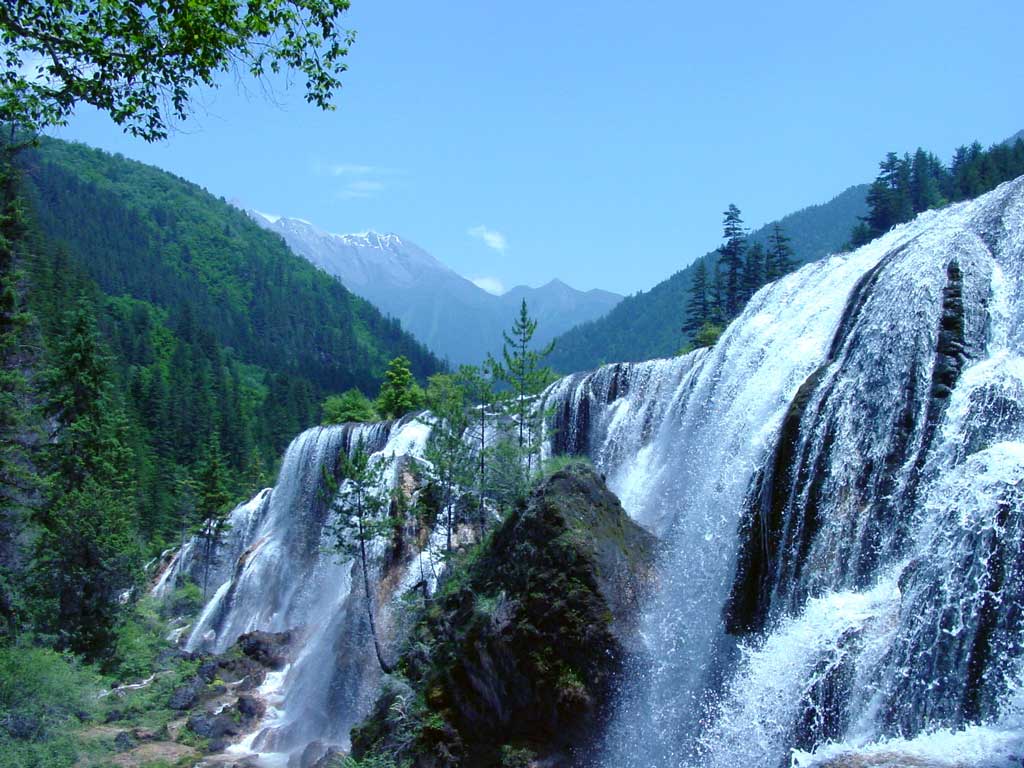
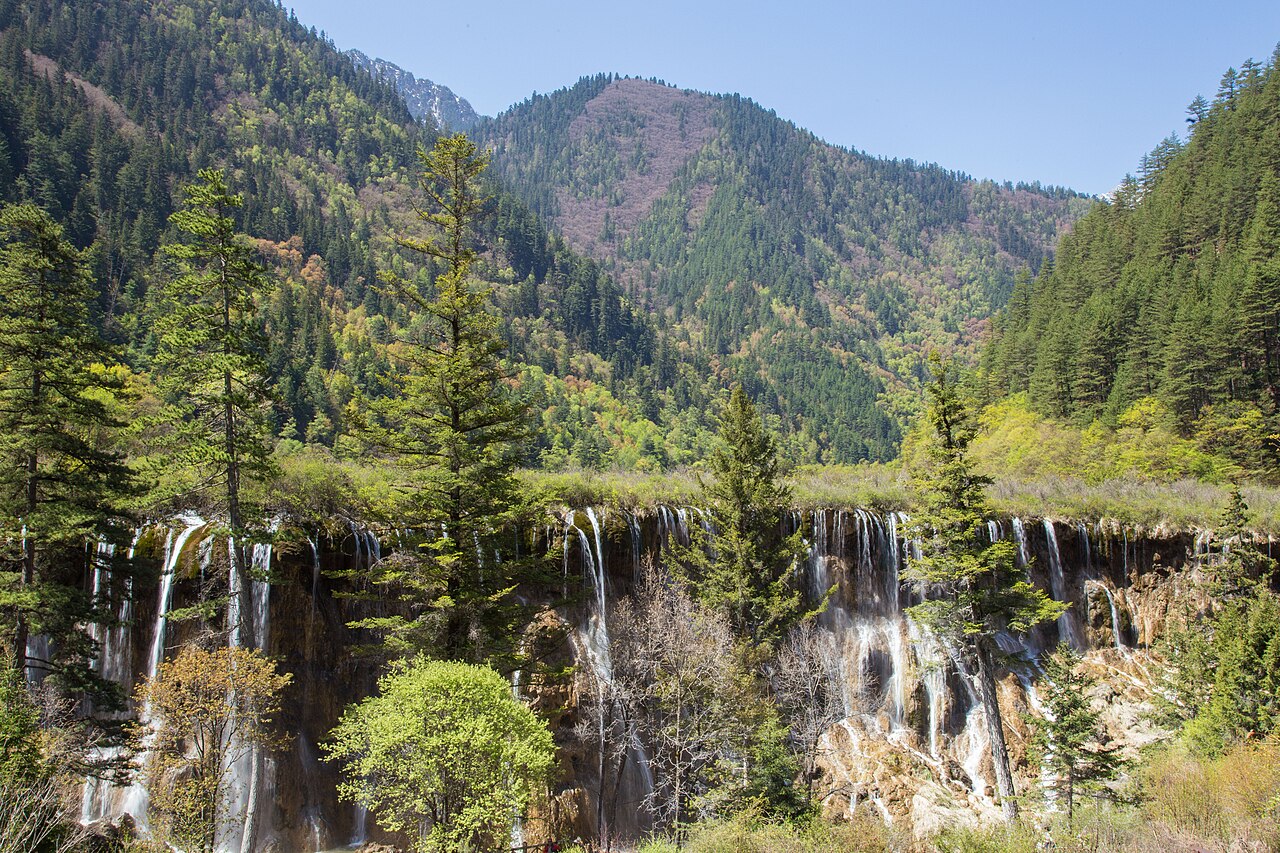
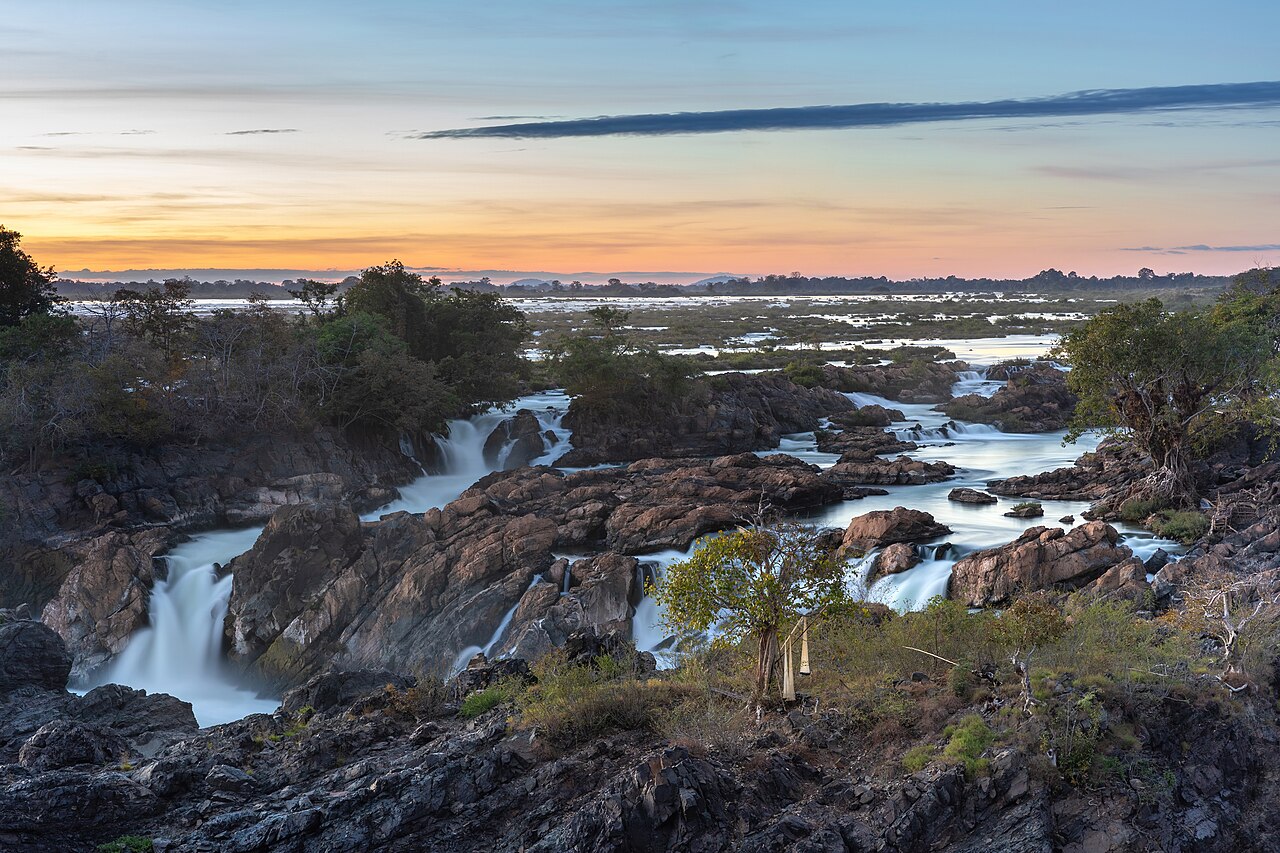
The park is a Y. Two arms climb from the junction at Nuorilang: the Rize arm east to Primeval Forest, and the Zechawa arm south to Long Lake and the small, absurd Five-Colour Pool. The main stem, Shuzheng Valley, runs downhill past nineteen linked lakes and the widest waterfall here — Nuorilang, 20 m high and 300 m across, the closing shot of the 1980s Journey to the West.
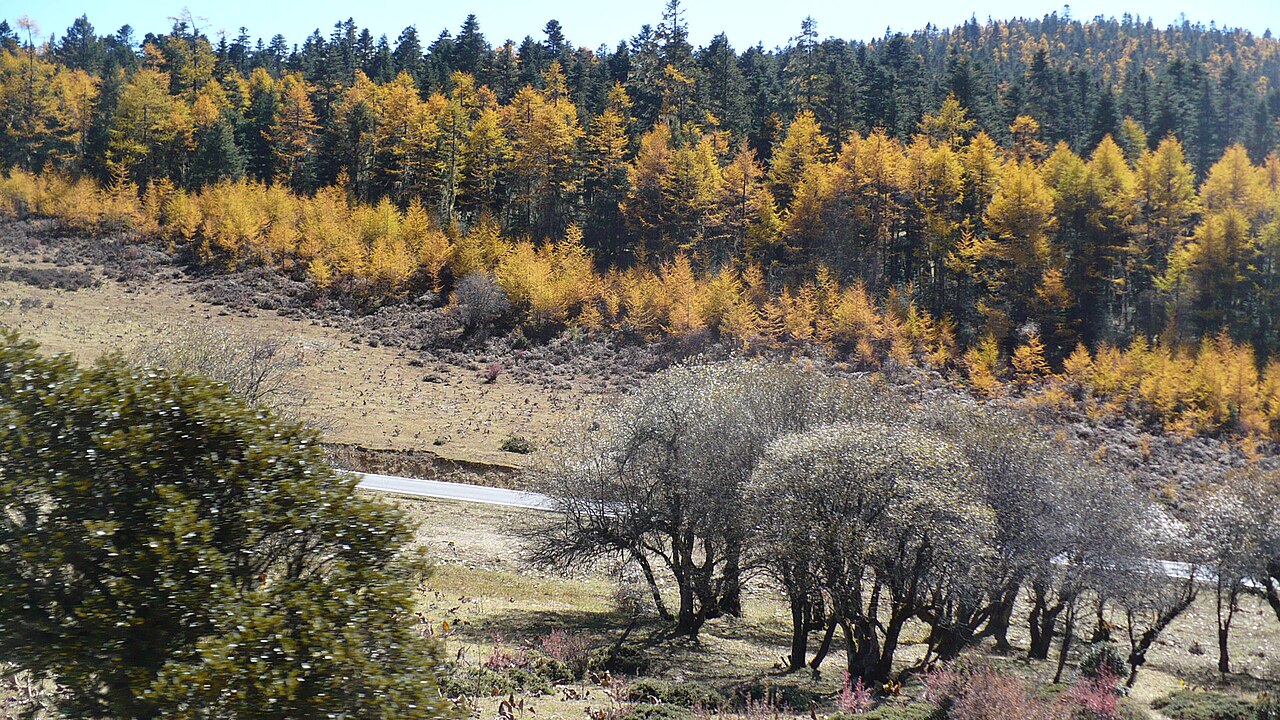
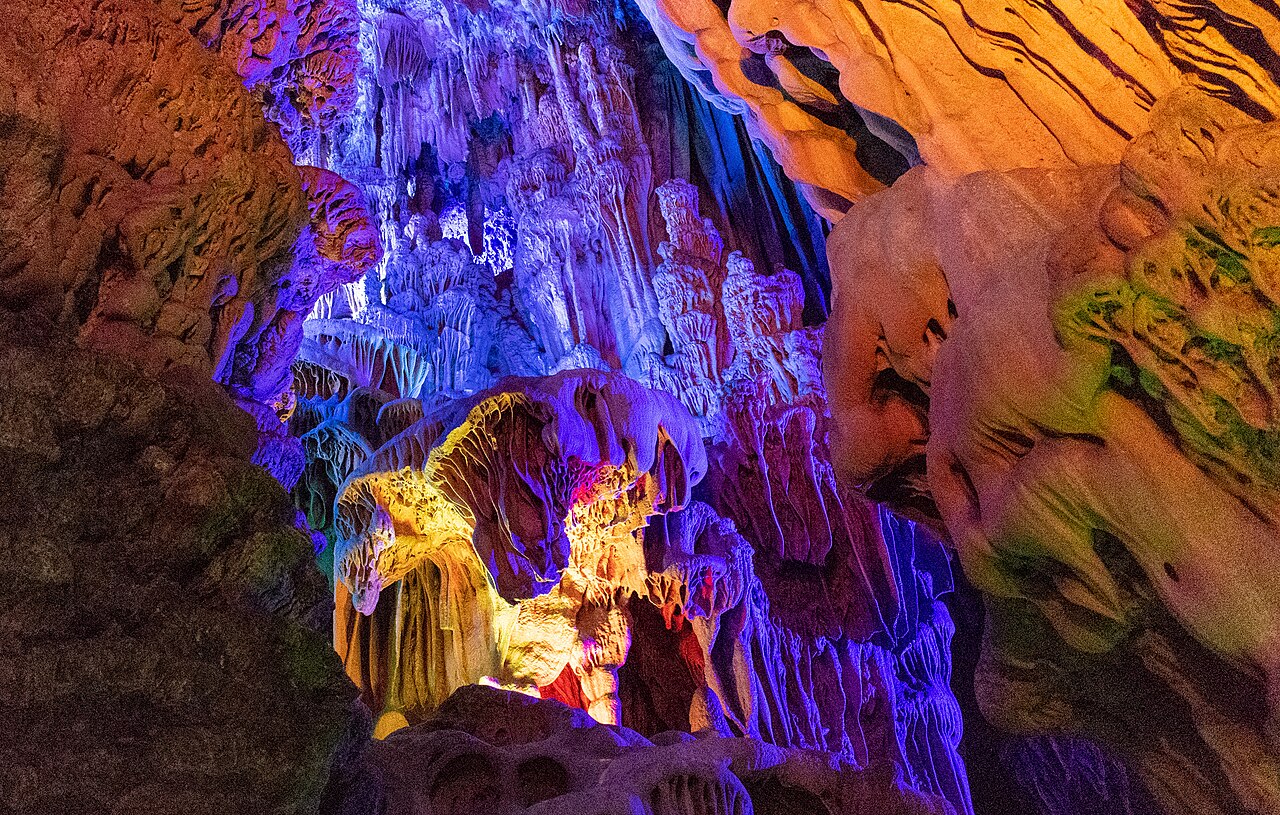
What you are actually looking at is calcium carbonate. Groundwater saturated with limestone lays travertine on every lake bed and weir, which is why the water is so impossibly bright and the dams so intricately stepped. Ancient glaciers carved the valley; the mineral rebuilt it. Autumn, when red and gold forest backs onto blue water, is what the posters promise — and in the second half of October, roughly what you get.
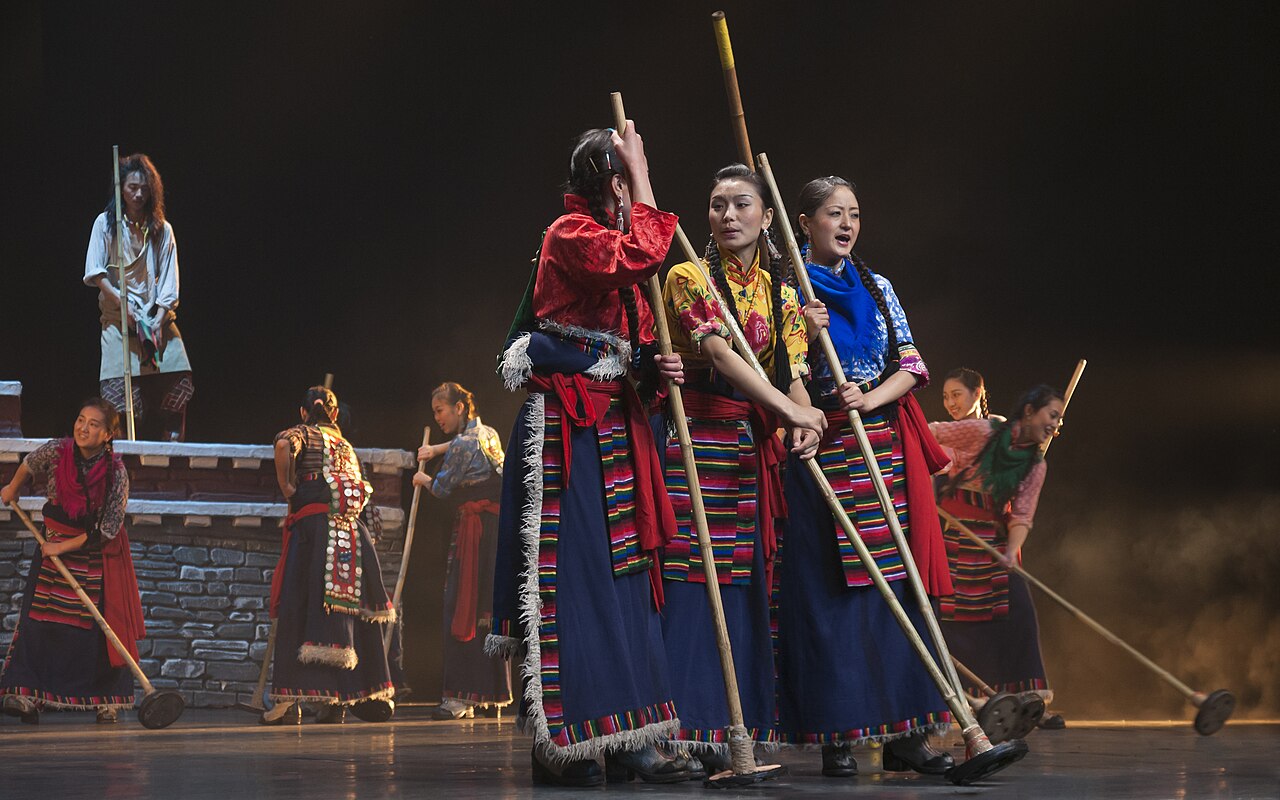
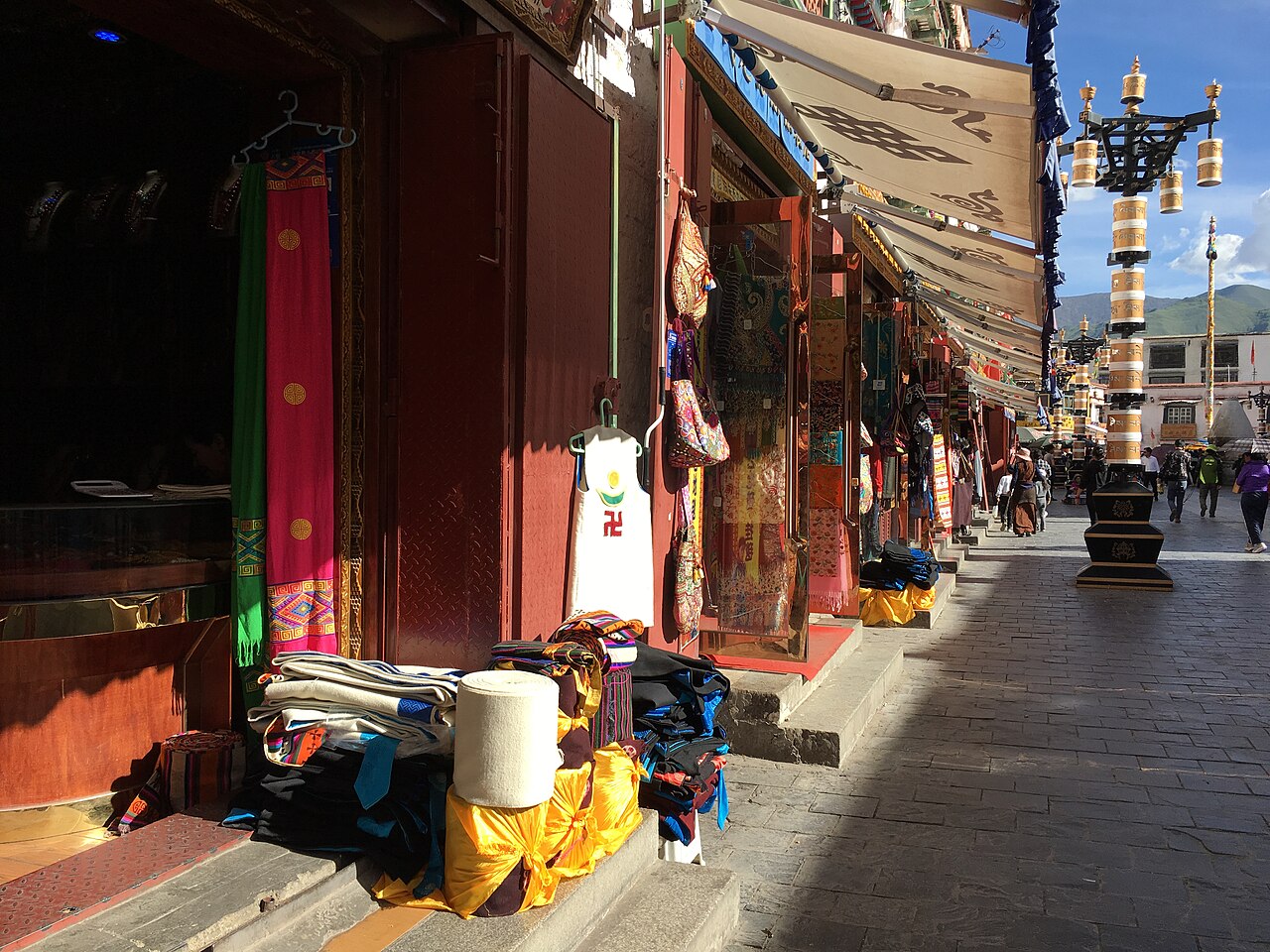
It is also Tibetan country on the old tea-horse road. Prayer flags, water mills, the largest village Shuzheng with four hundred of the valley's thousand residents, and a Bon-po heritage older than the Buddhism layered over it. Bring cash for the villages, keep your voice down at the temples, and remember this is a tightly managed world heritage site: overnight stays inside the valley are banned and smoking anywhere outside Nuorilang costs ¥500.